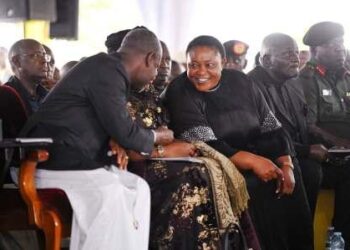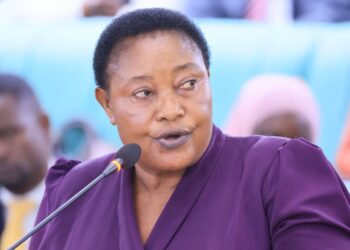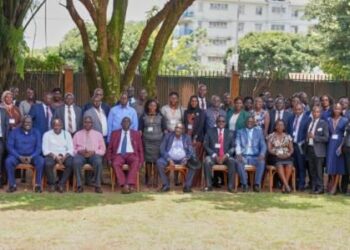







The spotlight at a vibrant victory celebration in Cape Town this week firmly rested on National Resistance Movement (NRM) Secretary General Rt. Hon. Richard Todwong, whose presence symbolized both leadership and continuity following President Yoweri Kaguta Museveni’s decisive win in the 2026 general elections.
The event, organized by the NRM Diaspora South Africa Chapter under the leadership of Kakuru Phillip, brought together Ugandans living abroad in a colorful show of unity, pride, and political enthusiasm.
The gathering was held to celebrate President Museveni’s re-election victory, where he secured 71 percent of the vote, reaffirming the NRM’s long-standing dominance in Uganda’s political landscape.
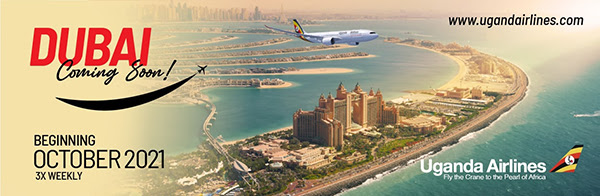
Todwong’s attendance underscored his central role in coordinating party structures and mobilization efforts that have kept the NRM firmly rooted across both local and international support bases.
He arrived in the company of key party figures, including members of the Central Executive Committee such as Chairman Jonard representing the Western Region and Dr. Tanga Odoi, alongside a delegation from the party secretariat.
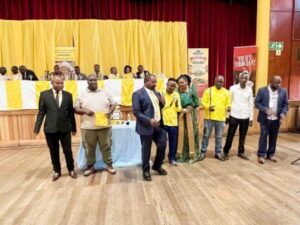
In his remarks, Todwong praised the diaspora chapter for remaining aligned with the party’s ideological pillars.
He said the group had consistently championed “the major NRM agenda of patriotism, Pan-Africanism, democracy, and socio-economic transformation.”
He emphasized that the victory being celebrated was not the result of isolated efforts but rather a collective national achievement built on coordinated mobilization and shared commitment.
He noted that it was indeed a moment worth marking, stressing that the President’s win reflected the trust Ugandans continue to place in the NRM’s leadership.
He highlighted that such success depended heavily on structured party organization, a role he has overseen as Secretary General through strengthening grassroots networks and harmonizing mobilization strategies across regions.
Todwong also used the occasion to recognize the role of diaspora leaders, singling out Kakuru Phillip for his efforts in bringing Ugandans in South Africa together under one umbrella.
He assured attendees of continued support from the party leadership in Kampala.
He conveyed confidence from President Museveni, reaffirming that the NRM values its diaspora supporters as an integral part of its broader political ecosystem.
Kakuru Phillip, speaking at the same event, expressed gratitude for the recognition and for Todwong’s presence at the celebration.
He thanked President Museveni for what he described as continued trust in the diaspora chapter.
He also appreciated Todwong for honoring the invitation, noting that his attendance added weight and significance to the occasion.
He urged fellow supporters to remain committed to the party, arguing that the NRM remains the only political organization with a clear and consistent ideological direction.
The celebrations in Cape Town were marked by music, food, and an atmosphere of triumph, reflecting a sense of shared accomplishment among attendees.
Beyond the festivities, the event mirrored a broader narrative about the NRM’s enduring political machinery and the individuals who sustain it, with Todwong emerging as a key figure in that equation.
Since coming to power in 1986, the NRM has built its political identity around stability, economic reform, and national unity following years of political turmoil.
Under Museveni’s leadership, Uganda has experienced relative political stability, expansion in infrastructure such as roads and energy, and growth in sectors like education and healthcare.
Programs such as Universal Primary Education and Universal Secondary Education have significantly increased school enrollment, while investments in roads, electricity, and telecommunications have supported economic activity across the country.
The government has also emphasized wealth creation initiatives, including support for agriculture and small enterprises, aimed at lifting households out of poverty.
This historical backdrop helps explain the NRM’s continued electoral strength, as many supporters associate the party with stability and incremental development.
In the 2026 elections, the NRM once again demonstrated its organizational depth, with mobilization structures stretching from village levels to the diaspora playing a crucial role.
At the center of this machinery is the office of the Secretary General, where Todwong has been instrumental in coordinating party activities, resolving internal challenges, and ensuring message consistency.
His presence in Cape Town therefore went beyond ceremonial duty, representing the operational backbone of a party that has maintained power for four decades.
As the celebrations concluded in jubilation, with no shortage of food, music, and camaraderie, the message from the NRM leadership remained clear.
The victory was not just about numbers at the ballot box, but about a system sustained by organization, loyalty, and a shared political vision.
And at the heart of that system stands Richard Todwong, whose role continues to shape the NRM’s path both at home and abroad.