










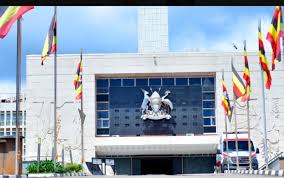
As Uganda’s 12th Parliament prepares to elect its first leaders, a surprise voice is urging women to look beyond the gender of whoever holds the gavel — and to focus instead on the substance of what leaders will do once seated.
A Capital in Political Flux
Kampala is rarely short of political drama, but the weeks leading up to the inauguration of Uganda’s 12th Parliament have delivered a charged atmosphere even by the capital’s standards.
The race to determine who will occupy the two most senior seats in the country’s legislature — the Speaker and the Deputy Speaker — has triggered a national conversation that cuts well beyond parliamentary procedure.
It has raised questions about women’s power, political legacy, accountability, and what real representation actually looks like.
At the centre of the storm is a cast of characters whose entrances and exits have kept political observers riveted.
Former Speaker Anita Among, who led Parliament through the 11th term, has stepped back from the race under a cloud of controversy, facing scrutiny over allegations linked to financial management and expenditure during her tenure at the helm of Parliament.
In her place, the Patriotic League of Uganda (PLU) — a pressure group associated with the country’s Chief of Defence Forces, General Muhoozi Kainerugaba — has thrown its weight behind Jacob Marksons Oboth-Oboth for Speaker and incumbent Deputy Speaker Thomas Tayebwa for the Deputy Speaker’s seat.
With both leading candidates being men, activists and women’s rights advocates were quick to sound the alarm: for the first time in over two decades, Parliament’s two most powerful positions could be occupied entirely by men.
And then, into this feverish debate, stepped the Uganda National Women’s Council — with a message that surprised nearly everyone.
“The Position Is Not the Point”
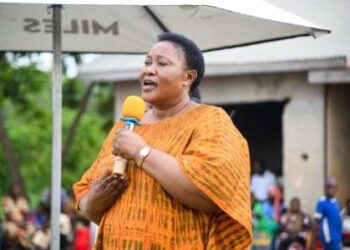
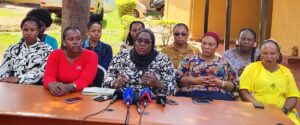
Standing before reporters at the Council’s headquarters in Ntinda, Council Chairperson Hajjat Faridah Kibowa delivered a statement that cut against the current of prevailing sentiment among many women’s advocates.
The race for Speaker, she said plainly, should not be reduced to a question of gender.
What matters, she insisted, is not the sex of whoever occupies the chair — but rather whether those who do occupy it will actually fight for women’s rights, welfare, and advancement.
“For nearly two decades, women have served in those top parliamentary offices, first as Deputy Speaker and later as Speaker,” Kibowa told reporters. “That was part of the struggle for inclusion, and we are proud that it was achieved.”
Her message was clear: the battle for women’s inclusion in Parliament had already been won at the symbolic level, and the movement must now mature beyond symbolism.
“We should not lose hope simply because the positions may now go to men,” she added. “Women have already demonstrated their leadership ability, and that progress cannot be erased.”
The Women’s Council chairperson was emphatic that the measure of progress was no longer which gender occupied a particular chair — but what the person sitting in that chair would do with the power it carries.
A Legacy Longer Than Any Single Tenure
To understand why Kibowa could make such a statement with confidence, one must trace the arc of women’s political empowerment in Uganda — a journey that stretches back four decades and bears the deep fingerprints of one man: President Yoweri Kaguta Museveni.
When Museveni and the National Resistance Movement seized power in January 1986, following a brutal five-year guerrilla war, Uganda was a country emerging from years of devastating political violence, economic collapse, and social disintegration under the regimes of Idi Amin and Milton Obote.
Women, as in virtually every post-conflict society, bore a disproportionate share of the suffering — yet found themselves systematically excluded from the political structures that would shape recovery and reconstruction.
Museveni moved quickly to change that calculus, and he has never tired of explaining why.
“When we were empowering women, it was deliberate,” the President has stated on multiple occasions. “When we defeated Idi Amin in 1979, I recruited women for our FRONASA. But when it came to the integration, our other partners in the system refused to absorb our women, and they had to be dismissed and go home. We brought them back when we were in charge now in 1986, when we were able to admit them in the army.”
The inclusion of women in the military was just the beginning.
The Architecture of Inclusion: How the NRM Built Women Into the System
As the NRM consolidated its hold on power and began constructing a new political order, it introduced what would become one of Africa’s most ambitious experiments in gender-based affirmative action in legislative politics.
As early as 1986, special positions on the village Resistance Councils were reserved for women and other special interest groups — a policy innovation that the 1995 Constitution would later entrench and expand at the national level.
The principle was straightforward: because women constituted a majority of Uganda’s population but had been historically frozen out of formal political spaces, the system would carve out protected entry points to begin correcting that imbalance.
“When we came to power, we said no; this is not correct, because all the census figures show that women are the majority,” President Museveni has explained. “We said let us have one man, one vote for the 149 constituencies at that time. After we get the constituency MPs, let us get one woman per the 36 districts elected by everybody, but on an affirmative action seat. That is how our women like the Rebeccas came up.”
The 1995 Constitution gave this philosophy constitutional force, explicitly mandating that the State take affirmative action in favour of groups marginalised on the basis of gender, and prohibiting laws, cultures, customs and traditions that are against the dignity, welfare, or interests of women.
The results, over time, were transformative: female representation in Parliament climbed from negligible levels in the 1980s to more than a third of all Members of Parliament by the time of the 11th Parliament, with women holding 189 seats.
Women also came to hold 45 percent of Cabinet Minister positions and 48 percent of State Minister positions — ratios that would be the envy of many countries that consider themselves far more advanced in matters of gender equality.
A Continent’s First: Uganda and the Landmark Vice Presidency
Perhaps no single moment better illustrated the extraordinary distance Uganda had travelled than what happened in 1994 — before the ink on the 1995 Constitution was even dry.
That year, Dr Specioza Wandira Kazibwe was appointed Uganda’s Vice President — making her the first female Vice President in the history of Africa, and the first woman on the entire continent to hold the position of Vice President of a sovereign nation.
It was a milestone that reverberated far beyond Uganda’s borders, signalling to the wider world that a country still rebuilding from decades of internal conflict had chosen to place a woman at the very apex of executive power.
Kazibwe served in that role from 1994 to 2003, a full nine years that helped normalise the idea of a woman in Uganda’s second-highest office.
When Museveni formed his Cabinet following the 2021 elections, he reached again for female leadership at the highest levels — appointing Jessica Alupo as Vice President, making her the second woman to hold the office, and naming Robinah Nabbanja as Prime Minister, the first woman ever to serve in that role.
At the same time, Museveni increased the proportion of women in the Cabinet from 27 percent to 43 percent — a figure that placed Uganda among the top countries in the world for female Cabinet representation.
Former Speaker Rebecca Kadaga was simultaneously appointed First Deputy Prime Minister and Minister for East African Community Affairs, ensuring that the Cabinet of 2021 stood as perhaps the most gender-balanced executive in Uganda’s history.
Rebecca Kadaga and the Path from Affirmative Action to Historic Speakership
No name better encapsulates the journey of women under the NRM’s political framework than that of Rebecca Kadaga — a woman whose career trajectory reads almost like a designed exhibit of what affirmative action can produce when it is combined with talent and determination.
Kadaga first entered Parliament in February 1989 on the affirmative action platform created by the NRM, representing Kamuli as a district woman representative on the National Resistance Council.
From there, her rise was swift and considerable: she was given responsibility to deputise Moses Kigongo as chairman of the interim parliament, served as a state minister across multiple portfolios, and built a reputation as one of the NRM’s most formidable political operators.
When she became Speaker of Parliament in May 2011, Kadaga made history as the first woman ever to hold that office in Uganda’s history.
She would go on to serve as Speaker until 2021 — ten full years at the top of Uganda’s legislative branch.
A visibly proud Museveni paid tribute to her journey at a state function: “I’m very happy with the women who came up and responded to our call and Rebecca Kadaga was one of them. When she came, we supported her. She became the Deputy Speaker for quite some time and then Speaker and has been with us all this time. I thank her. Rebecca is a very committed person, committed to what she believes in, and a fighter.”
Kadaga’s decade at the helm of Parliament was followed seamlessly by the Speakership of Anita Among — meaning that from 2011 to 2026, Uganda had an unbroken run of fifteen years with a woman presiding over its national legislature.
It is this reality that forms the bedrock of Hajjat Kibowa’s calm confidence when she tells the country not to panic at the prospect of two male presiding officers.
The Double-Edged Sword: Progress With Caveats
Uganda’s record on women’s political representation is genuinely remarkable by African and global standards — and yet scholars, activists, and even some of the women who benefited from the system have long noted its contradictions.
Critics have pointed out that much of women’s representation has been channelled through affirmative action seats, creating a perception that women cannot succeed in open competitive politics.
Others have argued that the high-profile appointments of women to senior roles have served a dual political purpose: advancing genuine gender equity goals on one hand, while simultaneously lending legitimacy to a government that has faced persistent criticism over democratic freedoms on the other.
A government report on gender participation acknowledged that while the number of women in elective positions has increased, barriers to women’s equal participation in elective politics remain formidable — including discrimination, cultural beliefs, the challenge of balancing family and political life, and the commercialisation of politics that systematically disadvantages women.
Even so, globally, Uganda ranks 49th out of 195 countries in women’s representation — a figure that would have been inconceivable in 1986.
The Weight of One Woman’s Choices
Kibowa’s remarks at the Ntinda press conference were notable not only for what she said about the speakership race, but for what she said about the broader responsibility carried by women in leadership.
She raised a concern that cuts to the heart of how women are perceived in public life: the tendency to judge all women leaders through the prism of one individual’s conduct.
“In many cases, when one woman faces criticism, society extends that judgment to all women,” she said plainly. “That is unfair and should stop.”
The implicit reference to Anita Among’s situation was unmistakable.
Among’s withdrawal from the speakership race had come against the backdrop of intense public scrutiny over allegations of financial impropriety during her tenure as Speaker — allegations that had generated significant negative publicity and had reportedly contributed to a falling-out with President Museveni himself.
For Kibowa, however, the Women’s Council’s response to Among’s situation was not to condemn or celebrate, but to call for calm and due process.
She appealed for the public to allow investigations and legal processes to proceed without interference — and used the occasion to remind women leaders everywhere of the weight of the expectations they carry.
“Women in leadership should remember they carry the expectations of many others who look up to them,” she said.
What the Women’s Council Now Demands
As the clock ticks toward the May 25 election of the Speaker and Deputy Speaker of Uganda’s 12th Parliament, the Women’s Council has made its priorities clear.
It is not the gender of whoever wins these elections that the Council will be watching most closely — it is the agenda they bring to those offices.
Kibowa was unambiguous: the Council’s focus remains firmly on securing leaders who are genuinely committed to protecting and advancing women’s rights, welfare, and opportunities — regardless of whether those leaders are men or women.
Activists from the broader women’s movement, however, have not entirely closed ranks behind this position, with many continuing to argue that the physical presence of women in Parliament’s most visible leadership positions carries its own irreplaceable symbolic and practical power.
The debate reflects a genuine and healthy tension within Uganda’s women’s movement — between those who believe the fight must remain focused on visible representation at every level, and those who argue that the movement has matured to a point where it can afford to prioritise substance over symbolism.
The Larger Lesson From Four Decades of Struggle
What Uganda’s experience ultimately demonstrates is that women’s political empowerment is not a single event — not the passage of a constitution, not the appointment of a Vice President, not the election of a Speaker.
It is, instead, an ongoing, shifting, contested, and sometimes internally divided process — one in which moments of apparent retreat can sometimes be reframed as evidence of deeper, more durable progress.
That Uganda can, in 2026, have its Women’s Council stand before cameras and calmly decline to demand a female Speaker — because women have already proven what they can do in that seat — is itself a statement about how far the country has traveled.
Whether that statement reflects genuine maturity or premature complacency remains a question that only Uganda’s women, in their full diversity of circumstance and opinion, are positioned to answer.
What is certain is that the chair of the Speaker of Parliament will be occupied on May 25.
What is less certain — and ultimately more important — is what the person who sits in it will do for the millions of Ugandan women who will never set foot in that chamber, but whose lives will be shaped, for better or worse, by the decisions made inside it.