














At the quiet and tree-lined grounds of the National Leadership Institute, a fresh chapter in Uganda’s parliamentary journey has begun to unfold.
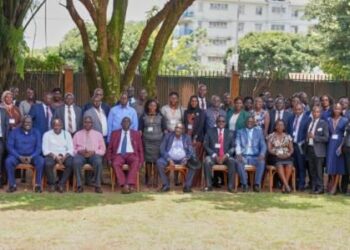
Leaders of the ruling National Resistance Movement have assembled for a crucial retreat aimed at sharpening focus, strengthening unity, and reinforcing discipline among newly elected Members of Parliament.
The gathering marks the beginning of a week-long induction program designed not just to orient legislators, but to shape the tone and direction of the 12th Parliament.

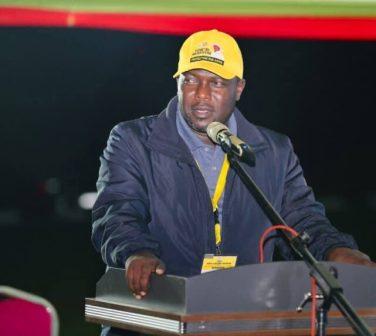
Delivering his opening remarks, the NRM Secretary General, Richard Todwong, welcomed the legislators with a message grounded in reflection and responsibility.
He reminded participants that the retreat is part of a long-standing tradition within the party to prepare leaders for the weight of national duty.
“We are here at a time when many issues affecting our country require thoughtful deliberation,” Todwong said.
He emphasized that the calm and focused environment at Kyankwanzi offers a rare opportunity for leaders to step away from daily political pressures and think deeply about Uganda’s future.
He urged Members of Parliament to minimize distractions and actively participate in discussions that will shape policy and governance.
He further encouraged leaders to reflect on the needs of their constituencies while aligning them with the broader national vision.
Todwong took a moment to congratulate the legislators on their election to the 12th Parliament, acknowledging the often intense and demanding nature of Uganda’s electoral process.
He assured those facing ongoing election petitions that the party remains committed to supporting them through the legal and political processes.
In a gesture aimed at fostering inclusivity, he extended an invitation to Independent MPs to collaborate with the NRM.
He revealed that structured arrangements are being developed to integrate willing independents into party activities through a memorandum of cooperation.
Structuring the Retreat for Impact
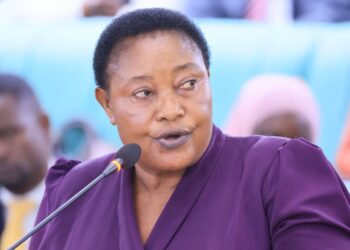
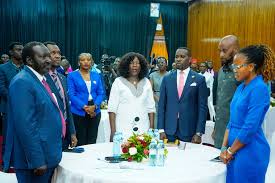
The Deputy Secretary General, Rose Namayanja Nsereko, outlined the framework and ambitions of the retreat.
She explained that the program, running from April 7 to April 15, is anchored on aligning party leaders to safeguard national achievements while accelerating Uganda’s journey toward higher middle-income status.
“The purpose of this retreat is to orient members of the 12th Parliament on the tasks ahead, strengthen cohesion within the caucus, and build consensus on priority actions for this term,” she stated.
She highlighted that the retreat will feature insights from the Party National Chairman, Yoweri Kaguta Museveni, alongside senior government officials, technocrats, academics, and private sector leaders.
She noted that this diverse lineup is intended to give MPs a broad and informed perspective on the country’s key challenges and opportunities.
Key Themes Shaping the Discussions
Namayanja pointed out that the retreat will tackle several critical thematic areas.
She mentioned ideological orientation as central to ensuring that all leaders remain grounded in the principles of the NRM.
She added that parliamentary effectiveness will also be addressed to improve legislative performance and accountability.
She further highlighted discussions on political economy, human capital development, wealth creation, job generation, and national security.
She stressed that these themes are interconnected and vital to Uganda’s socio-economic transformation.
Expected Outcomes for the 12th Parliament
Namayanja expressed optimism that the retreat will produce tangible outcomes for both the party and the country.
She noted that participants are expected to emerge with stronger ideological clarity and a renewed sense of unity.
She added that improved legislative performance and a shared roadmap for development will be key measures of success.
She emphasized that cohesion within the NRM parliamentary caucus will be critical in driving forward the government’s agenda.
Background
Richard Todwong has played a significant role in shaping the internal strength and organizational direction of the NRM.
He has served the party in various capacities over the years, steadily building a reputation as a mobilizer, strategist, and administrator.
Before becoming Secretary General, he was actively involved in grassroots mobilization efforts that helped consolidate NRM support across regions, particularly in Northern Uganda.
His political journey has often been associated with strengthening party structures and ensuring effective communication between leadership and the grassroots.
Todwong has also been instrumental in coordinating party activities, managing internal processes, and promoting discipline within party ranks.
His leadership style has emphasized consultation, inclusivity, and adherence to party ideology.
He has contributed to organizing key party events, including national conferences and electoral strategies that have sustained the NRM’s dominance in Uganda’s political landscape.
His appointment as Secretary General marked a continuation of the party’s effort to maintain experienced leadership at its core.
He is widely regarded within party circles as a steady hand capable of balancing political strategy with organizational discipline.
Museveni’s Influence and the Kyankwanzi Tradition
The retreat is expected to be officially opened by President Yoweri Kaguta Museveni, who has historically used Kyankwanzi as a platform to shape ideological direction and national policy.
The Kyankwanzi retreats have become synonymous with deep policy discussions and strategic planning within the NRM.
They have often served as a space where leaders align on national priorities and reaffirm their commitment to the party’s core principles.
A Moment to Reset and Refocus
Both Todwong and Namayanja underscored the importance of discipline, unity, and active participation throughout the retreat.
They urged Members of Parliament to engage fully in discussions and contribute ideas that will influence Uganda’s development path.
As the retreat unfolds, it represents more than just an orientation program.
It stands as a moment for reflection, recalibration, and renewed commitment to leadership in service of the nation.