













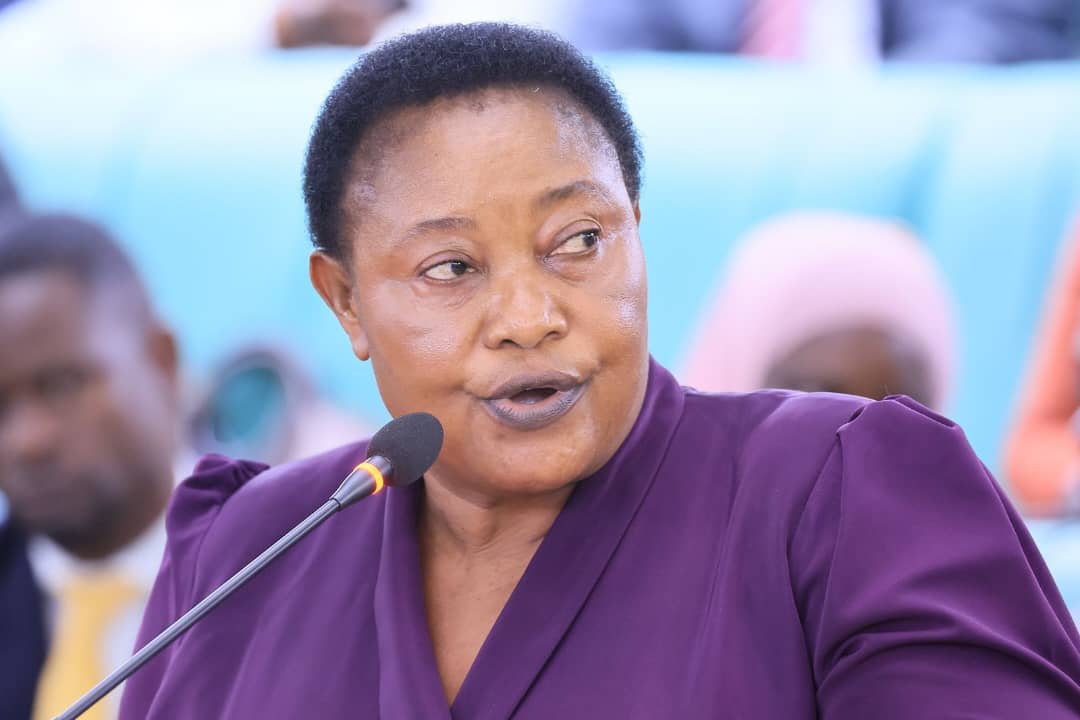
By Milly Babirye Babalanda
In 2001, President Yoweri Kaguta Museveni made a promise to the people of Busoga.
He pledged that the Mbulamuti–Kamuli–Bukungu road would be built.
Twenty-five years later, that promise has finally cleared its biggest hurdle.
Last Thursday, Parliament approved government’s request to borrow funds for the road’s construction, a vote that turns a quarter-century-old pledge into a financed, fundable project.
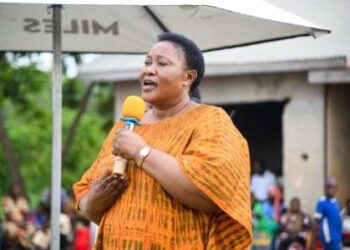
Writing on the milestone, the Minister for the Presidency and MP for Budiope West, Hon. Babirye Milly Babalanda, did not hide her relief.
“As a leader from Buyende and representative of the people of Budiope West, this is a significant milestone not only for Busoga, but also for Uganda’s wider economic transformation agenda,” she wrote.
She commended the Members of Parliament who backed the borrowing motion, and singled out the Parliamentary Committee on National Economy, chaired by Hon. Jane Pacuto, for fast-tracking the project so its benefits could arrive sooner.
What Parliament Actually Approved
The scale of the financing gives a sense of just how substantial this project is.
Parliament authorised government to borrow up to €207.77 million, roughly Shs842.71 billion, from Citibank and other financial institutions.
That money will fund the upgrading of the 127-kilometre Mbulamuti–Kamuli–Bukungu road itself.
It will also cover 10 kilometres of road works within Jinja City.
Beyond construction, the financing has been structured to also cater for land compensation and construction supervision, two areas that have historically been sources of delay and dispute on Ugandan road projects.
More Than Tarmac: An Economic Artery
Babalanda was insistent that the road should not be reduced to a strip of asphalt.
“It is an economic artery with the potential to transform the fortunes of entire communities,” she wrote.
The route itself tells part of that story.
It connects Jinja and Kamuli through Budondo Sub-county, passes through Mbulamuti on the banks of the River Nile, and terminates at Bukungu in Buyende District.
Its significance, in Babalanda’s telling, reaches beyond Busoga’s own borders.
Once completed, it will function as an alternative transport corridor linking northern and southern Uganda, connecting Busoga to the Lango and Teso sub-regions through Bukungu.
The Corridor Ugandans on Both Sides Will Feel
The practical effects of that new corridor, Babalanda argued, will ripple through everyday economic life.
Reduced travel time and lower transport costs will follow, she wrote, along with improved access to markets.
Farmers, traders, manufacturers, students, workers and ordinary travellers all stand to benefit, in her account.
She pointed specifically to Budondo and Butagaya sub-counties, describing them as key food baskets supplying Jinja City and, indirectly, Kampala.
A better road, she argued, will make it easier to move that food from farm to market.
For the people of Buyende, she wrote, the project opens a long-missing connection to bigger markets and opportunities in Jinja, Teso, Lango and beyond.
A Gateway to Kyabirwa and Itanda Falls
Babalanda also framed the road as a tourism investment, not just a trade route.
She described it as the principal access route to Kyabirwa and Itanda Falls on the River Nile, sites she called among the region’s most important natural attractions, particularly for visitors drawn to water sports.
A good road, she wrote, will let tourists reach those destinations more easily, safely and conveniently.
That accessibility, in turn, is expected to stimulate investment in accommodation, restaurants, tour operations, transport and the wider tourism value chain along the corridor.
Lessons From the 2013 Protests
Babalanda did not shy away from the project’s more difficult history.
She recalled that in 2013, some people were incited to demonstrate in demand of the road.
While acknowledging the frustration behind those protests, she argued that government has always had to balance many competing national priorities against limited resources.
She framed the project’s arrival, a full 25 years after the original promise, as proof that patience and constructive engagement can move government commitments forward.
“President Museveni has demonstrated over the years that he does not make promises simply to win applause,” she wrote.
How Museveni Talks About Roads Elsewhere
Babalanda’s characterisation lines up with how the President has framed infrastructure on several other occasions, in his own words.
Commissioning USMID-funded roads in Mbale City, President Museveni argued that Uganda’s road investment is only one part of a much larger transport strategy still to come.
“The big effort which we are going to make is the railway,” he said, explaining that roads should increasingly be reserved for passengers and light cargo while heavier freight shifts to rail.
Speaking months later at an infrastructure summit in Nairobi, he placed road-building within an even wider continental vision.
He argued for “moving priority infrastructure projects from conception to implementation” through coordinated regional planning, describing roads as one strand of an integrated system linking transport, energy and digital infrastructure to agriculture, tourism and small business.
At his seventh-term swearing-in earlier this year, Museveni went further still, describing infrastructure as the second of what he called the NRM’s seven “bricks” of national transformation, alongside peace, wealth creation, jobs, markets and regional integration.
Read together, those remarks suggest the Mbulamuti–Kamuli–Bukungu road fits a pattern the President has described consistently across different platforms: roads as connective tissue for a wider economic strategy, not as isolated construction projects.
A Convergence With Bigger Regional Ambitions
Babalanda noted that the road’s timing is not incidental.
Buyende District, through which the road passes, is also the site of the country’s first nuclear energy project, which she described as a critical pillar of Uganda’s development under NDP IV and Vision 2040.
She pointed to a related piece of infrastructure already delivered: government’s commissioning of the Bukungu–Kagwara–Kaberamaido ferries, which she said had already eased transport across Lake Kyoga.
Together with the new road, she argued, this further shortens the route between Kampala and the northern region through Busoga.
She tied that improved connectivity directly to government wealth creation programmes, arguing it will help people engaged in schemes such as PDM and Emyooga get their produce to better markets.
Guarding Every Shilling
Babalanda was careful to temper her optimism with a warning about accountability.
She noted that government is borrowing substantial resources for this project, meaning every shilling must deliver real value to the taxpayer.
She welcomed the Ministry of Works and Transport’s commitment to ensuring Project Affected Persons are compensated equitably, smoothly and in line with the law.
Fair and timely compensation, she argued, protects both affected households from disruption to their livelihoods and government’s own image.
She linked her confidence in the project’s integrity to the wider anti-corruption drive she said President Museveni and CDF Gen. Muhoozi Kainerugaba have intensified in recent months.
She specifically urged the district leadership and Resident District Commissioners of Kamuli and Buyende to monitor the project closely.
“Road projects must no longer become opportunities for a few individuals to enrich themselves at the expense of taxpayers,” she wrote.
The Numbers Behind the Investment Case
The economic argument for the road was not left to sentiment alone.
During last Thursday’s parliamentary debate, the Finance Minister made the government’s economic case, citing an Economic Internal Rate of Return of 16.7 percent for the project.
That figure, he noted, sits well above the 11 percent economic opportunity cost of capital typically used to judge whether a public investment is worthwhile.
In plain terms, the numbers suggest the road is expected to generate returns well beyond what the borrowed capital would cost government to service, turning the project from a political promise into what Babalanda called an economically viable investment.
A New Chapter, With Responsibility Attached
Babalanda closed her reflection by looking forward rather than back.
She predicted that Bukungu will increasingly become a gateway to opportunities beyond Busoga’s traditional geographic boundaries.
She urged residents to welcome the development with optimism, but also with responsibility, stressing that construction must meet required standards, stay within agreed timelines, and remain free of corruption.
For the people of Busoga, she wrote, the road represents far more than asphalt, bridges and drainage channels.
“It represents connectivity, markets, tourism, jobs and hope,” she wrote.
She closed with a direct word of thanks to the man who first made the promise a quarter-century ago.
“We can’t thank you enough, Mr. President!” she wrote.
The author is the Minister for the Presidency and MP for Budiope West County, Buyende District.