

















Inside the Anti-Corruption Court in Kampala, a case that has gripped national attention reached a decisive turning point as Agnes Nandutu was found guilty over the controversial diversion of iron sheets meant for vulnerable communities in Karamoja.
The ruling, delivered by Justice Jane Okuo Kajuga, marked a significant moment in Uganda’s ongoing fight against misuse of public resources.
The court concluded that Nandutu knowingly received and retained government property that had not been lawfully allocated to her.

The judge emphasized that the former minister had reason to believe the iron sheets had been irregularly diverted from a public programme intended to support vulnerable citizens.
Inside the Courtroom
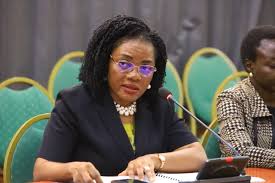
During the court session, proceedings unfolded in a tense but orderly atmosphere as the judgment was read out.
The court relied heavily on the earlier advisory opinions of three assessors—Rose Joanittah, Bob Nabende, and Sarah Namayanja—who had, on April 1, 2026, found that the prosecution had proved critical elements of the offence.
They had concluded that Nandutu handled the iron sheets with full knowledge of their questionable origin.
As the judgment was delivered, the courtroom fell silent, with legal teams and observers closely following every word.
Moments after the conviction, the court ordered the immediate cancellation of Nandutu’s bail.
She was subsequently remanded to Luzira Prison, where she is to remain until her sentencing scheduled for later in the week.
The decision marked a sharp turn in her legal battle, shifting the focus from defence to sentencing and potential punishment.
How the Case Was Built
Court records presented a detailed account of how the events unfolded between June and July 2022.
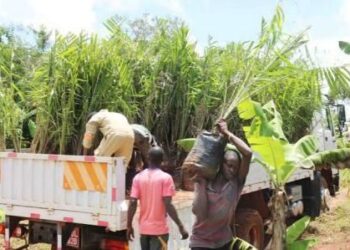
Prosecutors demonstrated that Nandutu received and retained 2,000 pre-painted iron sheets marked “Office of the Prime Minister.”
These materials were part of a government programme implemented under the Office of the Prime Minister.
The initiative, valued at approximately Shs39.94 billion in the 2021/2022 financial year, was designed to support disarmament and socio-economic empowerment in the Karamoja sub-region.
It involved the procurement and distribution of relief items, including over 95,000 iron sheets stored in Namanve for onward distribution.
Evidence revealed that in June 2022, 10,000 iron sheets were requisitioned to support a presidential launch event in Moroto District.
Although the request had been approved, only 1,000 sheets were eventually issued, leaving thousands unaccounted for in storage.
Nandutu, who attended the June 13 launch, was later informed that 2,000 iron sheets had been allocated to her, reportedly for landslide victims.
The court heard that she accepted the allocation without verifying its legitimacy.
On June 23, 2022, she reportedly provided transport funds and instructed her political assistant to collect the sheets from the Namanve stores.
The consignment was first delivered to a private residence in Wakiso District, where she allegedly confirmed the quantity.
It was later transferred to her residence in Seeta, Mukono District, on her instructions.

The Woman at the Center of the Storm
Agnes Nandutu has been a prominent political figure, particularly in Eastern Uganda.
She rose to national recognition through her role as a journalist before transitioning into politics.
Her media background, especially her work with UBC, helped her build a strong public profile and communication skills that later shaped her political career.
She was elected as the Woman Member of Parliament for Bududa District, a region frequently affected by landslides and natural disasters.
Her advocacy for vulnerable communities, especially those affected by environmental challenges, earned her visibility and support among constituents.
Her appointment as State Minister for Karamoja Affairs under the Office of the Prime Minister placed her at the center of government efforts to transform the historically marginalized Karamoja region.
The docket involved overseeing programs aimed at disarmament, relief distribution, and long-term socio-economic development.
Her rise within government was seen as part of a broader effort to bring experienced communicators and grassroots leaders into key administrative roles.
From Public Trust to Legal Trouble
The Karamoja iron sheets scandal emerged as one of the most high-profile corruption cases in recent years.
It raised serious questions about the management of relief items intended for some of Uganda’s most vulnerable populations.
The case attracted widespread public and political attention, with several high-ranking officials implicated in the broader investigation.
For Nandutu, the allegations marked a dramatic reversal of fortunes from a trusted public servant to a defendant in a corruption trial.
The court’s findings now place her among officials held accountable in a scandal that shook public confidence in government programs.
Awaiting Sentencing
Following her conviction, attention now turns to the sentencing phase, which will determine the legal consequences she faces.
Legal analysts note that the outcome could set an important precedent in Uganda’s anti-corruption efforts.
As she remains in custody at Luzira Prison, the country watches closely to see how the judiciary will conclude one of its most closely followed cases.
The judgment has also reignited debate about accountability, public trust, and the protection of resources meant for the most vulnerable citizens.