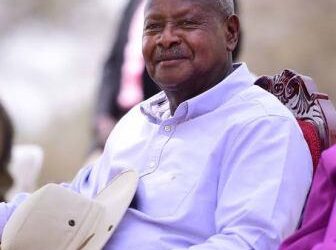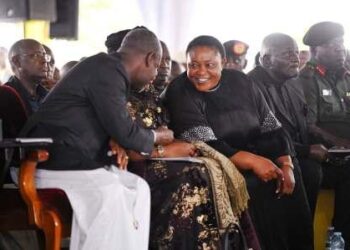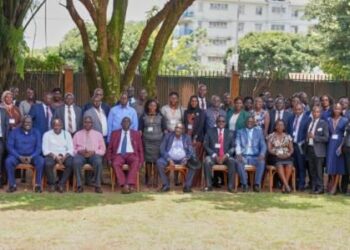










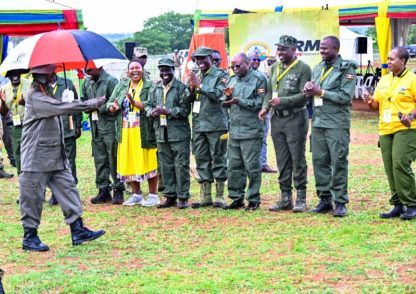
At the calm and expansive grounds of the National Leadership Institute, a significant moment in Uganda’s political calendar unfolded as Yoweri Kaguta Museveni officially opened a week-long retreat for newly elected legislators.
The gathering brought together Members of Parliament from the National Resistance Movement as well as independent legislators who lean toward the party, marking the start of an intensive ideological and policy orientation for the 12th Parliament.
The retreat, built around the theme of aligning leadership to protect national gains and drive Uganda toward higher middle-income status, is designed to sharpen focus, deepen understanding, and unify lawmakers around a shared national agenda.

Upon arrival, President Museveni was warmly received by senior leaders including Vice President Jessica Alupo, Deputy Speaker Thomas Tayebwa, and NRM Secretary General Richard Todwong, reflecting the importance the party attaches to the Kyankwanzi platform.
In his keynote address, Museveni congratulated the legislators on their electoral victories but quickly shifted their attention from celebration to responsibility, reminding them that their new roles demand a higher level of commitment and understanding.
“You are now not only followers of the NRM but leaders,” he told the gathering.
He explained that while followers may support certain ideas without fully grasping them, leaders must internalize the ideology, philosophy, and strategy that guide the movement.
He described the retreat as a “seminary,” a place where leaders are shaped, disciplined, and grounded in the core beliefs of the party.
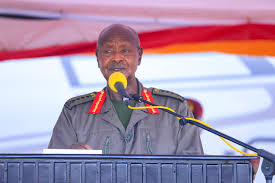
Museveni went on to break down what he considers the essential pillars of leadership, explaining that ideology involves correctly diagnosing societal problems in the same way a doctor diagnoses illness.
He noted that philosophy helps leaders understand human behavior and motivations, which influence how societies function.
He added that strategy is about applying the right solutions in a practical and effective manner to address challenges facing the country.
Through this framework, he urged Members of Parliament to think beyond political rhetoric and instead focus on delivering real solutions to citizens.
Turning to the issue of economic transformation, Museveni stressed that Uganda’s prosperity depends on productivity and self-reliance rather than dependency.
“Every adult must produce a good or service and earn from it. Prosperity does not come from begging or stealing,” he said.
He emphasized the importance of wealth creation through sectors such as commercial agriculture, manufacturing, services, and information and communication technology, which he described as the backbone of Uganda’s economic future.
He also warned against the dangers of identity-based politics, noting that tribalism and religious divisions can fragment markets and limit economic opportunities.
The President called on legislators to champion regional and continental integration, highlighting frameworks such as the East African Community and the African Continental Free Trade Area as critical to expanding markets and strengthening Africa’s global competitiveness.
He argued that unity across African countries is essential for prosperity and strategic security, while division weakens the continent’s position in the global arena.
Museveni revisited the four ideological pillars of the NRM—patriotism, Pan-Africanism, socio-economic transformation, and democracy—describing them as the foundation for achieving long-term development and stability.
He reminded participants that Africa’s history of colonialism left deep economic and structural challenges, and that the current generation of leaders carries the responsibility to overcome them.
Corruption emerged as one of the most urgent issues in his address, with Museveni issuing a firm warning against the misuse of public resources.
“If you are corrupt, you not only waste resources but set a bad example. I will not tolerate it,” he declared.
He specifically pointed to the risks facing government initiatives such as the Parish Development Model, warning that corruption could undermine efforts aimed at improving livelihoods at the grassroots level.
Drawing from his personal experience, he recounted how 22 cows given to him by his father in 1965 had multiplied into thousands through discipline and proper management, using the story to illustrate the value of hard work and long-term planning.
Vice President Jessica Alupo, who chaired the session, described the retreat as a crucial opportunity for Members of Parliament to receive direct guidance from the party chairman and align themselves with national priorities.
NRM Secretary General Richard Todwong also welcomed participants and praised the party’s electoral performance, noting that the retreat would provide detailed insights into the results and future strategy.
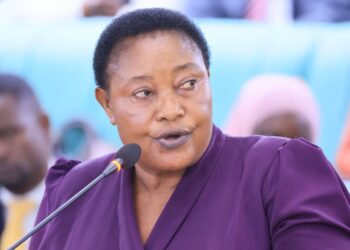
During the discussions, Justine Nameere raised concerns about corruption in the health sector, particularly the persistent problem of stolen medicines in government hospitals.
Her contribution highlighted the everyday governance challenges that directly affect citizens across the country.
In response, Museveni reassured the legislators and the public that such malpractice would be dealt with firmly.
“Corruption, including theft of drugs in government hospitals, shall be tackled very seriously,” he affirmed.
As the retreat continues, it serves as both a training ground and a strategic forum where lawmakers are expected to reflect, engage, and align their efforts with Uganda’s broader development goals.
The message from Kyankwanzi is clear: leadership must be anchored in ideology, guided by discipline, and committed to fighting corruption while delivering meaningful transformation for the people.