
















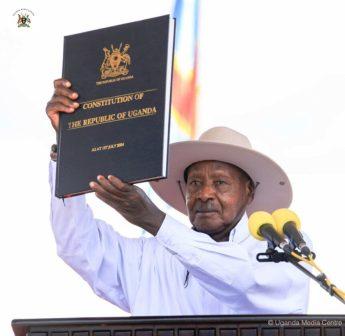
As we enter the 7th term, our beloved President, Gen. Yoweri Kaguta Museveni today, I write with deep gratitude, renewed hope, and unshakable confidence in the future of our country.
Presidency of President Museveni and the National Resistance Movement (NRM) Party, Ugandans have every reason to remain hopeful because the foundation for a prosperous nation has already been laid.
It pleases me and all good-willed Ugandans to know that the journey of Uganda over the last decades has not been accidental. It has, rather, been guided by President Museveni’s visionary leadership, ideological clarity, patriotism, and a consistent commitment to transforming the lives of ordinary citizens.
This is why I speak with confidence that with our tested and proven father of the nation still in the driving seat, the coming term presents a unique opportunity to multiply the gains we have registered. The President already laid down the grand ambition for this term — propelling Uganda into upper middle-income status.
From the work done so far, it is safe to say that this ambition is realistic and achievable, especially given the strong drivers and pillars that government has already laid down.
Oil revenue and discipline
To begin with; Uganda expects her first oil in this term but the better news is that Uganda’s oil and gas sector is not merely a source of revenue.
It is equally a strategic springboard for industrialization, infrastructure development, job creation, and economic expansion.
However, as His Excellency has repeatedly emphasized, oil alone cannot transform a nation unless accompanied by discipline, accountability, and strategic planning.
That is why the continued enforcement of the government’s Ten Strategic Pillars — which the president recently laid down at the new MPs’ induction retreat at Kyankwanzi — remains critical.
These pillars (covering peace and security, infrastructure, industrialization, agriculture, ICT, education, health, wealth creation, regional integration, and good governance) must continue to guide our national transformation agenda.
The renewed battle against corruption
One of the greatest expectations of Ugandans in the coming term is the intensified fight against corruption.
Corruption remains one of the biggest threats to service delivery and equitable development.
I am therefore encouraged by the President’s firm commitment to confronting this vice without fear or favour; as he reiterated on Monday last week during the final cabinet sitting.
The recent strengthening of monitoring systems, digital government platforms, and anti-corruption enforcement mechanisms demonstrates that government is serious about protecting public resources.
Ugandans are also witnessing a renewed consistency in enforcing public order and service delivery standards.
The ongoing trade order enforcement campaign is a clear indication that government is determined to restore sanity, fairness, and formalization within the business environment.
While reforms may sometimes cause temporary discomfort, history teaches us that discipline and organization are necessary ingredients for sustainable national progress.
As outgoing Minister for the Presidency, I take pride in the important role the Office of the President has played in monitoring government programs, coordinating service delivery, strengthening RDC structures, and ensuring that wananchi voices are heard at the center of decision-making.
The increased responsiveness of government institutions today is evidence that Uganda’s governance systems are steadily maturing.
Commendable milestones reached
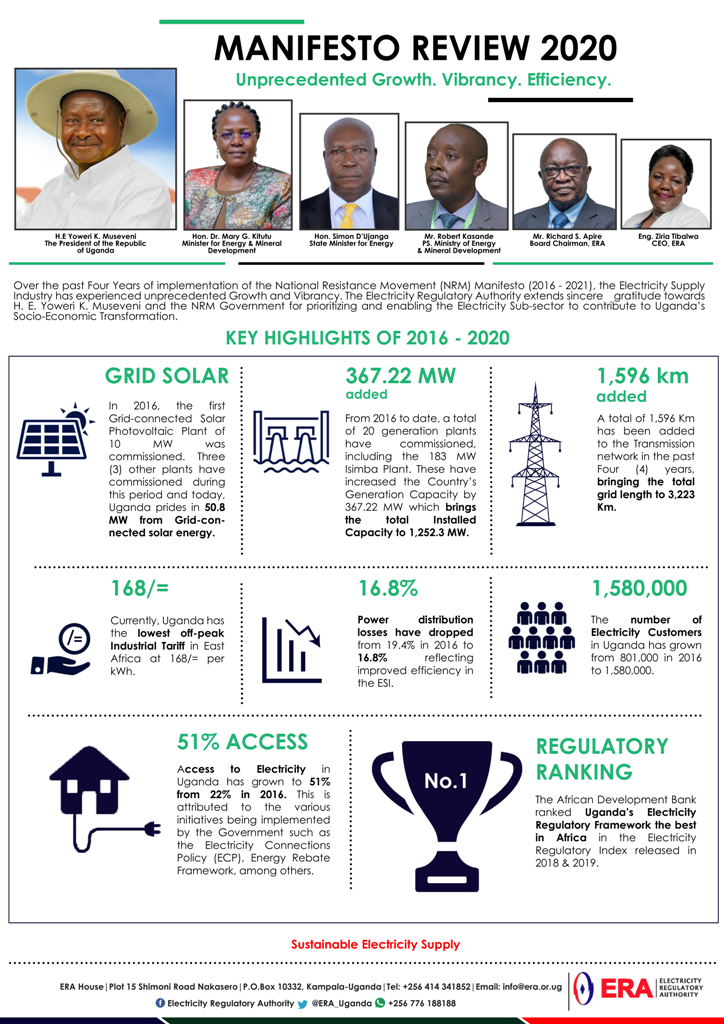
Indeed, the milestones registered under President Museveni’s leadership speak for themselves.
In the health sector, Uganda has expanded healthcare infrastructure across the country, including regional referral hospitals, Health Centre IVs, and specialized medical services.
Immunization coverage has improved significantly, maternal mortality has reduced over the years, and access to HIV treatment services has expanded tremendously.
Thousands of Ugandans who once sought treatment abroad can now access specialized care within our borders.
In education, Universal Primary Education and Universal Secondary Education have continued to open doors for millions of children from humble backgrounds.
Government investment in skilling centers, technical institutions, and universities has expanded opportunities for young people.
Today, Uganda boasts a literacy rate of 85%, thanks to the increase of the number of primary schools to 45,466, while secondary schools now stand at 7,600.
This has enabled over 20 million children to benefit from UPE while USE has helped 2.1 million learners to attain secondary education since its inception.
These interventions are critical because education not only changes citizens’ mindset but also creates for the country a stronger human capital base for the future economy.
The ICT sector has become one of Uganda’s fastest-growing sectors. Internet penetration, digital financial services, and innovation hubs have transformed the way Ugandans communicate, learn, and conduct business.
Young innovators are increasingly using technology to create jobs and solve community challenges, supported by improved connectivity and digital infrastructure.
Industrialization has equally accelerated under the NRM government.
Industrial parks across the country have attracted investors, increased exports, and created employment opportunities for thousands of Ugandans.
Uganda is steadily transitioning from a raw-material exporter to a value-adding economy, particularly in agro-processing, manufacturing, and mineral development.
Agriculture, the backbone of our economy, continues to receive strategic attention through programs such as the Parish Development Model, Emyooga, irrigation expansion, and commercialization initiatives.
More Ugandans are embracing modern farming methods, coffee exports have grown tremendously; now standing at 8.8 million 60-kg bags exported between April 2025 and March 2026, generating US$2.4 billion.
This represents a 28% volume increase from the previous year. Household incomes are steadily improving in many parts of the country, which has reduced Ugandans still in the subsistence sector to just 30% from the 69% at the start of the previous term.
These achievements have not come easily. They are products of sacrifice, resilience, and consistent leadership.
While challenges still exist, Uganda today is far more stable, connected, educated, and economically positioned than it was decades ago.
As a leader privileged to serve in President Museveni’s cabinet and as the representative of the hardworking people of Budhiope West and Buyende district, I remain optimistic that the next term will unlock even greater opportunities for our nation.
The anticipated oil revenues, combined with strengthened governance, strategic investments, and disciplined implementation of government programs, can usher Uganda into a new era of prosperity.
I therefore congratulate President Museveni upon reaching yet another swearing-in milestone and commend the people of Uganda for their continued trust in the NRM government.
I also salute all public servants, security personnel, farmers, teachers, health workers, entrepreneurs, and ordinary citizens whose daily efforts continue to build our country.
The future of Uganda remains bright
If we remain united, patriotic, hardworking, and committed to fighting corruption while strengthening service delivery, there is no doubt that the coming term will benefit all Ugandans and elevate our nation to even greater heights.
May God bless Uganda and guide our leaders in the service of our beloved nation.
The author is the Minister for the Presidency emeritus and Member of Parliament for Budiope West Constituency.