














From the ABC campaigns of the 1980s to a near-perfect injectable available in over a hundred health facilities today, Uganda’s four-decade battle against HIV is entering its most promising chapter yet — but the hardest mile remains
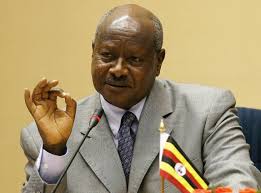
When Yoweri Museveni’s National Resistance Movement swept into Kampala in January 1986 and brought an end to fifteen years of dictatorship, the new government inherited not just a broken economy and a traumatised population — it inherited an epidemic.
Uganda was already being decimated by AIDS when Museveni came to power. HIV was not an abstract threat on the horizon but an immediate, visible catastrophe consuming communities, families, and the army that had just fought its way into the capital.

Scientists now believe this region of central Africa, around the Lake Victoria basin, was one of the places where HIV first began infecting humans at scale. By 1992, one in six Ugandan adults — 16 percent — was infected.
The young president faced a choice that many African leaders of his era refused to make: to speak openly about the disease or to maintain the silence that was allowing it to spread.
He chose to speak.
The ABC Years: A President Who Talked About Sex
What followed became one of the most studied public health interventions in African history.
Under President Museveni’s leadership, leaders at every level of Ugandan society responded to the AIDS crisis by sending a unified and forceful message, urging people to prevent the spread of HIV through a framework as simple as its acronym: Abstain, Be faithful, and, if necessary, use a Condom.
Uganda’s success in the late 1980s and early 1990s was built significantly on the promotion of what became known as “zero grazing” — a deeply Ugandan phrase for faithfulness and partner reduction — developed by the government and local NGOs including faith-based, women’s, people-living-with-AIDS, and community-based groups.
The results were remarkable and, at the time, without precedent on the continent.
Uganda is widely hailed as Africa’s AIDS success story. From a 16 percent infection rate in 1992, the country drove prevalence down to between 4 and 6 percent by 2003 — a turnaround attributable both to top-down presidential leadership and a homegrown grassroots campaign by ordinary Ugandans who chose to care for the sick and educate the healthy.
Institutions Built for the Long Fight
President Museveni understood that sustained epidemic control could not run on political speeches alone — it required permanent institutions.
The Uganda AIDS Commission was established under the Office of the President by an Act of Parliament in 1992, tasked with coordinating the multi-sectoral national response to HIV and AIDS — creating an institutional home that has survived five subsequent presidential terms and continues to lead Uganda’s response today.
In 2017, recognising that Uganda’s progress had stalled and new infections were refusing to fall further, President Museveni launched the Presidential Fast-Track Initiative on Ending AIDS as a Public Health Threat by 2030, branded under the Swahili rallying call “Kisanja hakuna mchezo” — no playing games.
The five-point plan contained in that initiative aimed to revitalise HIV prevention especially among adolescent girls and young women, and to consolidate progress on eliminating mother-to-child transmission — the two areas where Uganda’s epidemic was proving most stubborn.
Forty Years of Progress: The Numbers Tell the Story
The arc of Uganda’s HIV response is measured in lives saved.
The Uganda AIDS Commission’s most recent status report shows a 64 percent reduction in annual AIDS deaths — from 56,000 in 2010 to 20,000 in 2024 — alongside a fall in new HIV infections from 96,000 to 37,000 over the same period.
Among adults aged 15 and above, HIV prevalence declined from 7.2 percent in 2010 to 5.3 percent in 2023. Among women, it dropped from 8.7 to 6.5 percent. Among men, from 5.8 to 3.3 percent. HIV-related deaths among adults fell from 52,000 in 2010 to 20,000 in 2023.
Early mother-to-child transmission of HIV decreased by more than 80 percent, from 7.5 percent in 2014 to 1.3 percent in 2024, one of the most significant achievements in Uganda’s HIV prevention history.
Uganda is now close to the UNAIDS 95-95-95 cascade — the globally agreed benchmark for epidemic control: 94 percent of people living with HIV are aware of their status, 90 percent are on antiretroviral therapy, and 96 percent of those on treatment are virally suppressed. More than 1.4 million Ugandans are currently receiving antiretroviral therapy.
Yet despite this extraordinary progress, the epidemic has not ended.
According to the Ministry of Health’s 2025 estimates, Uganda’s HIV prevalence stands at 4.9 percent, with 37,000 new infections recorded in 2024. That translates to approximately 711 new infections every week — roughly five people becoming infected every hour. Young women and girls remain the most affected: of the new infections recorded in 2024, 14,000 occurred among females aged 15 to 24, including 11,000 adolescent girls.
The Drug That Changes the Equation
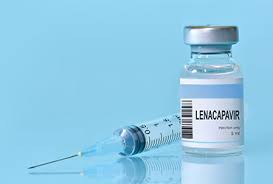
It is into this unfinished story that Lenacapavir arrives.
Speaking during a media café attended by journalists, Dr. Flavia Kiweewa, a researcher affiliated with Makerere University and Johns Hopkins University, described Lenacapavir as one of the most significant scientific advancements in HIV prevention in recent years.
She explained that the medicine was initially approved in 2022 for HIV treatment before researchers investigated its use as a preventive intervention — a pivot driven by the well-documented failures of daily oral pre-exposure prophylaxis, or PrEP.
“Daily oral PrEP has been effective, but many people struggle to take it consistently. Lenacapavir provides protection for six months after a single injection, making HIV prevention much easier for people at risk,” Dr. Kiweewa said.
The science underpinning that claim is extraordinary.
The PURPOSE 1 trial found 100 percent efficacy in preventing HIV in 5,300 cisgender women in Uganda and South Africa. The companion PURPOSE 2 trial showed a 96 percent reduction in HIV incidence among cisgender men, transgender, and non-binary individuals across multiple countries. Both trials demonstrated Lenacapavir’s safety and effectiveness in reducing HIV transmission.
The landmark PURPOSE 1 study evaluated the injectable specifically among adolescent girls and young women aged 16 to 25 years in sub-Saharan Africa — precisely the population that Uganda’s epidemic data shows is being most severely failed by existing prevention methods.
Participants were recruited from high-risk communities, including fishing villages, mining areas, factory settings and communities surrounding bars.
During the trial, none of the participants who received Lenacapavir acquired HIV, while 55 new infections were recorded among participants using oral HIV prevention methods.
“The findings demonstrated the medicine’s exceptional ability to prevent HIV infection and represented a major milestone in HIV research,” Dr. Kiweewa said.
How the Drug Works
HIV prevention advocate Moses Super Charger described Lenacapavir as one of the most innovative HIV medicines ever developed because it targets the virus in a completely different way from any existing antiretroviral drug.
He explained that Lenacapavir is the first HIV capsid inhibitor — a drug that disrupts the protective shell surrounding the virus, interrupting multiple stages of the virus’s life cycle before infection can become established and before the virus integrates into human DNA.
“This drug attacks HIV in a completely different way from previous medicines, making it a groundbreaking scientific achievement,” Moses said.
The drug is administered beneath the skin, where it forms a small depot that slowly releases medication over six months — meaning that a person who receives their injection in January is fully protected until July, without a single additional dose required.
Dr. Kiweewa noted that the medicine has shown a good safety profile, with most users experiencing only mild side effects such as pain, swelling, or skin changes at the injection site. Studies involving pregnant women have also found no significant safety concerns.
Uganda’s First Consignment and the Race to Scale Up
Uganda received its first consignment of 19,200 doses of Lenacapavir on February 24, 2026, supported by the Global Fund, with the shipment distributed to high-burden and high-incidence districts as part of efforts to curb new HIV infections across the country.
The Ministry of Health officially launched the Lenacapavir programme at Lira Regional Referral Hospital in April 2026. The medicine has since been distributed to more than 104 health facilities across the country, with approximately 19,000 doses already distributed in the initial phase of the rollout.
Dr. Jane Ruth Aceng, speaking at the launch, contextualised the development within Uganda’s longer trajectory: Uganda has made significant progress in reducing new HIV infections from 96,000 in 2010 to about 37,000 by the end of 2025, and has expanded access to treatment to over 1.4 million people. However, she emphasised that HIV remains a significant public health challenge, with new infections continuing alongside persistent social, economic, and structural barriers.
U.S. Ambassador William Popp described the drug’s arrival as a product of a specific partnership: “This medicine is an excellent example of how American leadership drives innovation to save lives. Collaboration between an American company and researchers right here in Uganda led to a medical breakthrough to reduce new HIV infections in the communities that need it most.”
By December 2026, Lenacapavir is expected to be available at 300 health facilities across Uganda, up from the current 103 public facilities — a nearly threefold expansion within a single calendar year.
Who It Is Being Prioritised For
The government is not making Lenacapavir available universally — at least not yet.
During the initial phase of the rollout, health authorities have prioritised pregnant and breastfeeding women, adolescent girls and young women, sex workers, men who have sex with men, people living in fishing communities, long-distance truck drivers, and HIV-discordant couples — the populations that Uganda’s epidemiological data consistently shows are at the highest risk of new infection.
Micah Kulubya, Director of Programmes at the Uganda Key Populations Consortium, explained why these groups remain so difficult to reach with conventional prevention methods.
He noted that sex workers, men who have sex with men, fisherfolk and long-distance truck drivers often encounter stigma, discrimination, and legal barriers that limit their access to health services.
“Many key populations are highly mobile and may not always have access to condoms or daily oral PrEP,” Kulubya said. “A long-acting injectable that provides protection for six months offers a practical solution and gives people greater privacy.”
The statistics explain the urgency of reaching these groups: HIV prevalence among sex workers is estimated at as high as 35 percent, 14 percent among men who have sex with men, and between 23 and 35 percent in fishing communities — rates many times higher than the national average.
Kulubya emphasised that Lenacapavir should complement rather than replace existing HIV prevention methods, expanding the range of options available to individuals at substantial risk. He called for continued investment in community education, stigma reduction, and client-centred health services to ensure vulnerable populations fully benefit from the new intervention.
The Supply Problem
The scientific achievement of Lenacapavir is not matched by the ease of its production.
Manufacturing the medicine is a complex process that takes approximately 18 months per production batch — a constraint that immediately limits how quickly any country can scale up its rollout regardless of funding.
Dr. Pamela Achii, a specialist in health products management at Uganda’s Ministry of Health, was candid about this challenge: “The drug is provided free of charge in public and private not-for-profit health facilities. However, supplies remain constrained because many countries are competing for the same stock.”
To address the manufacturing bottleneck, Gilead Sciences — the American pharmaceutical company that developed the drug — has signed agreements with six generic manufacturers to increase production and lower costs over time.
The United States government and the Global Fund are co-funding an advanced market commitment to purchase Lenacapavir for up to two million individuals by 2028 in the countries with the largest HIV epidemics — with Gilead agreeing to provide the drug at cost, and to licence its intellectual property to generic manufacturers who can eventually produce it at a scale that drives prices down to sustainable levels.
UNAIDS Executive Director Winnie Byanyima welcomed the expanded rollout but was clear that more was needed: “To end AIDS as a public health threat, we must urgently go further — by enabling large-scale generic manufacturing, especially on the African continent, lowering prices through transparent, equitable pricing frameworks that enable widespread uptake in low- and middle-income countries.”
The Unfinished Business
Uganda has been here before — at the edge of a breakthrough, with the tools for transformation in hand, only for implementation gaps to blunt the impact.
The discussion at the media café highlighted implementation science research as essential — determining the most effective ways of delivering HIV prevention services to mobile and underserved communities who move between fishing landings, truck stops, and urban centres in ways that fixed clinic schedules cannot accommodate.
Dr. Kiweewa noted that HIV prevention continues to face challenges including stigma, transportation costs, limited awareness, and poor adherence to daily medication — and that long-acting methods like Lenacapavir are specifically designed to address those last-mile barriers.
The Uganda AIDS Commission has stated its confidence that the country can end AIDS as a public health threat by 2030 — the target year set under President Museveni’s fast-track initiative — by strengthening partnerships, investing in prevention, and integrating HIV into all development programmes.
It is an ambitious goal.
Uganda has proved before, in the 1990s, that an epidemic can be reversed through political will, community mobilisation, and sustained investment.
It will need all three again — and this time, a twice-yearly injection with near-perfect effectiveness may finally give the country the scientific tool to match the ambition.