














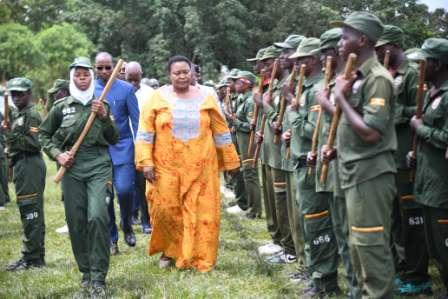
At Musana Vocational Secondary School, 865 students finished a patriotism course. The Minister in Charge of the Presidency told them the real test starts when they leave.
It was Sunday in Iganga District.

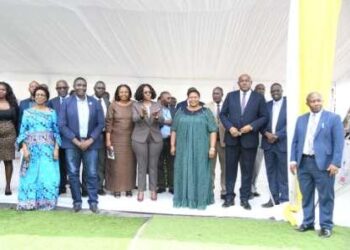
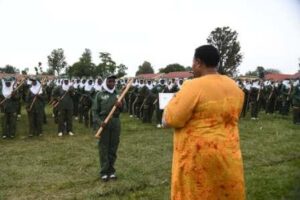
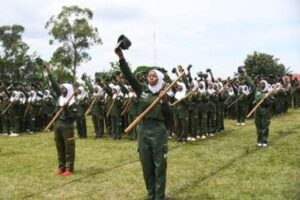
Hundreds of students stood in formation at Musana Vocational Secondary School.
They had just finished a course in patriotism and ideological mindset change.
There were 865 of them, drawn from Musana Vocational Secondary School and Ibuni Baz Girls Secondary School.
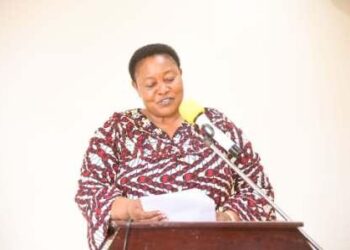
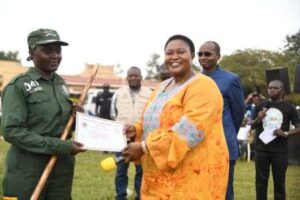
Presiding over the pass-out was the Minister in Charge of the Presidency, Hon. Babirye Milly Babalanda.
She congratulated the graduands on completing the training.
She also commended the administrations of both schools for embracing the programme.
Her message went beyond certificates and ceremony.
She said Uganda’s transformation depends on a generation of disciplined, skilled and responsible citizens.
A Programme Now Woven into School Life
The training is run by the National Secretariat for Patriotism Corps.
Hon. Babalanda applauded the Secretariat and its National Coordinator, Ms. Hellen Seku, for their continued efforts to instil national values, especially among young people.
The programme is no longer a side activity.
The patriotism course is officially recognised under Uganda’s education curriculum and is examinable.
According to Seku, it seeks to instil hard work, discipline, ethical conduct, mutual respect, financial literacy, health awareness and knowledge of Uganda’s political history and economy.
The scale has grown quickly.
In January 2025, Seku said the Secretariat had trained more than 146,791 Ugandans, far above its annual target of 75,000.
Similar pass-outs have been held in schools across the country.
One in Mbale District, for example, covered 1,250 students from three schools.
The Minister described patriotism, national unity and ideological orientation as important pillars of Uganda’s development agenda under President Yoweri Kaguta Museveni.
“Patriotism Is More Than a Song”
Hon. Babalanda told the students that patriotism is not only ceremonial.
Singing the national anthem, saluting the flag and joining national celebrations are not enough, she said.
“Genuine patriotism must be seen in how you conduct yourselves, in the choices you make, in the work you do and in your commitment to the well-being of this country,” she told the graduands.
She reminded them that patriotism is also a legal duty.
She cited Objective XXIX of the National Objectives and Directive Principles of State Policy.
That provision sets out the duties of citizens, including being patriotic and loyal to Uganda and promoting its well-being.
Five Responsibilities for a New Generation
The Minister challenged the students to take on five fundamental responsibilities.
The first is to engage in productive and gainful work.
The second is to contribute to community welfare.
The third is to promote national unity.
The fourth is to respect democracy and the rule of law.
The fifth is to understand and defend the Constitution.
She urged them to acquire practical skills and to identify the opportunities around them.
“Do not grow up expecting that government or other people will provide everything for you,” she said.
One Country, Many Tribes
On national unity, her tone turned to caution.
She warned against tribalism, sectarianism, religious intolerance and discrimination.
Ugandans differ in tribe, language, religion and culture, she noted.
“Despite those differences, we share one country and a common national destiny,” she said.
She encouraged the students to respect the rights of others and obey the law.
She urged them to settle disagreements through peaceful and lawful means.
She also warned them against being manipulated into violence or activities that threaten peace and stability.
Seku has made a similar point elsewhere in the Busoga sub-region.
During a visit to Busoga schools, she told students there is only one Uganda, the Pearl of Africa, and that citizens must be patriotic and work hard to build it.
From the Classroom to the Family Farm
The Minister’s most practical challenge was for the students to become ambassadors of patriotism at home.
She asked them to encourage their parents and guardians to take part in government wealth creation programmes, particularly the Parish Development Model (PDM).
She explained that PDM is meant to move households from subsistence production into the money economy.
The programme is relatively recent.
President Museveni launched it in February 2022 as a multi-sectoral strategy for transforming subsistence households.
The Ministry of Local Government says about 39% of Ugandan households, roughly 16 million people, still live in the subsistence economy.
The model makes the parish the centre of planning and delivery, and promotes financial inclusion through the Parish Revolving Fund and PDM SACCOs.
One of its seven pillars is community mobilisation and mindset change.
That pillar is where the students’ role fits in.
The Minister urged them to support their parents’ enterprises in agriculture, livestock, poultry, fisheries and trade.
She encouraged them to use school holidays to learn from those businesses.
She asked them to keep records, pick up practical business skills and adopt modern production methods.
Holidays Are for Learning, Not Loitering
Hon. Babalanda was blunt about how not to spend the holidays.
She cautioned the young people against loitering in villages and trading centres.
She warned them against bad company and irresponsible behaviour.
“Your holidays should build you, not waste you,” she told them.
She encouraged them to take part in national initiatives such as National Cleaning Days.
She described a clean environment as an expression of responsibility and of love for one’s community and country.
Speaking Up for the Vulnerable
The Minister also asked the graduands to be responsible voices against abuse.
She listed child neglect, defilement, domestic violence and child labour.
“Do not remain silent when you come across such cases,” she said.
She told them to report abuse to parents, teachers, local leaders, the police and other relevant authorities.
Stay in School
On education, the Minister urged the students to stay in school and take their studies seriously.
Uganda needs educated, skilled, innovative and disciplined young people to drive its transformation, she said.
She tied this to the country’s ambition of reaching high-income status and the aspirations of Vision 2040.
That ambition rests on a strong human resource base.
She named skilled professionals, entrepreneurs, scientists, teachers, engineers and technicians.
The official plan itself points to the gap.
Vision 2040 aims to move Uganda from a predominantly low-income country to a competitive upper-middle-income one within 30 years, with a per capita income of USD 9,500.
Among the challenges it lists is an inadequate supply of properly skilled and educated human resource.
She warned the students not to let peer pressure, early marriage, teenage pregnancy or drug abuse derail their education.
A Special Word to the Girls of Ibuni Baz
She spoke directly to the girls from Ibuni Baz Girls Secondary School.
“Believe in yourselves, pursue your ambitions and never let your gender limit your potential,” she told them.
Uganda needs educated, confident and empowered women who can contribute meaningfully to national development, she said.
Seku has echoed this message to schoolgirls.
She has argued that integrity must begin with each individual if Uganda is to prosper, calling corruption one of the biggest obstacles to national development.
Beyond the School Gate
The Minister also turned to parents, guardians and school administrations.
She challenged parents to keep supporting their children and reinforcing the values learned in training.
“Patriotism education cannot be left to schools and government alone,” she said.
“It must begin at home, through honesty, discipline, respect, hard work and responsibility.”
She urged schools and teachers to sustain these values in the learning environment.
She named discipline, teamwork, respect for authority, cleanliness and responsible conduct.
The Real Measure of Success
Hon. Babalanda said the training should not be judged by the number of certificates handed out.
“The success of this training will be measured by the kind of citizens you eventually become,” she said.
She described the Uganda she hopes these students will help build.
It is a country whose citizens love it and respect the Constitution.
They reject corruption.
They protect public resources.
They work hard and take an active part in national development.
She challenged the graduands to carry the message beyond their school gates.
She asked them to be role models in their homes, villages and communities.
She closed by thanking the National Secretariat for Patriotism Corps, the school administrations, teachers and parents for supporting the initiative.
She congratulated the 865 students once more on completing the training.