












Prosperity for All: President Museveni’s Vision for Uganda’s Future
By The Public Lens
President Yoweri Kaguta Museveni has emphasized the importance of prosperity for all Ugandans, highlighting it as a key principle of the National Resistance Movement (NRM).

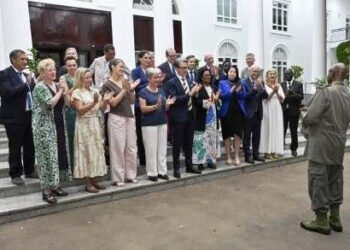
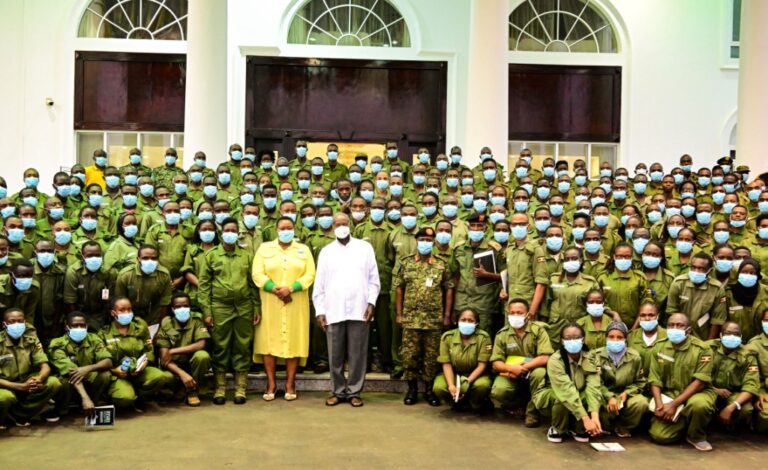
Speaking to 210 post-medical interns at State House, Entebbe, the President explained that prosperity can only be achieved by producing goods or services and selling them to get money, continuously.
“In medicine, you must diagnose the sickness of a patient correctly, once the diagnosis is correct, then you can be able to provide a prescription/treatment and if the diagnosis is wrong, then the patient will not be cured and he may die. The same with politics, you must diagnose what a group of people need, what they lack, what they are suffering from and what medicine you can prescribe for them,” he said.
The President noted that in their analysis, they found out that Ugandans lacked prosperity and strategic security. “That was our diagnosis as a student group. Then it became FRONASA, then UPM for a short period then it became NRM. We had to find the prescription for the people.”
He explained that prosperity can only be achieved by producing a good or a service and selling it to get money, continuously. “Every adult must produce a good or a service and sell it but do so with a ‘kibaaro’ (calculation). If that is the solution, then the next question is who will buy what you produce?”
The President emphasized that the prosperity of a tribe is more from Uganda as a country than from the tribe itself. “That is why we came up with the first principle; Patriotism (loving your country) because you need Uganda for your prosperity.”
He added that when people start producing more, they will realize that the internal market is not enough, thus the need for an external market of Africa to help them buy the surplus products they produce.
“If Kenya, Tanzania, Rwanda, and Burundi buy our surplus and support our prosperity, what do we call that? We found the appropriate name to be Pan-Africanism,” the president said.
The President noted that all this could not happen if Ugandans do not become modern people.
“Society must change. Society should undergo socio-economic transformation. You cannot get prosperity unless you have patriotism which gets you the market of Uganda, Pan-Africanism which gets you the market of Africa but even if those are there but you don’t undergo socio-economic transformation, you will not manage,” The president noted.
He explained that socio-economic transformation can be achieved through education and prosperity for all.
“Here we shall get a new society of wealth creators in the money economy. And then the fourth principle is democracy which is clear. In the socio-economic transformation, we tell you about the four sectors; commercial agriculture, manufacturing and artisanship, services and ICT,” the president said.
The President’s remarks come at a time when government is facing challenges in funding medical interns, with a proposal to have sponsors who supported medical students during their studies continue to sponsor them during their internship.
President Museveni emphasized that the government cannot afford to fund all medical interns, citing competing priorities such as roads, security, and other development projects.
The President also called on medical professionals to support his efforts to increase the budget and create more posts at health centers to absorb as many doctors as possible.
He pledged to financially support qualified doctors to start their private health facilities, given the fact that not all can be absorbed in government facilities.
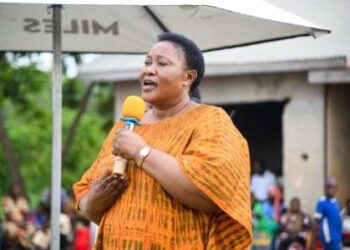
The President thanked Hellen Seku, the Head of the Patriotism Secretariat, for her dynamism and efforts in promoting patriotism among the youth.
He also commended the Minister for Presidency, Babirye Milly Babalanda, for her support and the Director of NALI, Brig. Gen. Charles Kisembo, for his leadership.
The post-medical interns expressed their gratitude to the President for his transformative leadership and dedication to improving Uganda’s health sector.
They pledged to act as agents of socio-economic transformation and utilize the knowledge acquired from NALI to contribute to the development of the country.