
















Government Takeover of Petroleum Imports Yields Positive Results as Fuel Prices Drop
By The Public Lens
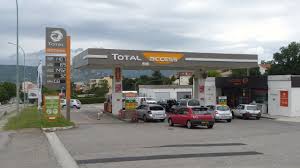
Uganda’s fuel prices have begun to decline following the government’s takeover of petroleum imports, signaling a significant shift in the country’s petroleum supply chain.

The reduction in fuel prices is partly attributed to cost savings achieved by oil marketing companies (OMCs), who are now saving between UGX 100 and UGX 150 per litre.
Issa Kietoo, marketing manager of Stabex Uganda, explained that the removal of Kenyan middlemen and the stronger Ugandan shilling have contributed to the cost savings.
The price drop follows a significant policy change in December 2023, when the Uganda National Oil Company (UNOC) took over the importation of petroleum products.
President Yoweri Kaguta Museveni signed the Petroleum Supply (Amendment) Act, 2023, granting UNOC full control over fuel imports.
This change was a response to Kenya’s shift from the Open Tender System (OTS) to a Government-to-Government (G2G) arrangement, which was seen as cumbersome and costly.
In March 2024, the Energy and Petroleum Regulatory Authority of Kenya granted UNOC a license to directly import petroleum products into Uganda.
Energy Minister Ruth Nankabirwa said the direct importation strategy eliminates unnecessary costs in the supply chain.
She added that part of the savings made by UNOC would be passed on to OMCs, who are expected to further reduce prices for consumers at the pump.
Despite the recent price cuts, the government hopes to see petrol and diesel prices fall below UGX 5,000.
Nankabirwa urged OMCs to reflect the savings in pump prices, cautioning them against inflating costs unnecessarily.
Experts at the Economic Research and Policy Centre (EPRC) at Makerere University have raised concerns about the pricing power of major fuel companies.
They recommend a similar approach to Tanzania’s government-regulated fuel prices to ensure affordability for consumers.
UNOC has explained that final retail prices may vary across OMCs due to differences in logistical, operational, and network costs.
However, Nankabirwa emphasized that the government’s new importation strategy should help lower fuel prices for Ugandans.
The direct importation process is expected to promote competition among OMCs, ultimately benefiting consumers.