















Museveni’s Vision for Uganda’s Prosperity by Empowering Citizens through Socio-Economic Transformation
By The Public Lens
President Yoweri Kaguta Museveni has reaffirmed his commitment to Uganda’s socio-economic transformation, emphasizing the need for citizens to harness the country’s rich national resources for a better life.

President Museveni has been working towards Uganda’s socio-economic transformation since his coming to power in 1986.
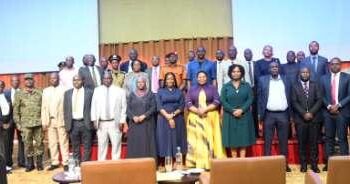
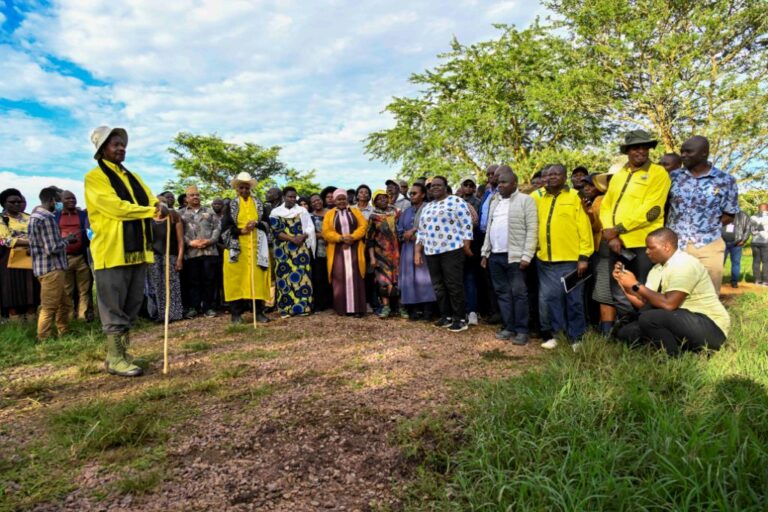
While meeting the NRM Parliamentary Caucus led by the Government Chief Whip, Hon. Denis Hamson Obua at his Kisozi farm in Gomba District on Sunday, November 2024, the president emphasized that Uganda is rich in national resources, but the population needs to learn how to utilize them effectively.
“A country like Uganda is very rich, it has got a lot of national resources, but the problem is that the population did not know how to use the national resources to live a good way; the modern way,” he said.
To achieve this transformation, he stressed the importance of focusing on two key areas: free education for all and prosperity/wealth creation for all.
He said this can be achieved through involvement in the money economy, specifically in four sectors: commercial agriculture, industries/manufacturing, services, and ICT.
President Museveni explained that Ugandans need to shift from traditional ways of living to modern ways of making money.
He highlighted the success of his wealth creation gospel in the cattle corridor, where people have adopted dairy farming.
However, he noted that many areas are still focused on crop agriculture, requiring intensive agriculture practices to lift people out of poverty.
The president also addressed misconceptions about government programs, particularly the rationalization of the Uganda Coffee Development Authority.
He urged leaders to sensitize the masses that the Coffee bill aims to develop the coffee sector.
The President warned that those spreading false information about the bill are “liars and criminals playing with fire” and will face a counterattack.
Key Areas of Focus for Uganda’s Socio-Economic Transformation:
– Free Education for All: Ensuring that all Ugandans have access to quality education
– Prosperity/Wealth Creation for All: Encouraging Ugandans to engage in money-making activities
– Commercial Agriculture: Intensive agriculture practices to increase productivity
– Industries/Manufacturing: Developing Uganda’s industrial sector
– Services: Enhancing Uganda’s service sector
– ICT: Leveraging technology to drive economic growth
By focusing on these areas, Museveni believes that Uganda can achieve socio-economic transformation and become a superpower on the African continent.
He emphasized that without socio-economic transformation, the government cannot pay good salaries to public servants, as there will be no money to do so.
The President’s commitment to socio-economic transformation is reflected in various government programs, such as the Entandikwa scheme, the Prosperity for All initiative, Emyooga, and the Parish Development Model (PDM).
These programs aim to empower people at the grassroots level, increase household incomes, and improve living conditions.
As President Museveni celebrates his 80th birthday, his legacy is marked by a lifetime dedication to the social and economic transformation of Uganda.
His leadership is characterized by a unique blend of patriotism, pragmatism, and a genuine concern for the welfare of all Ugandans.
Sarah Nalwanga, coordinator of the Presidential poverty alleviation program in Gomba and Sembabule Districts, reported that over 1,800 households have benefited from the program, with 769 engaging in coffee growing, 556 in dairy farming, and 336 in goat rearing.
Various beneficiaries, including Mulika Noah Peterson, Ms. Rosette Kadoozi, and Lule John, expressed gratitude to Museveni for transforming their lives through his poverty alleviation project.
The meeting was preceded by a field tour of successful wealth creators’ farms, led by Vice President Jessica Alupo and attended by NRM top officials, ministers, and a delegation led by EALA Speaker Joseph Ntakirutimana .