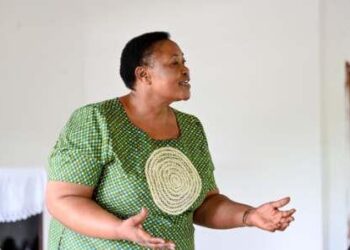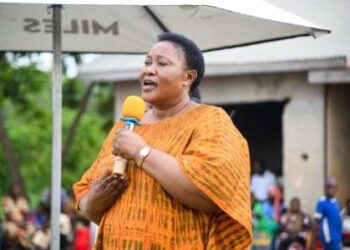















Dr. Diana Musoke, a family law expert at the Islamic University In Uganda (IUIU), has expressed concerns that the Marriage Bill, 2024, could have devastating consequences for the institution of marriage if enacted into law.
The Bill’s proposals, according to Dr. Musoke, seek to undermine the traditional understanding of marriage in Uganda, leaving many to wonder what the true purpose of marriage is.
One of the key issues Dr. Musoke raises is the Bill’s subtle approach to grounds for divorce, providing only for instances where the marriage is irretrievable.

“The law has completely done away with the grounds for divorce and instead provides for no-fault divorce,” Dr. Musoke pointed out. “Are you not watering down the institution of marriage to say it should be dissolved as long as there is consent from both parties at free will?”
Dr. Musoke also questioned what would happen in situations where one partner refuses to consent to a divorce, suggesting that this could lead to an escalation of domestic violence.
With 25 years of experience teaching family law, Dr. Musoke notes that the current generation lacks the resilience to sustain marriages, and therefore, the new law should not make it easier for couples to divorce.
“People who are divorcing are those who entered marriage in 2021,” Dr. Musoke observed. “The generation we are dealing with is not that resilient, that is why the divorce rate is so high. We should not make it easier for them.”
Another concern Dr. Musoke raised is the Bill’s provision allowing Christian polygamy, which she believes abolishes the traditional Christian understanding of marriage.
“Is this not a violation of the right to religion especially to those religions that preach one woman one man?” Dr. Musoke asked. “This is a way of trying to do away with cohabitation such that a man married in church can convert his monogamous marriage to marry as many as he desires but still remain a church faithful.”
Dr. Musoke also cautioned against provisions that may clash with existing laws on marriage, such as conducting marriages online, which she argues contravenes the requirement of consummation to render a marriage legal.
Additionally, Dr. Musoke expressed concerns about the provision allowing Ugandans living in diaspora to conduct marriages at Ugandan embassies, noting that this falls short of certain requirements, such as notice of objection.
“How will the registrar of marriage at foreign missions be able to obtain notices of objection to marriage from the couple’s families and friends in Uganda?” Dr. Musoke wondered.
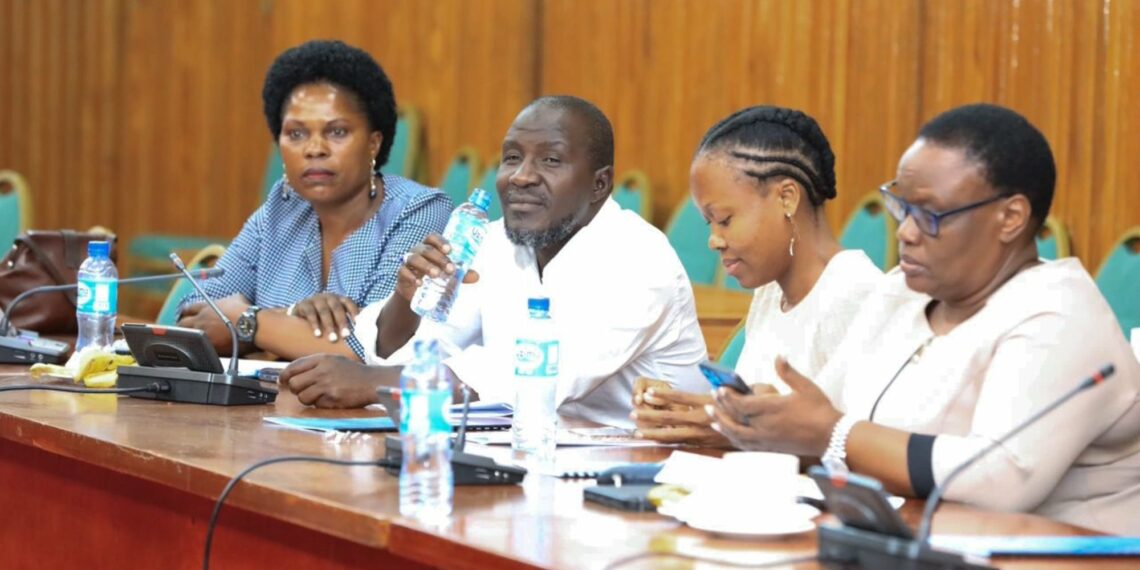
Members of Parliament also raised concerns about the Bill, with some arguing that prescribing grounds for divorce could limit the discretion of courts.
“The whole concern is that can all the grounds for divorce be exhausted?” asked Hon. Asuman Basalirwa (JEEMA, Bugiri Municipality). “What happens if a reason for divorce arises but is not listed among the grounds? Will we not be tying people in marriages?”
Basalirwa also noted that stakeholders are concerned about the inclusion of property distribution in the Bill, suggesting that this could create the impression that marriage is motivated by material gain.
“They are saying each time you introduce property in the marriage bill you create an impression that the motivation of marriage is property, that it may be entered targeting those with property,” Basalirwa said.
Nakaseke Central County MP, Hon. Allan Mayanja, observed that the provision for polyandry, where a woman is married to more than one man, could also weaken marriages, given the likely resistance to its implementation.