
















Uganda’s Ambition to Lead in MICE Tourism Threatened by Luxury Hotel Deficit and Room Shortage
Uganda’s vision of becoming a premier destination for Meetings, Incentives, Conferences, and Exhibitions (MICE) in East Africa is being undermined by a critical shortage of high-quality hotel rooms and a scarcity of five-star facilities.
With Speke Resort Munyonyo positioned as the country’s flagship MICE venue, Uganda has hosted high-profile gatherings such as the 19th Non-Aligned Movement (NAM) Summit and the G77+China Summit.

These successes demonstrated the nation’s capacity to convene global leaders. However, industry experts warn that Uganda’s limited hotel infrastructure could prevent the country from capitalizing on future opportunities.
Uganda boasts around 3,000 hotels across the country, offering approximately 35,000 rooms. Of these, just 1,500 are located in Kampala.
Even more concerning is that only 30% of these hotels in the capital meet the international standards necessary for accommodating elite delegates.
This shortfall has enabled regional competitors like Kenya, Rwanda, and Tanzania to capture events that might otherwise have been hosted in Uganda.
“Uganda is losing out because we lack enough quality hotels,” said Herbert Byaruhanga, a tourism consultant and director at Birdnest Resort in Entebbe. “Rwanda’s Kigali Convention Centre and Tanzania’s facilities in Arusha and Dodoma are attracting conferences that should be ours.”
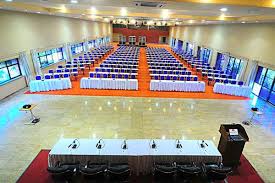
Currently, Uganda has only two five-star hotels: Kampala Serena Hotel and Speke Resort Munyonyo. The latter, with its state-of-the-art conference halls and scenic lakeside location, has emerged as the face of Uganda’s MICE ambitions.
Despite this, hosting future international events of similar magnitude will require more than one standout venue.
The hospitality industry must scale up to provide adequate accommodation and facilities that adhere to strict international standards for comfort, service, and security.
The economic implications are significant. Conference tourism is a major contributor to the economy, generating income for hotels, restaurants, transportation services, and small enterprises, while also creating jobs and boosting foreign exchange earnings.
Yet, Uganda continues to miss out on these benefits due to a lack of capacity outside top-tier venues like Speke Resort Munyonyo.
Neighboring countries have leveraged their more robust hotel infrastructure to draw in major events, further intensifying regional competition.
In response to these challenges, the Ministry of Tourism, Wildlife, and Antiquities has trained over 2,000 hospitality workers in a bid to improve service quality across the industry.
The government and private sector have also launched initiatives to attract greater investment in luxury hospitality infrastructure.
However, hoteliers and investors cite persistent hurdles, such as high commercial lending rates of 20–25% and the expensive importation of construction materials.
“We need incentives like tax waivers on imported materials and lower interest rates to encourage investors,” said Susan Muhwezi, Chairperson of the Uganda Hotel Owners Association. “Without these, competing with our neighbors is a challenge.”
Private players such as Mestil Hotel and Residences and Golden Tulip Canaan have made efforts to upgrade their standards, but progress has been slow and uneven across the sector.
Experts suggest Uganda needs a minimum of ten more five-star hotels, particularly in Kampala and Entebbe, to meet rising MICE demands and support the hosting of international events that reinforce the country’s reputation on the global stage.
The successful hosting of events like the NAM and G77+China summits showcased Uganda’s scenic beauty, cultural depth, and hospitality. These milestones also positioned the country as a potential conference powerhouse in Africa.
To sustain this momentum, Uganda must urgently address the gaps in its hotel infrastructure.
With Speke Resort Munyonyo already playing a central role in Uganda’s MICE strategy, expanding the pool of luxury hotels and reforming policies to support construction and financing will be essential.
Uganda’s hospitality sector now faces a pivotal moment—either scale up to meet the demands of the global conference market or risk ceding ground to better-prepared regional rivals.
The path forward requires swift and collaborative action between the government and private investors to turn Uganda’s MICE potential into a sustainable economic reality.