






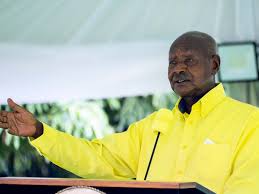
President Yoweri Museveni has revealed that 333 individuals have so far been arrested in connection with electoral malpractice in the recently concluded NRM parliamentary primaries, as part of a broader crackdown aimed at cleaning up the ruling party’s internal electoral process.
In a statement issued on Saturday, July 26, President Museveni confirmed that 48 of those arrested have already been charged in court, including 13 NRM district registrars.
“Up to now, a total of 333 persons have been arrested and 48 of these have been charged in court, 13 of whom are NRM district registrars,” Museveni stated. “They are to face prosecution in connection with, mainly, altering the results.”

He explained that operations were ongoing to apprehend more suspects, particularly those involved in voter bribery, and he encouraged citizens to report any related incidents.
The President described the arrests as a necessary step to restore trust in the party’s internal democracy following the irregularities that marred the July 17 parliamentary flag bearer elections.
He credited the firm response to fraud with improving the conduct of subsequent elections.
He pointed to the July 24 NRM primaries for LC5 chairpersons, mayors, and local council leaders as being more orderly and free of malpractice.
“This is not bad at all if you bear in mind that this was, again, mid-week and on a working day… The more peaceful and fraud-free nature of the exercise is on account of the decisive anti-crime actions we took,” Museveni noted.
He added that over 7.95 million NRM members participated in Thursday’s voting, with reports still coming in from several districts, some of which had candidates elected unopposed.
Museveni also used the statement to address criticism from opposition legislator Hon. Muhammad Kivumbi, who accused him of encouraging corruption through the distribution of cash, commonly referred to as “brown envelopes.”
He rejected the accusation, clarifying that the money he gives publicly is part of an official presidential gesture known as Kurongoora, a government-sanctioned token of appreciation for cultural contributors, the elderly, and other community beneficiaries.
“That brown envelope is a glorious one. It is the official envelope of the Republic of Uganda, given by the President to deserving people,” Museveni stated.
He cited a recent instance where he gave UGX 5 million to a group of Bwola dancers in Patongo, emphasizing that it was a gesture of cultural recognition, not political bribery.
“Hon. Kivumbi is not the President of Uganda and has no budget for Kurongoora. He can offer a modest figure to Kivuuwa dancers, like offertory in church,” Museveni added.
The President reiterated his opposition to vote-buying and stressed that it contradicts the core principles of the NRM.
He said any use of money beyond legitimate campaign logistics runs counter to his vision for politics in Uganda.
“The use of money for politics, beyond the legitimate needs of logistics, is in spite of my vision and that of the NRM—and not because of us,” Museveni emphasized.
He called for collective action to eliminate the practice from the political landscape and reaffirmed his commitment to transparent and credible electoral processes within the party and the country at large.