














In an effort to address the growing legal challenges faced by refugees in Uganda, the United Nations High Commissioner for Refugees (UNHCR) is seeking financial assistance from Austria to strengthen legal aid services across the country.
With more than 5,156 refugees currently imprisoned in various detention facilities, UNHCR is raising alarm over the absence of legal representation for many, a gap that undermines fair trial standards and delays the resolution of cases.
Matthew Crentsil, UNHCR’s Representative to Uganda, explained that refugee-related legal cases can drag on for as long as two years, largely because of the limited availability of legal support specifically tailored to this vulnerable population.

Crentsil emphasized that most refugees do not have the legal knowledge or financial means to effectively represent themselves or advocate for their rights.
“Many are traumatized, disoriented, and physically and emotionally vulnerable,” he said, noting how this deeply impacts their ability to engage meaningfully with the justice system.
Historically, legal aid for refugees in Uganda has been provided by non-governmental organizations, with support from UNHCR partners and the Refugee Law Project (RLP) of Makerere University.
These organizations assist with legal advice, case representation, navigation of asylum procedures, and access to basic rights.
However, due to a significant drop in refugee-focused funding, UNHCR’s ability to continue providing these critical services has been severely strained.
As of now, the agency has secured only 25 percent of the total funding required for its comprehensive refugee response program in Uganda.
This financial crisis coincides with a continued increase in Uganda’s refugee population, which is projected to reach two million by 2026.
Crentsil expressed hope that external support, particularly from Austria, could help fill the funding gap and ensure refugees are provided with fair and timely legal assistance.
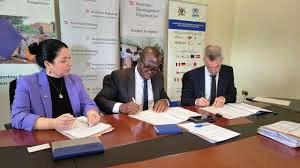
Currently, Bernd Brunner, Managing Director of the Austrian Development Agency (ADA), is visiting Uganda and has joined UNHCR officials on a tour of urban refugee communities, including Kansanga.
The visit is intended to assess the needs on the ground and evaluate ongoing efforts to support displaced populations.
In Kansanga, local authorities have reported a surge in crime within refugee communities, with incidents such as theft, drug abuse, domestic violence, and interpersonal conflicts becoming increasingly common.
These challenges are often linked to trauma, unemployment, and a lack of meaningful engagement among refugees.
Frank Walusimbi, UNHCR’s Associate Communication Officer, noted that addressing these social challenges goes beyond legal aid.
He explained that UNHCR is also focusing on economic empowerment as a preventive strategy to reduce crime and promote self-sufficiency among refugees.
“UNHCR and its partners initiated empowerment programs focused on equipping refugees with vocational skills and supporting small-scale business ventures,” Walusimbi said.
He highlighted that these initiatives are designed to offer sustainable alternatives to crime by helping refugees become self-reliant and constructively engaged in society.
As UNHCR intensifies its appeal for international funding, particularly from Austria, the agency remains committed to upholding the rights of refugees and fostering long-term solutions that combine legal protection with socio-economic empowerment.