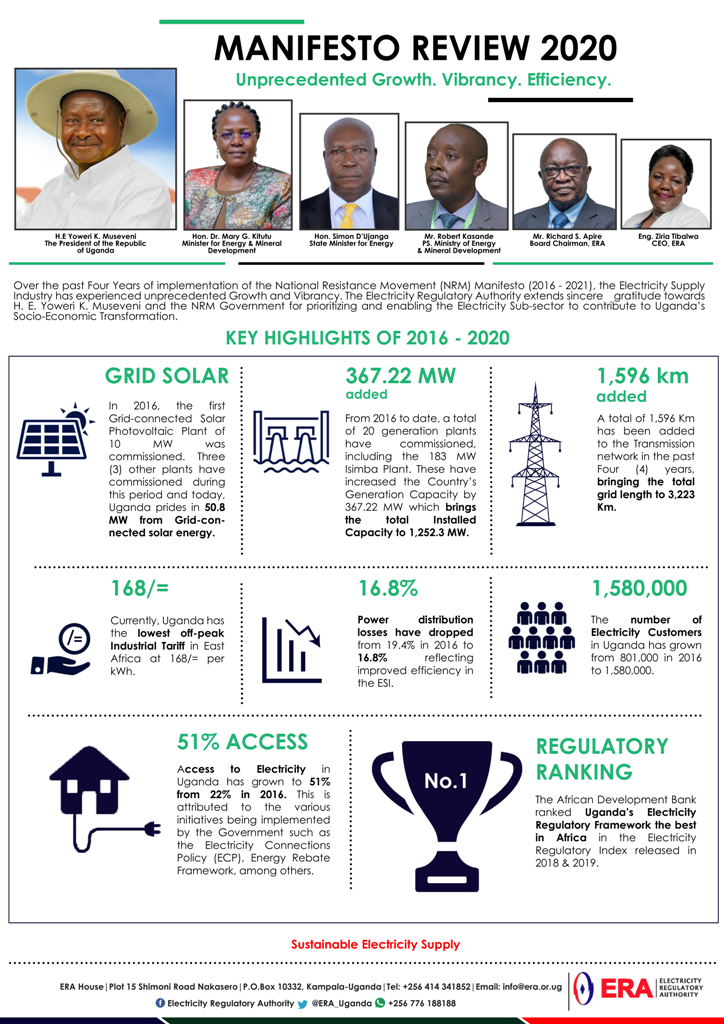











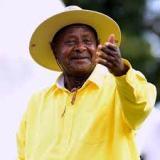
The ruling National Resistance Movement (NRM) continues to back President Yoweri Museveni as its sole presidential flag bearer, a decision that has persisted for over four decades.
The justification, according to senior party officials, is not rooted in autocracy but in strategic party unity and Museveni’s unmatched leadership.
Minister of ICT and National Guidance, Dr. Chris Baryomunsi, has stepped forward to defend the NRM’s unwavering support for Museveni’s leadership.
He stated, “Every election cycle presents a clear opportunity for any Ugandan who meets the constitutional requirements to stand for president.” “But none of the aspirants within or outside the NRM has proved to be a match for President Museveni,” he added.
Since its formation, the NRM has never had a contested internal presidential race.
President Museveni, who assumed office in 1986, has continued to enjoy unchallenged backing within the party across successive election cycles.
This has raised questions about internal democracy and the openness of the NRM to new leadership.
However, Baryomunsi emphasized that the party’s decisions are grounded in unity rather than suppression.
“We always ask what is good for the NRM and what keeps it very strong. That is our principle, not coercion,” he explained.
According to Baryomunsi, internal consensus around Museveni’s leadership has helped the party avoid the internal divisions that have plagued some opposition parties.
He dismissed the notion that the absence of a challenger reflects authoritarian control within the NRM.
Instead, he described it as the outcome of careful consideration of what sustains party cohesion and national progress.
Baryomunsi pointed to Museveni’s extensive leadership experience and political legacy as reasons why other potential candidates within the NRM have not stepped forward.
He argued that the President’s proven record makes it difficult for any aspiring flag bearer to gain similar trust and credibility.
“Museveni still possesses the vision, energy, and leadership qualities required to carry the NRM through yet another election cycle,” Baryomunsi said.
While critics continue to question the internal dynamics of the NRM, the party’s leadership maintains that President Museveni’s continued endorsement is a reflection of strategic confidence rather than autocratic exclusion.
As the country approaches the next general election cycle, the question remains whether any contender will emerge strong enough to shift the longstanding internal consensus—or whether the NRM will once again choose the tried and tested path of continuity under Museveni.