
















President Yoweri Kaguta Museveni has thrown his weight behind a bold proposal by city businessman Dr. Hamis Kiggundu to cover Nakivubo channel and redevelop the surrounding area.
In a letter dated August 2, 2025, addressed to Prime Minister Robinah Nabbanja, the President described the initiative as both “imaginative and simple.”
The endorsement followed a proposal presented to him by Kiggundu on July 25, 2025, which outlined a strategy to end Kampala’s recurring garbage and flooding challenges linked to the open drainage system.

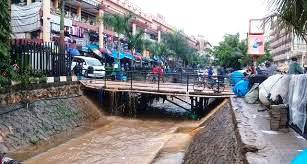
President Museveni observed that Nakivubo channel, running through the city’s business hub, had effectively become a dumping site for rubbish.
He noted that the state of the drainage had turned into a serious public health concern while also worsening flooding across the capital.
“Ham’s idea is imaginative and simple,” the President wrote. “By covering the channel, he will solve the problem of rubbish being thrown into it and create new urban infrastructure that will enhance the image of our capital city.”
Museveni praised what he called a “godly proposal,” stressing that it would offer a permanent fix to a problem Kampala has battled for decades.

The plan is anchored on a public-private partnership model in which Kiggundu will fund the engineering works to cover the channel.
In return, he will be permitted to put up commercial infrastructure above the covered drainage to recover his investment.
The President instructed all relevant government ministries and agencies to support the project and remove any unnecessary obstacles.
The letter was copied to Vice President Jessica Alupo, Minister for Kampala Hajjati Minsa Kabanda, Minister of Finance Matia Kasaija, Minister of Education and Sports Janet Kataaha Museveni, the Attorney General Kiryowa Kiwanuka, Minister for the Presidency Milly Babalanda, and Dr. Kiggundu himself.
Kiggundu, who is behind projects such as the redevelopment of Nakivubo Stadium and the Ham Shopping Mall, explained that his new proposal seeks to blend environmental solutions with commercial viability.
In his July 25 letter, he pointed out that leaving the channel uncovered has for years encouraged reckless dumping of waste.
He said this has resulted in frequent blockages, flooding, and sanitation crises in downtown Kampala.
“By covering it, we not only eliminate the garbage menace but also create additional usable space for Kampala’s congested business community,” Kiggundu stated.
Museveni’s support for the idea is expected to spark a broader discussion on urban planning, infrastructure financing, and private sector participation in public projects.
For years, Nakivubo channel has stood as a reminder of Kampala’s struggles with garbage disposal and drainage management.
Although the proposal is considered innovative, questions are likely to emerge from planners, environmentalists, and civil society groups on issues such as land use, compensation, and the risk of privatizing public infrastructure.
Museveni, however, made it clear that government institutions must work quickly to align technical, financial, and legal frameworks that guarantee public interest while maintaining investor confidence.
He emphasized that the project should move forward without unnecessary bureaucratic delays.
If implemented, the initiative could reshape how Uganda handles urban challenges by setting an example for future government–private sector collaborations.
Ham Kiggundu has now secured top-level political approval for what could become one of the most transformative development projects in Kampala’s history.