




President Yoweri Kaguta Museveni has called on leaders of the National Resistance Movement (NRM) to focus their energies on fighting poverty, uprooting corruption, and ensuring that every Ugandan household is integrated into the money economy.
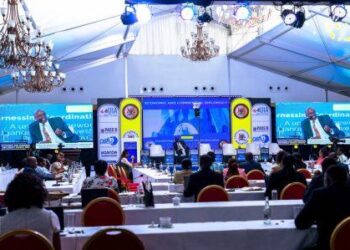
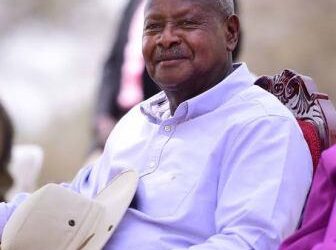
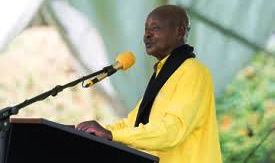
The President made the appeal today as he officially opened the 1st Meeting of the 4th National Conference of the NRM at Kololo Ceremonial Grounds.
He was accompanied by the First Lady and Minister of Education and Sports, Maama Janet Kataha Museveni, as thousands of delegates from across Uganda gathered to elect special interest group representatives and chart the party’s future direction.

The conference is expected to elect leaders representing youth, elderly, workers, and persons with disabilities, among other categories.
In his address, President Museveni expressed excitement over the strong presence of young people among the new delegates, describing it as a positive indicator of generational renewal within the Movement.
He urged the delegates to uphold the NRM’s core principles of patriotism, Pan-Africanism, democracy, and socio-economic transformation while deepening the party’s vision within every community and household across Uganda.
The President retraced Uganda’s economic journey under NRM leadership, recalling the difficult years when citizens struggled to access essential commodities such as sugar, salt, and soap.
He explained that those days marked a period of “minimum recovery” when survival was the main priority.
He noted that the country later expanded its economic base through cash crops like coffee and tea, before diversifying into new sectors that laid the foundation for today’s industrial growth.
Highlighting key milestones, President Museveni pointed to Uganda’s ability to manufacture vehicles through Kiira Motors, the establishment of vaccine production facilities, and the rise of ICT innovations as proof of the country’s progress.
“We are no longer in recovery; Uganda is in the take-off stage. We are now manufacturing our own cars, producing vaccines, and building an ICT-driven economy,” President Museveni said.
Turning to the household level, the President stressed that true transformation requires every family to actively participate in wealth creation.
He recalled that in 2013, nearly 68 percent of the population lived outside the money economy, while recent figures show improvement with 67 percent now actively participating.
He emphasized that the government’s long-term target is to ensure that no family is left behind.
To illustrate his point, President Museveni shared the example of Joseph Ijaara, a farmer in Serere who uses a small piece of land to generate high returns through commercial agriculture.
He explained that Uganda’s money economy rests on four foundational pillars: agriculture, industry, services, and ICT.
He urged delegates to take this message back to their communities and ensure that households embrace at least one of these sectors.
“In the past, towns were only filled with shops, but today we are building towns of factories where people work and earn. That is the NRM difference,” he said.
The President challenged leaders to leave the conference with a mission to address the issues directly affecting the ordinary Ugandan.
“What I want you to take from here is simple: fight poverty in your families, fight corruption — don’t allow people to eat Parish Development Model (PDM) money. Insist that the police fight crime, and where they fail, report them,” he stressed.
He also underlined the importance of delivering social services as a foundation for national transformation.
On health, the President acknowledged the progress achieved in malaria control and immunization but criticized the theft of drugs, which he said undermines health services.
He reaffirmed the government’s determination to expand access to safe water across all villages.
On infrastructure, the President disclosed that each district currently receives UGX 1.3 billion annually for the maintenance of murram roads, warning that these funds must be put to proper use.
On education, he made one of his strongest commitments of the day, pledging to deliver free education in all government schools.
He stressed that since most parents prefer government schools, tuition fees must be abolished so that every child can access quality learning.
“Once the NRM is voted again, we shall insist on free education in all government schools. Support me so we can fully implement it,” he said.
Other party leaders also addressed the gathering, echoing the President’s call for discipline and service.
NRM Secretary General, Rt. Hon. Richard Todwong, reminded delegates that the NRM is larger than any individual and that leadership should always be seen as service, not self-enrichment.
He urged delegates to uphold discipline, sacrifice, and responsibility in their roles, noting that elections are temporary but the Movement and the people endure.
Dr. Tanga Odoi, the Chairman of the NRM Electoral Commission, assured members that the elections of special interest groups and the upcoming internal elections would be conducted freely and fairly.
The conference marked a pivotal moment for the NRM, as leaders and delegates reflected on the party’s achievements while setting a new course aimed at consolidating Uganda’s economic gains and tackling persistent challenges of poverty, corruption, and inequality.
Looking ahead, political observers suggest that President Museveni’s strong emphasis on fighting poverty and corruption, expanding the money economy, and promising free education may serve as the NRM’s rallying message in the coming years.
With elections on the horizon, these priorities are likely to form the backbone of the party’s strategy to maintain grassroots support, deepen its legacy of stability, and position itself as the vehicle for Uganda’s long-term socio-economic transformation.