














The Buganda Kingdom has appealed to the government to partner more closely with its leadership in addressing corruption and poverty, which continue to threaten Uganda’s socio-economic development.
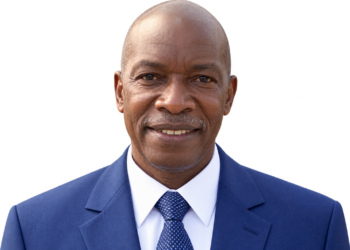
The call was made on Saturday, August 30, 2025, by the Deputy Katikkiro and Minister for Science, Technology, and Employment, Oweek. Prof. Twaha Kaawaase Kigongo, during a meeting of young leaders from Buganda.
Prof. Kaawaase stressed that corruption and poverty cannot be eradicated in isolation, and urged the government to utilize Buganda’s grassroots structures for effective results.

“We cannot fight poverty and corruption effectively unless we work together. Buganda has strong leadership at the grassroots level, and it is time the government tapped into this resource to create sustainable solutions,” Kaawaase said.
He also underscored the importance of empowering the youth, noting that they are the demographic most affected by poverty and the consequences of corruption.
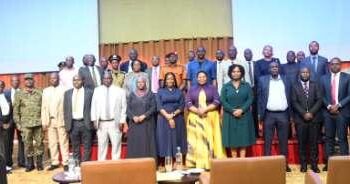
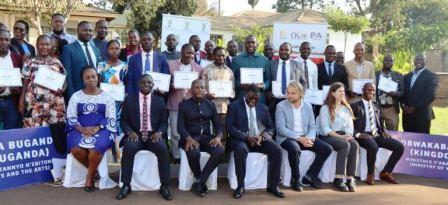
The appeal was made during a three-day youth leadership seminar organized by the Buganda Ministry of Youth, Sports, and Culture.
The seminar, hosted at the Buganda Heritage & Tourism Board headquarters in Mengo, brought together youth leaders from across the kingdom, including district representatives from the Masaza.
Buganda’s Minister of Youth, Robert Serwanga Ssalongo, encouraged national unity behind the kingdom’s efforts to empower the youth.
“We need to work together, as one people, to empower our youth and create solutions that will eliminate corruption and poverty. We must all stand with Buganda to lead the country towards a better future,” he stated.
Derrick Kavuma, the head of Buganda’s youth wing, challenged young people to apply the knowledge gained from such seminars to transform their communities.
He emphasized that action, not words, would be the true measure of progress.
“As young people, we cannot just talk about change. We must show through our actions that we are committed to making a difference. We are the future of this country, and if we do not step up now, we risk being left behind,” Kavuma declared.
The Buganda Kingdom believes that closer collaboration with the central government will create long-term solutions to the country’s challenges.
Observers view the kingdom’s initiative as a promising model for tackling corruption and improving livelihoods, particularly for young people.
However, the success of these efforts will depend on the willingness of both the government and Buganda to translate their commitments into concrete action.
While the kingdom continues to push for joint strategies to uplift communities, much work remains to ensure these initiatives deliver lasting national impact.
Analysis: What the Partnership Could Mean for Uganda
Analysts suggest that if government embraces Buganda’s call, it could unlock a new model of grassroots governance where cultural institutions and state structures jointly address pressing social issues.
By leveraging Buganda’s extensive network of local leaders, programs against corruption and poverty could penetrate rural communities more effectively than through government channels alone.
This collaboration could also strengthen national unity by demonstrating that traditional and state institutions can work side by side to deliver development.
At the same time, it would place greater responsibility on the kingdom to ensure accountability within its structures, making it a key partner in national reforms.
If fully implemented, the partnership could serve as a blueprint for other cultural institutions across Uganda to work with the government in driving socio-economic transformation.