

















President Yoweri Kaguta Museveni has urged the Uganda Development Bank (UDB) to lower its lending rates in order to accelerate access to affordable credit for Ugandans, especially those engaged in the productive sectors of the economy.
The President was speaking at the inaugural Uganda Development Finance Summit 2025, which opened on September 1 at Speke Resort Munyonyo. The two-day summit was convened under the theme “Transforming Africa through National Development Finance Architecture.”
President Museveni praised UDB for being a reliable source of financing for national development but faulted the institution for keeping interest rates higher than what he considered reasonable.

He noted that commercial banks in Uganda continue to charge as high as 22 percent interest despite the country maintaining inflation below 5 percent, which he described as exploitation.
“UDB is a guarantee for financing, unlike commercial banks that are greedy and continue to demand 22 percent interest. But even UDB’s 15 percent is still too high,” the President said.
He challenged the bank to reduce its rates to around 10 percent to make credit more accessible. He also suggested that the institution should reconsider its staffing costs.
“UDB must not be run by a crowd of parasites. You cannot keep high salaries and then transfer the burden to borrowers. Reduce the interest rates so that Ugandans can benefit,” Museveni remarked.
The President further urged African leaders to shift focus from raw material exports to value addition in order to transform their economies. He cited Uganda’s historic dependence on coffee, copper, cotton, tobacco, tourism, and tea, saying such practices had kept the country from achieving high-value growth.
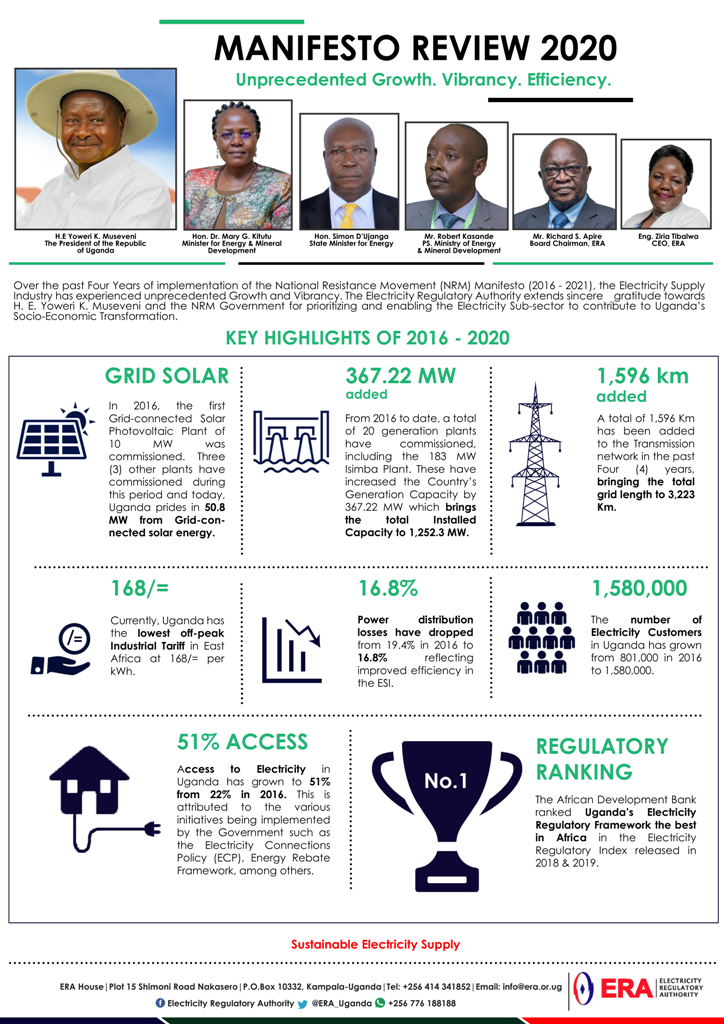
In his address, he also praised Chinese investments for enabling Uganda to access affordable electricity from large infrastructure projects such as the Karuma Dam, which produces power at 2.8 cents per kilowatt-hour, and the Isimba Dam, which delivers at 4.8 cents. He challenged Western financiers to adopt a similar model by providing patient and affordable capital for development projects.
The summit brought together a wide range of policymakers, financiers, and industry experts. Among those in attendance were First Lady and Minister of Education Janet Museveni, Finance Minister Matia Kasaija, UDB Managing Director Dr. Patricia Ojangole, UDB Board Chairperson Geoffrey Kihuguru, Arshad Rab, the CEO of the European Organisation for Sustainable Development, Admassu Tadesse, President of the TDB Group, and Dr. Arkebe Oqubay, a former senior minister in Ethiopia.
Finance Minister Matia Kasaija welcomed the discussions, describing the summit as timely in light of Uganda’s growth trajectory.
“Our target is to grow GDP from 50 billion US dollars in 2023 to 500 billion by 2040. This will be achieved through agro-industrialization, tourism, minerals, oil and gas, and ICT innovation,” Kasaija said.
Dr. Patricia Ojangole, the UDB Managing Director, said development banks had proven successful in many parts of the world, including Asia and Brazil, and stressed that Uganda’s choice to maintain UDB even during structural adjustment reforms was now paying off.
“National development banks have been central to transformation in Asia and Latin America. Uganda was wise to keep UDB, and this is why today we are able to finance critical areas of development,” Dr. Ojangole said.
Arshad Rab called for African economies to shift toward high-value industries and to mobilize domestic capital to reduce dependence on foreign aid.
“We must focus on high-value economies and local capital mobilization if we are to end poverty on the continent,” Rab said.
UDB Board Chairperson Geoffrey Kihuguru emphasized that the role of the bank was not only to finance businesses but also to ensure sustainable jobs for Africa’s rapidly growing youth population.
“Our young people need jobs, and our development finance structures must respond to the challenges of climate change and global instability. We must be forward-looking,” Kihuguru explained.
Dr. Arkebe Oqubay added that African governments must adopt export-oriented strategies while balancing donor support with homegrown financing.
The summit concluded with a set of priorities for national development financing. These included de-risking sectors such as energy and infrastructure, strengthening public-private partnerships, and creating resilient financial systems that can generate employment while adapting to global changes.
Delegates agreed that homegrown solutions would be critical in ensuring sustainable and inclusive growth for Uganda and the rest of Africa.
As Museveni concluded, he reminded participants that Uganda’s Vision 2040 would only be achieved through discipline, innovation, and affordable capital.
“The Standard Gauge Railway, industrial parks, and agro-processing are all within reach, but the financing must serve the people. The real legacy of UDB will not be in the money it lends but in the Ugandans it empowers to drive their own development journey,” Museveni said.