














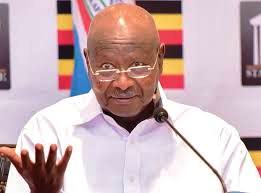
President Yoweri Kaguta Museveni has issued a strong appeal to Ugandans to remain united and avoid divisions based on sectarianism, reminding the nation of its painful political journey since Independence.
In his reflection, Museveni revisited the early years after 1962 when Uganda attained self-rule. He recalled how politics at the time was marred by sectarian alliances involving the Democratic Party (DP), Uganda People’s Congress (UPC), and Kabaka Yekka (KY).
“These weak alliances eventually collapsed, creating conditions that led to major conflicts in 1966 and 1971,” Museveni explained, noting that political instability grew worse in the years that followed.

By 1979, he said, Uganda had endured “massive killings under Amin and economic collapse,” leaving the country in ruins and its people desperate for change.
The President further pointed to the disputed 1980 general elections, which he described as rigged, saying this event triggered the armed struggle by the National Resistance Army (NRA). He highlighted that the first spark of the liberation war was the Kabamba attack in 1981.
According to Museveni, this struggle was backed by the majority of the population. “Eighty percent of Ugandans supported this fight,” he said, emphasizing that the movement brought together individuals who had once been rivals.
He stressed that former members of the Uganda National Liberation Army (UNLA), Democratic Party (DP), Uganda People’s Congress (UPC), and Kabaka Yekka (KY) were all integrated into the NRA, creating a new spirit of unity.
Museveni noted that this foundation was built on the principles of patriotism, Pan-Africanism, socio-economic transformation, and democracy. He said these values helped strengthen Uganda and gave direction to the country’s political landscape.
Reflecting on the post-liberation period, the President said that the National Resistance Movement (NRM) has maintained a broad national consensus since 1996, even though there have been “occasional setbacks” along the way.
He cautioned that sectarian tendencies remain a threat to national stability and progress. “Ugandans must emphasize unity and capacity over ethnicity,” he warned, stressing that development can only thrive in an environment free from divisions.
Below is the detailed Statement;
PPU-H.E-THE-PRESIDENTS-STATEMENT-ON-THE-NRMS-TIME-TESTED-STRATEGY-OF-PRINCIPLED-UNITY