














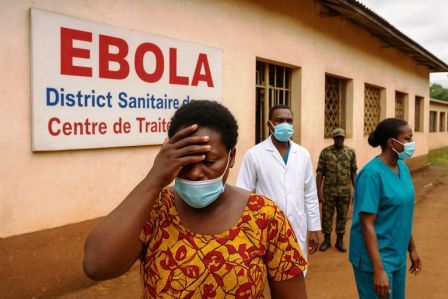
The Democratic Republic of Congo (DRC) on September 4 announced its 16th Ebola outbreak since 1976 after laboratory tests confirmed the Zaire strain in Kasai Province near the Angolan border.
The first confirmed case was a 34-year-old pregnant woman admitted in late August with high fever and persistent vomiting.
She has now become the index case guiding the entire response, stretching from isolated health posts to the laboratories in Kinshasa.

By the time of the declaration, health officials had already identified 28 suspected infections and 15 deaths across Bulape and Mweka health zones, including four healthcare workers.
On September 3, samples analyzed at the National Institute of Biomedical Research (INRB) confirmed Ebola Zaire, setting off rapid deployments, logistical operations, and the structured steps of contact tracing, isolation, and front-line protection.
Geography immediately complicates the response.
Kasai is remote, with limited air connections and road journeys that can take a full day from Tshikapa or several days from Kinshasa during the rainy season.
Every hour of delay matters, making early organization a necessity.
Yet, the country is no stranger to this challenge.
DRC has faced Ebola 15 times before, starting in 1976.
Kasai Province last reported cases in 2007 and 2008, while Equateur Province experienced the most recent outbreak in April 2022, which was contained in under three months through case tracing, ring vaccination, and strict infection control.
Health leaders are now relying on the same proven strategy.
“Africa CDC stands firmly with the people of the Democratic Republic of Congo,” said Dr. Jean Kaseya, Director General of the Africa Centres for Disease Control and Prevention (Africa CDC).
“We are taking strong measures to bring this outbreak under control — protecting communities and supporting the health workers on the frontlines.”
Within hours of the declaration, Africa CDC sent experts to reinforce surveillance, tracing, data systems, laboratory capacity, and infection prevention measures in the affected zones.
The World Health Organization (WHO) also deployed epidemiologists and specialists in case management and laboratories, while communication teams began moving into villages to explain how Ebola spreads and how households can stay safe.
WHO further confirmed that two tonnes of protective gear, laboratory equipment, and medical supplies are en route to shorten the gap between detection and treatment.
“We’re acting with determination to rapidly halt the spread of the virus and protect communities,” said Dr. Mohamed Janabi, WHO Regional Director for Africa.
“Banking on the country’s long-standing expertise in controlling viral disease outbreaks, we’re working closely with the health authorities to quickly scale up key response measures to end the outbreak as soon as possible.”
In Kinshasa, scientists at INRB continue sequencing work to better understand the virus.
On September 3, six samples were tested using GeneXpert Ebola assays, BioFire FilmArray Global Fever Panel, and Altona RealStar Filovirus PCR kits.
Confirmed positives were then sequenced using Oxford Nanopore Technology platforms to generate genetic data.
Prof. Placide Mbala Kingebeni, Head of the Epidemiology and Global Health Division at INRB, explained in a paper published on September 4 that rapid genome analysis is critical to identify the lineage and determine whether this outbreak stems from a fresh spillover or another source.
He stressed that speed matters because genome data helps teams map transmission and design more effective interventions.
Ebola virus disease is a severe zoonotic hemorrhagic fever spread by direct contact with bodily fluids or contaminated materials.
Its early symptoms—fever, headache, vomiting, diarrhea, and fatigue—often resemble malaria or typhoid.
As illness progresses, patients may show unexplained bleeding.
Historically, the Zaire strain has carried a mortality rate as high as 90% without care, although treatment and supportive therapy can reduce this to 20–30%.
The infection of four healthcare workers has raised alarm, signaling possible gaps in infection prevention practices.
Responders are now focused on triage, isolation, PPE use, and thorough decontamination of health facilities and homes.
Kasai remains relatively calm compared to eastern DRC, but chronic food insecurity, malnutrition, and weak healthcare systems complicate the fight.
Seasonal flooding, population movements, and community mistrust can accelerate spread and delay care.
The International Organization for Migration (IOM) on September 5 announced a mapping exercise to track population movements across Kasai.
“IOM stands with affected communities at this critical moment,” said Amy Pope, IOM Director General.
“Responding to this outbreak demands swift action, close coordination, and above all, a people-centred approach that protects health workers, prevents further transmission, and ensures every person can access the care and information they need.”
In Kinshasa, 2,000 doses of the Ervebo vaccine are on standby, ready for ring vaccination of contacts, contacts-of-contacts, and frontline health staff.
Treatment stockpiles are also available, ensuring that early-detected patients have better survival chances.
WHO has warned that case numbers may initially rise as surveillance intensifies, which is normal, but the key objective is to break chains of transmission quickly.
Africa CDC has pledged ongoing support to digitize surveillance, strengthen case management, and reinforce infection control.
The Ebola fight unfolds amid other public health threats, including MPox, cholera, and malaria, all competing for the same limited resources.
Still, DRC’s past successes inspire confidence.
The swift containment of the 2022 outbreak in Equateur Province demonstrated the value of early action, ring vaccination, and strict infection control.
Public confidence is equally critical.
Clear communication, visible deployment of supplies, and structured coordination are essential to ensure that communities see isolation wards and ambulances as lifesaving tools rather than sources of stigma.
Officials acknowledge that more cases may surface, but they stress that finding them early is part of the strategy.
This 16th outbreak underscores Congo’s vulnerability to viral spillovers but also its resilience and experience in overcoming them.
With laboratories running, vaccines in storage, and international partners mobilized, the DRC is once again mounting a robust defense.