
















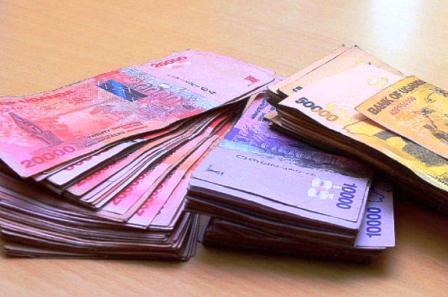
Uganda’s economy is basking in renewed confidence after the national currency, the Uganda shilling, appreciated by 2.7% against the U.S. dollar during the 2024/2025 financial year.
According to the Bank of Uganda’s (BoU) Integrated Annual Report, the exchange rate stood at a mid-rate of UGX 3,678 per U.S. dollar by the end of the fiscal year.
This performance placed the Ugandan shilling among Africa’s most stable currencies in 2025, a remarkable feat amid global economic headwinds caused by trade wars, shifting tariffs, and volatile markets.

The strong shilling performance also boosted the country’s foreign exchange reserves to USD 4.3 billion — an equivalent of 3.9 months of import cover, up from 3.1 months recorded the previous year.
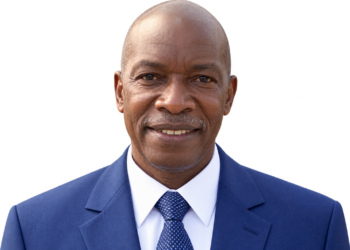
Bank of Uganda Governor, Michael Atingi-Ego, attributed the achievement to disciplined monetary policies and robust inflows from key sectors such as coffee exports, remittances, and non-governmental organizations.
“Prudent policy and inflows from coffee, remittances, and NGOs met corporate demand head-on,” Atingi-Ego declared in the report.
He added that a weakening U.S. dollar and BoU’s well-executed Strategic Asset Allocation (SAA) framework helped sustain Uganda’s currency strength.
The Governor emphasized that the shilling’s steady rise was not by chance but the result of deliberate policy strategies.
First-half appreciation of 1.1% accelerated to 4.2% in the second half of the financial year, signaling resilience despite global uncertainty.
Against a basket of trading partners’ currencies, the Nominal Effective Exchange Rate (NEER) appreciated by 2.1%, BoU data confirmed.
Exporters across the country welcomed the development.
Coffee exporter and entrepreneur, Beatrice Ndyabagye, described the stability as a major relief to the sector.
“Stable rates mean predictable earnings — no more hedging headaches,” she told Bloomberg on September 30, 2025.
Her company, Uganda Coffee Exporters Ltd., registered an 18% increase in revenues, rising to UGX 120 billion, thanks to strong remittance inflows of USD 1.6 billion and thriving gold and coffee exports.
The central bank’s Strategic Asset Allocation policy played a crucial role in building confidence among investors and safeguarding the economy from global shocks.
BoU optimized safety, liquidity, and returns through well-diversified asset management strategies, including plans to purchase gold as part of its foreign reserve diversification.
“We’re not just accumulating; we’re architecting resilience,” Atingi-Ego remarked in a Reuters interview on October 2, 2025.
He further revealed ongoing preparations for managing oil-era foreign exchange operations through swaps and cross-currency repurchase agreements.
The Balance of Payments also improved significantly, recording a USD 1.0 billion surplus compared to a deficit of USD 995 million in the previous financial year.
Similarly, Uganda’s current account deficit narrowed by 15.3% to USD 3.6 billion.
Trade deficits fell by 20.4% to USD 2.5 billion, driven by higher gold and coffee exports that offset the impact of rising import volumes.
Importers, too, benefitted from the currency stability.
“Cheaper inputs mean leaner margins — we’re passing savings to consumers,” said Raj Patel, Managing Director of Kampala Imports Co.
He noted that the stronger shilling reduced machinery import costs by 3%, which in turn spurred a 12% increase in industrial output.
Nonetheless, Uganda still faces external financing challenges.
The country’s primary income deficit fell by 9.5% to USD 1.2 billion, though external debt interest payments amounted to USD 384 million.
Meanwhile, the services account deficit widened by 2.6% to USD 1.9 billion, largely due to higher transportation costs.
Foreign investments, however, surged, underscoring investor confidence in Uganda’s economic outlook.
Foreign Direct Investment reached USD 3.7 billion, largely oil-driven, while portfolio inflows climbed to USD 610 million due to rising offshore bond purchases.
Other investment inflows amounted to USD 164 million.
“This cocktail — exports, FDI, remittances — fortified us against shocks,” Atingi-Ego observed, projecting Uganda’s GDP growth to range between 6.0% and 6.5% for the 2025/2026 fiscal year.
Several Ugandan firms are already capitalizing on this stable financial environment.
EcoPay Uganda, a fast-growing fintech company supported by USD 50 million in FDI, expanded its user base by 40% to reach two million customers.
CEO Lydia Mirembe said currency stability has allowed the company to offer smooth cross-border transactions without hidden fees.
“No volatility means no hidden fees — pure growth,” she told TechCrunch on October 1, 2025.
Despite the optimism, small and medium enterprises still face hurdles in accessing affordable foreign exchange for imports.
“Access to cheap forex for imports remains patchy,” warned Sarah Kizza, head of the Uganda Manufacturers Association.
In response, the Bank of Uganda announced plans to deepen the financial markets, digitize payment systems, and promote green financing as part of its transition to the ISO 20022 financial messaging standard.
With reserves now covering 3.9 months of imports, Uganda’s foreign exchange position is more robust than ever.
Governor Atingi-Ego concluded his report with an inspiring message, stating, “Stability isn’t passive — it’s our strategic edge.”
For investors and businesses across East Africa, the Ugandan shilling’s strength now represents not only economic stability but also a beacon of sustainable growth and financial confidence.