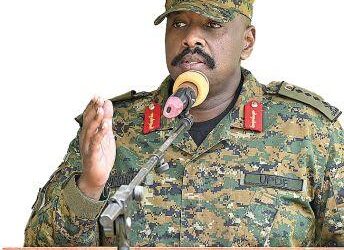







President Yoweri Kaguta Museveni has urged Ugandans to uphold forgiveness and reconciliation as the cornerstones of peace, unity, and national transformation.
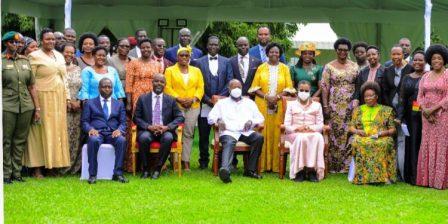
The President made the appeal while addressing the 27th National Prayer Breakfast, held at State House Entebbe under the theme *“The Power of Forgiveness and Reconciliation.”*
He commended the Parliament of Uganda for sustaining the annual tradition of the National Prayer Breakfast, noting that such gatherings promote unity, faith, and moral reflection among leaders and citizens.

Museveni expressed his satisfaction that Uganda has continued to hold the event every year since its introduction, describing it as a vital platform for spiritual renewal and dialogue.
He explained that the inspiration for Uganda’s prayer breakfast came from the United States, where it was first initiated during a time of deep division.
“Maama and myself went to the United States for their prayer breakfast, and we were told that it started during wars when people were not talking to each other,” he said. “I am glad that you have sustained it and don’t abandon it.”
The President applauded Hon. Chris Rwakasisi for his moving personal testimony and Bishop JB Masinde for delivering a powerful sermon that centered on forgiveness, tolerance, and reconciliation in both private and public life.
He reflected on Uganda’s rich cultural diversity, urging citizens to find harmony between traditional values and the teachings of Christianity and other faiths.
Recounting his personal experiences from the bush war days, the President narrated moments that shaped his understanding of mercy and justice.
He recalled how, after a victory during the liberation struggle, Gen. Kahinda Otafiire had suggested hiding some guns in case the then-UPC government turned against them, but Museveni refused, calling the act treacherous.
He also shared an incident involving Oyite Ojok, one of President Obote’s top army commanders, whom he decided not to kill despite having the opportunity.
“When I got the case about Chris, I went somewhere in my office and prayed about it, whether to sign the document to kill him,” the President said. “And the voice came, ‘No, do not sign it.’ Accountability is not always punitive, but the other side can come and negotiate and *okuhonga*, which means to pay for the mistakes.”
Museveni emphasized that his faith has always guided his decisions, even when others misunderstood his approach to justice.
“People thought I was naïve; that’s why you hear I started with twenty-seven guns,” he said. “The NRA fight was an open fight — not killing people, not poisoning people. The witness of Rwakasisi is very good. It is good that he has stayed alive and I have stayed alive so that we can tell you these stories.”
The President said Bishop Masinde’s message of forgiveness and gratitude should inspire Ugandans to focus on the nation’s progress rather than its challenges.
“Even if there are bad things about your country, find some good things and talk about them. This is a good message from Mzee Rwakasisi and Bishop Masinde.”
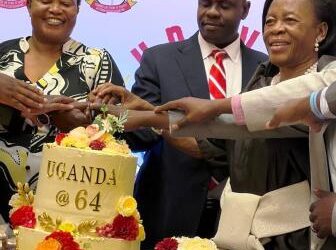
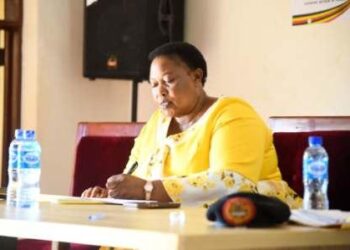
Delivering the closing prayer, the First Lady and Minister of Education and Sports, Maama Janet Kataaha Museveni, echoed the President’s message by calling upon Ugandans to embrace forgiveness, unity, and reconciliation as the country marks its 63rd Independence anniversary.
She described the occasion as a time of gratitude to God “for the miraculous way He has carried us through the course of this year and brought us safely to yet another Independence celebration.”
Drawing from the biblical parable of the prodigal son, the First Lady highlighted God’s unending mercy and compassion.
“In spite of the selfishness and irresponsibility of the prodigal son, the loving father never gave up on him,” she said. “This is a picture of God’s love for us and shows that He rejoices over even one soul that turns to Him in repentance.”
Maama Janet also urged Ugandans to confront national challenges such as corruption, tribalism, and political division with humility and renewed moral conviction.
“Often, we are selfish and myopic. Whether it is unbridled corruption, wars, political intrigue, disunity, tribalism, or sectarianism — all these serve to divide our communities and bring suffering to our people,” she said.
She prayed for peace in conflict-torn regions like Sudan and the Democratic Republic of Congo, and appealed for African-led solutions to continental problems.
She further reminded Ugandans that lasting peace and reconciliation must begin with personal transformation, saying that “we often have to ask foreigners to come and mediate between our own people and nations,” yet true healing “lies in God’s guidance and the healing of hearts.”
Quoting 2 Corinthians 5:18–21, the First Lady reminded the nation that God has entrusted humanity with the ministry of reconciliation.
“It was God in Christ reconciling and restoring the world to favour with Himself, not counting men’s trespasses against them,” she said, urging Ugandans to “lay hold of divine favour and be reconciled to God” both individually and collectively.
As Uganda approaches another election season, the First Lady appealed to leaders to lead by example in fostering political maturity and tolerance.
“May we as leaders lead by example and show that we can disagree politically but still remain united as Ugandans,” she said.
She concluded her message with a heartfelt prayer for a spiritual revival, saying, “We pray for a spiritual awakening and revival in Uganda that will spread the light of the Gospel and bring healing, reconciliation, and restoration of our identity in Jesus Christ.”
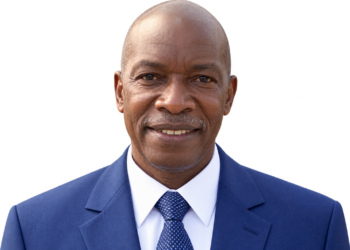
Hon. Chris Rwakasisi, who was pardoned by President Museveni in 2009 after years of imprisonment, delivered an emotional testimony that moved the audience deeply.
Opening his remarks humorously with, “My Majesty, certainly, warm greetings and love. I’m the only one who can address you as Lord of the Western World,” Rwakasisi said his testimony aimed to glorify Jesus by showcasing the redemptive power of forgiveness.
He reminded the congregation that forgiveness is not optional but divinely mandated.
“Forgiveness is not a favor… Rather, forgiveness is a command. The power of forgiveness and reconciliation is an infrastructure,” he said.
He warned against harboring resentment, saying, “Not forgiving is like bringing poison, hoping that the enemy you hate will die. It is a terrible thing not to forgive.”
Rwakasisi narrated his political journey during and after the 1980 elections, recounting how his pride and ambition had distanced him from God until he was imprisoned.
He admitted that while in prison, he initially prayed for President Museveni’s death but later realized that his bitterness only deepened his suffering.
“The more I prayed for Museveni to die and his family and government, the more he flourished. But the Holy Spirit helped me, and I changed my prayer from hate to love. I started praying for him and his family, and from there things started to ease.”
He said that while still in prison, he received divine assurance that he would soon be released.
“A gentleman came near me and said, ‘Chris, fear not. No one is going to kill you. In a few days, you will leave this place,’ and in a few days, I left.”
Rwakasisi later shared how President Museveni ordered his unconditional release and welcomed him warmly.
“When we met, we embraced and sat down and talked like old lost brothers. He asked me how the case was, and that was reconciliation.”
He described his subsequent appointment as a Special Presidential Advisor as “evidence of true forgiveness.”
Rwakasisi also thanked the President for not signing any death sentence since 1995 and relayed a plea from prisoners requesting clemency.
“The inmates have asked me to request you to pardon them,” he said.
In his closing remarks, he advised opposition members to choose peace over conflict.
“You who want to fight Museveni, fight him. Me, I will not fight him,” he stated, adding that forgiveness and reconciliation are not weaknesses but expressions of divine strength.
Delivering the keynote message, Bishop JB Masinde reminded believers that forgiveness begins with the words they speak, emphasizing that the tongue holds the power to either heal or destroy.
He encouraged Ugandans to guard their speech and use it to promote unity and healing.
Bishop Masinde urged leaders to model humility and repentance, saying that true reconciliation starts with “a willingness to speak peace.”
Deputy Speaker of Parliament Rt. Hon. Thomas Tayebwa concluded that the day’s message was deeply timely, especially following the NRM’s recent primary elections.
He said the message of forgiveness and reconciliation was crucial for restoring trust among leaders and strengthening unity both within the party and across the nation.
The 27th National Prayer Breakfast thus became not only a call for national reflection but also a reaffirmation that forgiveness and reconciliation remain the heart of Uganda’s continued journey toward peace, stability, and unity.