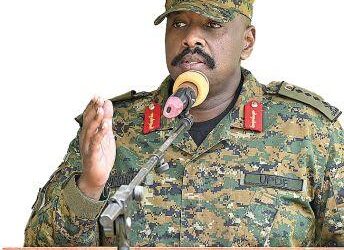












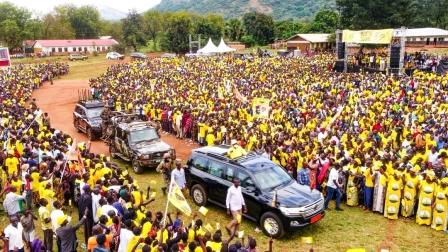
President Yoweri Kaguta Museveni, the National Resistance Movement (NRM) Presidential candidate, has praised the remarkable progress achieved in Karamoja over the years, particularly the restoration of peace through a successful disarmament program that has transformed the once-volatile region into a growing hub of security and stability.
Speaking as he launched his 2026 presidential campaign in Abim District, Karamoja Sub-region, President Museveni commended the people of Karamoja for embracing peace and supporting government initiatives aimed at development and transformation.
The President emphasized that the disarmament campaign, which saw the recovery of over 41,000 illegal guns from the Karamojong communities, played a decisive role in reducing violent crime and fostering long-term peace across the region.

He said the disarmament process, which began in the early 2000s, was one of the NRM government’s most successful peace building initiatives and laid the foundation for socio-economic progress in a region that was once synonymous with insecurity and cattle rustling.
“Because we collected over 41,000 guns from the Karamojong, we now have lasting peace,” President Museveni stated. “That peace has enabled development to take root, and our people can now live and work without fear.”
General Museveni highlighted the tremendous transformation Karamoja has undergone since the NRM came to power, noting visible improvements in population growth, access to education, health care, and road infrastructure.
He pointed out that the population of Karamoja, which once struggled due to insecurity and harsh living conditions, has now increased tenfold to about 1.5 million people — a clear reflection of the improved quality of life, healthcare, and security.
“The population of Karamoja has now grown to 1.5 million from just about 150,000 in the past,” the President observed. “That growth shows how peace and development have changed people’s lives in this region.”
Addressing the people of Abim, the NRM flag bearer announced that the government would revamp Abim General Hospital and upgrade several health centers across the district to cater to the rapidly growing population.
He said the move is part of a broader government effort to strengthen health service delivery, especially in rural and previously marginalized areas.
The President further enumerated key infrastructure projects currently underway in Abim and the wider Karamoja Sub-region, including the construction of the 123-kilometer Soroti–Abim Road and the Moroto–Abim Road.
He noted that these strategic road networks are vital for promoting trade, easing the movement of goods and services, and improving access to markets and social amenities.
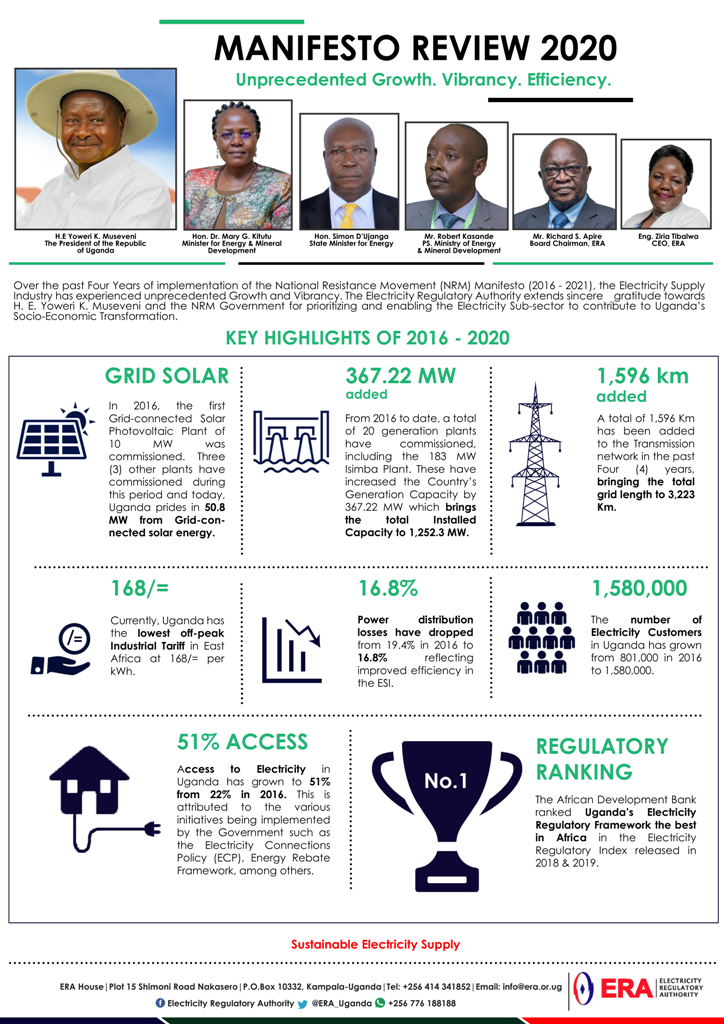
President Museveni reiterated that the NRM government has largely fulfilled the commitments made in its 2016 manifesto, including the expansion of electricity distribution, the construction of security and community access roads, and the rollout of major public infrastructure projects to boost economic activity.
He emphasized that the government’s continued investment in infrastructure and social services demonstrates its commitment to inclusive development, national unity, and the transformation of all regions of Uganda, including Karamoja.
As he concluded his address, President Museveni called on the people of Abim to judge the NRM government based on its record of achievements and to remain steadfast in supporting peace and development.
He assured the residents that under his leadership, Uganda would continue to experience stability, prosperity, and progress.
“I want you to evaluate us based on what we have done,” he said. “We have delivered peace, improved roads, better health services, and stability. With your continued support, Uganda will go even further.”
Background: Karamoja’s Journey from Insecurity to Stability
The Karamoja Sub-region, located in northeastern Uganda, has historically been one of the most insecure and economically marginalized areas in the country. For decades, the region was plagued by cycles of cattle rustling, inter-clan conflicts, and widespread gun violence, which hindered social and economic development.
The proliferation of small arms in the 1970s and 1980s — largely due to porous borders and regional instability — fueled constant clashes among pastoral communities. Armed raids not only claimed lives but also destroyed livelihoods, forcing thousands into poverty and displacement.
When the National Resistance Movement (NRM) took power in 1986, one of its earliest security challenges was to bring peace to Karamoja. Several government-led interventions were launched to control armed banditry and promote peaceful coexistence among the Karamojong and neighboring communities.
However, it was the 2001 disarmament exercise, spearheaded by President Museveni, that marked a turning point.
The Uganda People’s Defence Forces (UPDF) conducted systematic operations to collect illegal firearms, combined with community sensitization campaigns and peace dialogues.
Over 41,000 guns were eventually recovered, significantly reducing incidents of cattle rustling and violent conflict.
This newfound stability allowed government programs and development projects to reach the region.
Over the past two decades, Karamoja has witnessed major infrastructure improvements — including road construction, health facility upgrades, and education expansion.
The government has also implemented initiatives such as the Karamoja Integrated Development Programme (KIDP) and Operation Wealth Creation (OWC), aimed at promoting food security, livestock production, and alternative livelihoods.
Improved road connectivity, particularly through key corridors like the Soroti–Abim–Kotido Road, has opened the region to trade and tourism.
Electrification projects and solar power initiatives have enhanced access to energy, while new schools and vocational centers have expanded educational opportunities for the youth.
Health indicators have also shown progress, with increased immunization coverage and reduced maternal mortality due to the establishment of new health centers and better-equipped hospitals.
Today, Karamoja stands as one of Uganda’s most transformed regions — a testament to sustained peacebuilding and government investment. Yet, challenges such as climate change, poverty, and limited access to clean water persist, requiring continued policy attention and community empowerment.
President Museveni’s renewed campaign message in Abim underscores the NRM’s commitment to consolidating these gains and ensuring that peace translates into tangible wealth creation and prosperity for all citizens in the Karamoja Sub-region.