















A Celebration of Partnership and Prosperity
President Yoweri Kaguta Museveni has praised Uganda’s Indian community for its outstanding contribution to the nation’s economic growth, resilience, and social development.
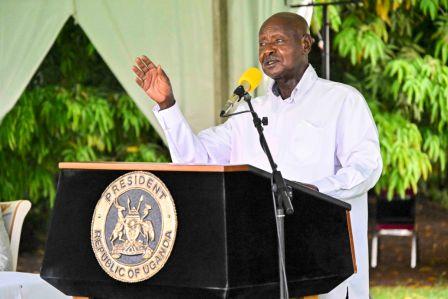
Speaking at State House Entebbe during the Diwali Festival of Lights celebrations on Sunday, October 26, 2025, the President described the Indian community as a “pillar of Uganda’s industrialization and a key driver of national progress.”

Official data from the Ministry of Finance, Planning, and Economic Development reveals that despite constituting less than one percent of Uganda’s population, the Indian community contributes approximately 65 percent of the country’s income tax revenue — a staggering figure that reflects their economic impact.
“You Are Helping Build a Modern Uganda” — Museveni
In his keynote address, President Museveni commended the community for its investment in factories, services, and trade, noting that their entrepreneurial spirit has helped establish a strong middle class and skilled workforce.
“The economy is growing on account of your entrepreneurial capacities,” Museveni said.
“By investing in factories and services, you are helping us to create a middle and skilled working class and a revenue base for the government from which we can get money to educate Ugandans so that through business and education, we can create a modern society. I therefore appreciate what you are doing.”
The President also recognized the community’s resilience in rebuilding trust with Uganda following the 1972 expulsion of Asians by Idi Amin Dada, an event that disrupted the country’s economy and international reputation.
“I went to an Indian temple in London and found some Indians there who were lamenting about Amin’s actions,” Museveni recounted.
“I told them that Amin did more damage to Africans than Indians; he damaged our economy and killed several people. I am therefore very glad that you came back when we called you. Thank you for trusting Uganda again.”
From Expulsion to Empowerment: The Return of Uganda’s Indian Community
Before the 1972 expulsion, the Indian population in Uganda numbered about 80,000, owning roughly 40,000 businesses that powered the manufacturing, trade, and service sectors.
When they were expelled, Uganda lost a significant portion of its skilled and entrepreneurial base, leading to economic decline.
However, since the early 1990s, under President Museveni’s liberal economic policies and investment-friendly environment, thousands of Indians have returned to Uganda, reclaiming their properties and contributing to the nation’s resurgence.
Today, the Indian community is estimated at around 40,000 people, many of whom operate in key industries such as banking, manufacturing, construction, real estate, health, and education.
High Commissioner Rawat: “India-Uganda Ties Are Stronger Than Ever”
The Indian High Commissioner to Uganda, H.E. Singh Rawat, thanked President Museveni for his consistent support of the Indian community and acknowledged the government’s role in fostering a stable investment climate.
“We welcome your continued encouragement for investment in value addition and manufacturing,” H.E. Rawat said.
“We also commend the steps taken under your administration to restore property rights and welcome back members of the diaspora who have revived economic activity.”
He emphasized that Uganda remains one of India’s closest allies in Africa, with growing collaboration in trade, healthcare, education, and defense cooperation.
Babalanda Calls for More Indian Investors
The Minister for the Presidency, Hon. Babirye Milly Babalanda, joined in commending the Indian community for “shielding our economy” and lauded President Museveni for enabling a conducive business environment.
“We thank the Indian community for shielding our economy and President Museveni for enabling the environment,” Hon. Babalanda said.
She urged the community to leverage the Diwali celebrations as a platform for mobilizing more investors to Uganda, saying, “We should use this year’s Diwali to attract other strategic friends to join you in investing in Uganda.”
Rebuilding the Vision of Prosperity
Mr. Paresh Mehta, Chairman of the Indian Association of Uganda, reflected on the 1972 expulsion as a painful yet transformative chapter that ultimately shaped Uganda’s path to inclusive growth.
“Uganda lost a part of its productive and enterprising spirit, but it is the same land, the same people, only the vision has changed,” Mr. Mehta said.
“Under your Excellency’s leadership, the vision has transformed Uganda into a country of opportunity and progress.”
He highlighted that Indian families such as the Ruparelias, Madhvanis, and Mehtas have been instrumental in Uganda’s economic transformation, providing jobs, promoting exports, and supporting social initiatives.
The Ruparelia Story: A Symbol of Uganda’s Economic Renewal
Among the most prominent examples of entrepreneurial success is Dr. Sudhir Ruparelia, who returned to Uganda with only $25,000 (approximately Shs 86 million) and has since built an empire worth $1.6 billion.
Through investments in finance, real estate, hospitality, and education, the Ruparelia Group has become one of Uganda’s largest private employers and taxpayers, symbolizing the opportunities available under the National Resistance Movement (NRM) government’s economic reforms.
Humanitarian Impact: A Heart for Uganda
Beyond business, the Indian community has made significant humanitarian contributions, particularly in the fields of health and blood donation drives.
So far, 238 Ugandan children have been flown to India for life-saving heart surgeries, with an additional 100 expected to receive similar medical care next year.
The community has also organized blood donation drives that have collected over 65,000 units of blood in partnership with the Uganda Blood Transfusion Services, including recent events at Singo Military Training School in Nakaseke and the Sai Centre on Mawanda Road in Kampala.
Trade and Diplomacy: Strengthening Bilateral Ties
Uganda and India’s relationship has evolved into a robust partnership anchored in mutual respect, investment, and shared goals for development.
Bilateral trade between the two nations has now surpassed $1.2 billion, with India ranking among Uganda’s top five trading partners.
Cooperation extends beyond commerce to include education exchanges, defense training, and technology transfer, reflecting a holistic partnership that supports Uganda’s Vision 2040 and industrialization agenda.
A Tradition of Unity and Light
This year’s Diwali celebration marked the eighth time President Museveni has hosted the Indian community since 2013, underscoring the deep friendship and mutual respect between the two communities.
The event brought together top business leaders, diplomats, and government officials in a display of cultural unity and shared commitment to Uganda’s prosperity.
As Uganda positions itself as a regional manufacturing and services hub, President Museveni’s recognition of the Indian community reaffirms his government’s commitment to inclusive partnerships that drive economic transformation and social cohesion.
“Diwali is not just a celebration of light,” Museveni remarked in closing. “It is a reminder that through unity, enterprise, and mutual trust, we can illuminate the path toward a modern, prosperous Uganda.”