







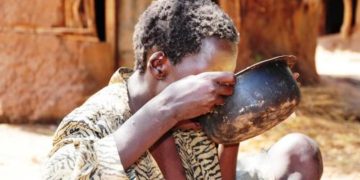








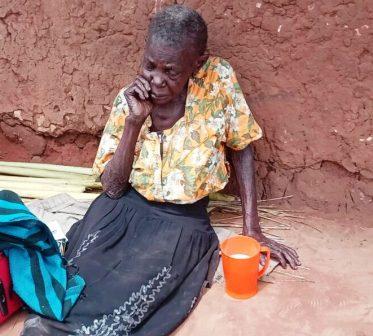
In the quiet village of Wanjeyo, Kimenyedde Sub-County in Mukono District, a frail 111-year-old widow sits outside her crumbling home, clutching a faded land document that has become the symbol of her struggle and survival.
For Florence Nantumbwe, the piece of land she occupies is more than soil — it is her history, her livelihood, and her final refuge. But at an age when she should be resting peacefully, she finds herself locked in a bitter land dispute that exposes the deeper failures within Uganda’s land tenure and justice systems.
A Widow’s Struggle for Justice

Nantumbwe’s troubles began when a man identified as Emmanuel Mubiru appeared, claiming ownership of 6.5 acres of her late husband’s land. Mubiru insists that he lawfully purchased the land from Solomon Mbogo, one of Nantumbwe’s sons.
The elderly widow, however, vehemently denies ever consenting to the sale.
“This is the land my husband left me. My two sons have since deserted me, and I have struggled alone for years. All I want is what belongs to me,” she says, her voice trembling with emotion.
According to Nantumbwe, the disputed land was part of the estate of her late husband, Jonathan Bwogere, and was meant to sustain her in old age. She insists that no one — not even her children — has the right to sell it without her knowledge or approval.
But in recent months, her resistance has drawn violence. Unidentified men have reportedly attacked her home at night, burning property, destroying crops, and threatening her life.
“Just last night, a group came at midnight. They burned our bedding and clothes, ruined the garden, and threatened to kill me if I didn’t leave,” she recounts in tears.
Despite multiple reports to Nagalama Police, Nantumbwe says no meaningful action has been taken to protect her.
“I have gone to the police many times, but nothing has been done. I live in constant fear,” she laments.
Local Leaders Demand Accountability
Local authorities in Wanjeyo Village have condemned the attacks and questioned the authenticity of Mubiru’s land ownership claim.
George William Sembatya, the LC1 Chairperson of Wanjeyo, says there is no record of Mubiru as a registered landowner in the village.
“There is no record in my office showing Mubiru as a landowner. The Bwogere family never introduced him as a buyer,” Sembatya explained.
He accuses Mubiru of defying multiple summons to appear before local leaders and continuing to intimidate the widow.
“He has been called several times to explain his side, but he refuses to come. Instead, he keeps sending people who harass this old woman,” Sembatya said.
The widow’s grandson, Lubowa Yoson, believes Mubiru is responsible for the attacks that have left their family destitute.
“We’ve lost everything — our food, our household items. We’re left with nothing to eat,” he said, appealing to police, the Ministry of Lands, and human rights organizations to intervene.
Uganda’s Troubled Land Tenure System
The case reflects a wider crisis affecting thousands of Ugandans trapped in similar land disputes. Uganda’s land ownership is governed by the 1995 Constitution and the Land Act (Cap 227), which recognize four land tenure systems: customary, freehold, mailo, and leasehold.
In Mukono and most parts of Buganda, land is predominantly held under the mailo tenure system, a colonial legacy from the 1900 Buganda Agreement. Mailo land grants ownership rights similar to freehold, but it also allows tenants — commonly referred to as bibanja holders — to occupy and use the land.
This dual ownership structure often leads to overlapping claims and disputes, particularly when landowners or family members sell parcels without informing lawful or bona fide occupants.
According to land rights advocates, widows and elderly women are among the most vulnerable under this system. Although the Land Act and the Succession Act grant them legal protection, enforcement remains weak, and most rural women lack the financial and legal capacity to pursue justice.
Legal experts note that Uganda’s land conflicts are often fueled by poor record-keeping, corruption in land offices, and the absence of effective local land tribunals. The District Land Boards and Land Committees, which are supposed to handle such cases, remain underfunded and largely inactive.
Human Rights Concerns
Reports by the Uganda Human Rights Commission (UHRC) indicate that over 60 percent of land-related complaints involve illegal evictions, forged titles, and exploitation of vulnerable individuals — particularly widows and orphans.
Mary Nalubega, a land rights advocate, says the law is clear but weakly enforced.
“Our Constitution protects women’s rights to property, and the Land Act reinforces those rights. But on the ground, implementation is almost nonexistent,” she explains. “If police and local land officials acted firmly, cases like Nantumbwe’s would not drag on for years.”
The Equal Opportunities Commission has also highlighted gender inequality in land ownership, noting that while women provide nearly 70 percent of agricultural labor in Uganda, they own less than 20 percent of registered land.
A Cry for Protection
As calls for intervention grow louder, community leaders in Wanjeyo have urged the government and the Ministry of Lands, Housing, and Urban Development to step in and resolve the dispute before it escalates further.
They are also demanding that police arrest the culprits behind the violent attacks and ensure the widow’s safety.
For Florence Nantumbwe, however, the battle has become more than a legal fight — it is a struggle for dignity in her final years.
“I don’t want to die fighting. I only want to rest on the land my husband left me,” she whispers, gazing across her ruined garden.
Her story is a painful reflection of how Uganda’s land disputes continue to erode the lives of the poor and elderly, exposing the urgent need for land reform and stronger protection for vulnerable citizens.
As the sun sets over Mukono’s hills, the aged widow remains steadfast — waiting for justice, hoping that the land she has called home for a century will not be taken away in her last days.