
















The Inspectorate of Government (IG) has strengthened its presence in the Karamoja sub-region through a strategic partnership with the Karamoja Anti-Corruption Coalition (KACC), marking a new phase in efforts to tackle endemic corruption and promote ethical governance.
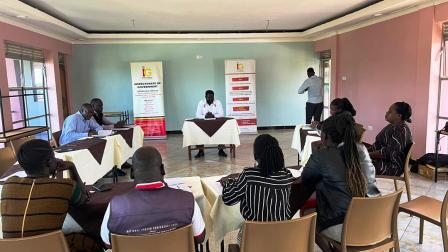
On 21st October 2025, senior officials from the IG and representatives of KACC convened at Rapona Apartments in Moroto for a high-level engagement aimed at identifying practical avenues for collaboration.
The meeting brought together key figures from the IG Moroto Regional Office and the IG Headquarters in Kampala, alongside KACC staff, to deliberate on joint mechanisms for promoting transparency, accountability, and civic responsibility in public institutions.

Comboni Oyet, Head of the IG Moroto Regional Office, applauded KACC for its unwavering commitment to advancing transparency and good governance across the sub-region.
He underscored the critical role of the Inspectorate in detecting and deterring corruption, emphasizing that effective partnerships with local actors such as KACC were essential for sustainable change.
Oyet urged KACC to step up public education campaigns to raise awareness about integrity, accountability, and ethical leadership at both community and institutional levels.
In her address, Mable Mary Nakajoba, a Principal Inspectorate Officer, called upon KACC to maintain active community sensitization programs that highlight the social and economic costs of corruption.
She further encouraged the coalition to report any corruption-related cases directly to the IG to ensure timely investigations and enforcement of the law.
Complementing these remarks, Bernard Oite, another IG official, elaborated on the Inspectorate’s ongoing reforms and innovative approaches designed to reinforce anti-corruption efforts within local governance systems across the region.
Representing the KACC Board, Loumo John Charles expressed gratitude to the IG for embracing collaboration with civil society, describing the initiative as a milestone in bridging the gap between government institutions and grassroots organizations.
He noted that such partnerships are vital in restoring public confidence in state institutions and ensuring that citizens are empowered to hold leaders accountable.
In his remarks, Dr. Ayub Mukisa, the Executive Director of KACC, thanked the IG for recognizing the importance of civil society engagement in promoting transparency and ethical conduct.
He reaffirmed KACC’s commitment to supporting the IG’s mission through joint advocacy, community mobilization, and civic education programs tailored to the unique socio-economic dynamics of Karamoja.
Dr. Mukisa further highlighted that KACC, with support from the Embassies of Denmark, the Netherlands, Ireland, and Sweden, is currently implementing the Civic Engagement and Accountability Project, a regional initiative designed to enhance citizen participation in governance and ensure accountability in public service delivery.
The collaboration between the IG and KACC represents a significant step toward building a more transparent and accountable public administration framework in Karamoja—one that empowers citizens, strengthens institutions, and lays a firm foundation for equitable development.