
















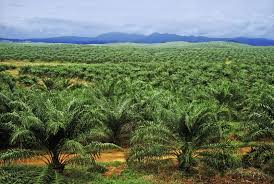
Government has officially rolled out a compensation programme worth Shs 52 billion for residents affected by the National Palm Oil Project in Buvuma and Sango Bay–Kyotera.
This programme follows a directive from President Yoweri Kaguta Museveni, who instructed the Ministry of Agriculture, Animal Industry and Fisheries (MAAIF) and the Ministry of Lands, Housing and Urban Development (MoLHUD) to conduct a thorough verification and valuation of all Project Affected Persons (PAPs).
According to the Ministry, government valuers conducted the exercise in close consultation with the PAPs, leading to a final compensation package of Shs 52 billion.

So far, MAAIF has received Shs 24 billion as the first tranche to operationalize the process, with Shs 14 billion allocated to Buvuma and Shs 10 billion earmarked for Sango Bay.
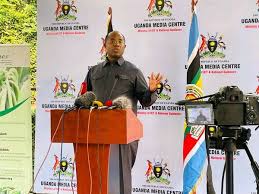
A total of 301 residents in Buvuma have already received compensation and State Minister for Agriculture Fred Bwino Kyakulaga confirmed that 2,149 individuals are expected to receive payments.
This update was delivered during a briefing at the Uganda Media Centre in Kampala.
Historical Background: Palm Oil as Part of Uganda’s Long-Term Agro-Industrial Strategy
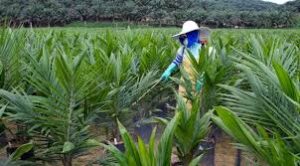
The introduction of palm oil in Uganda dates back to the early 2000s, when government partnered with private sector investors, most notably Bidco Uganda, to develop industrial-scale oil palm plantations in Kalangala.
The project was part of a broader national strategy to reduce dependence on imported edible oils, boost rural incomes, and expand agro-processing.
Over time, the Kalangala Oil Palm Project produced tangible economic results, including improved infrastructure, expanded farmer cooperatives, job creation, and a more stable domestic supply of vegetable oil.
Due to these successes, government initiated the second phase of the programme, expanding operations to Buvuma, Mayuge, Bugiri, and Sango Bay.
However, this expansion also intensified debates about land rights, environmental protection, and the welfare of communities living in targeted areas.

Land Governance Issues: Experts Weigh In
Land governance remains one of Uganda’s most contested areas of public policy, especially where large-scale agribusiness projects are involved.
Dr. Sarah Ainomugisha, a land governance specialist at Makerere University’s Department of Environmental Management, says the compensation rollout is a positive development but one that must be monitored closely.
She explains that compensation disputes in Uganda often arise from valuation disagreements, non-transparent verification processes, and delays in payment.
She says that the involvement of PAPs in valuation is an encouraging step.
According to Dr. Ainomugisha, transparency in land acquisition protects livelihoods, prevents conflict, and increases the legitimacy of large agricultural projects.
Paul Kabuye, a land rights advocate with the Land Governance Network, adds that the palm oil programme could set a precedent for future projects if properly executed.
He notes that oil palm expansion has historically raised concerns, but fair and prompt compensation demonstrates that development can occur without violating community rights.
Palm Oil’s Economic Significance and Local Concerns
Agricultural economists continue to highlight palm oil as a key contributor to Uganda’s agro-industrialization agenda.
By 2024, the Kalangala project alone was supplying a significant portion of Uganda’s edible oil needs, reducing import expenditure and stabilizing prices.
However, communities in Buvuma and Sango Bay have raised concerns about displacement, loss of farmland, reduced access to water bodies, and low valuation rates for customary land.
Local leaders say the new compensation programme could ease tension and unlock stalled development activities.
Government’s Position: Compensation as a Path to Harmonious Development
State Minister Fred Bwino Kyakulaga emphasized that the compensation initiative is designed to ensure that residents are treated fairly and respectfully.
He stated that compensation is already underway and that 301 residents in Buvuma have received their payments out of the 2,149 PAPs identified.
Government officials maintain that no resident will be forcefully displaced and that necessary resettlement assistance will be provided.
Political and Development Trends: Expert Commentary
Political analysts say the compensation programme reflects a broader shift in Uganda’s governance model, where the state increasingly positions itself as a driver of infrastructure development, agricultural expansion, and rural transformation.
Dr. Isaac Kasule, a political commentator, notes that such exercises carry political significance.
According to him, they signal to citizens that the government is balancing investment promotion with community welfare.
He adds that land conflicts can weaken political stability, making transparent compensation a crucial element of national development strategy.
Voices from the Ground
Local leaders from Buvuma have expressed cautious optimism about the ongoing payments.
Many say families will now be able to relocate or invest in alternative livelihoods.
Some residents have requested faster processing of payments and clearer communication regarding land documentation.
Officials in Sango Bay have called on government to ensure displaced households receive livelihood restoration support, including agricultural inputs, training, and access to alternative land.
A Test for Future Agribusiness Expansion
As Uganda pushes forward with its agricultural modernization agenda, the compensation programme in Buvuma and Sango Bay is expected to set the standard for how future agribusiness projects handle land acquisition.
Experts agree that fair compensation, transparency, and community participation are essential to sustainable development.
The rollout of the Shs 52 billion fund therefore represents more than a financial exercise. It is a crucial step in balancing Uganda’s development ambitions with the rights and welfare of its citizens.