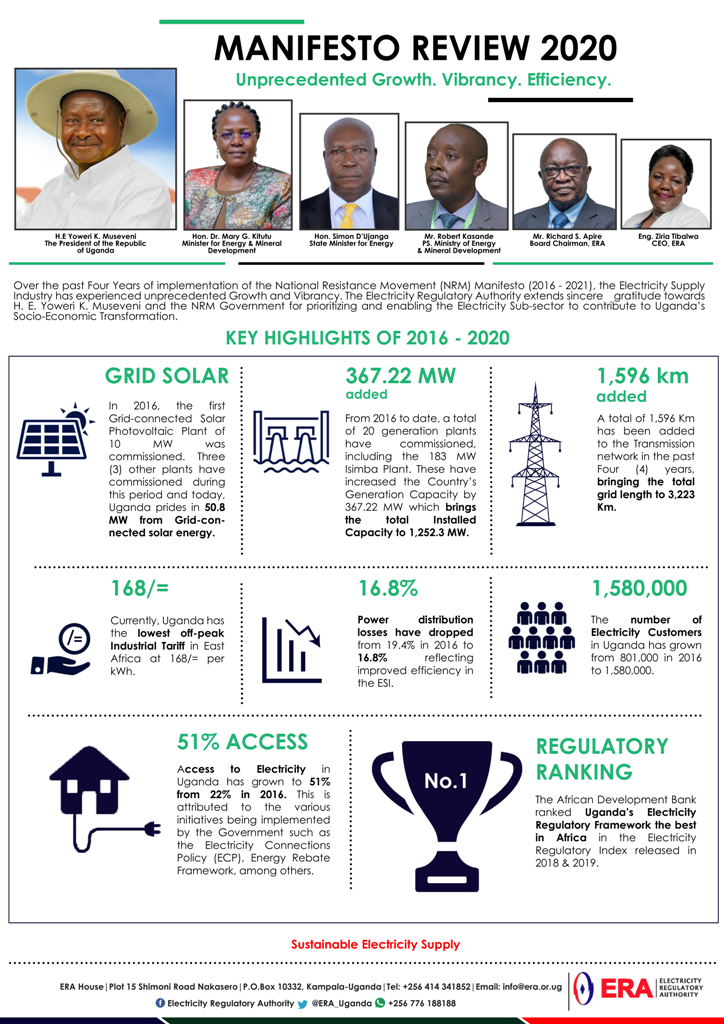













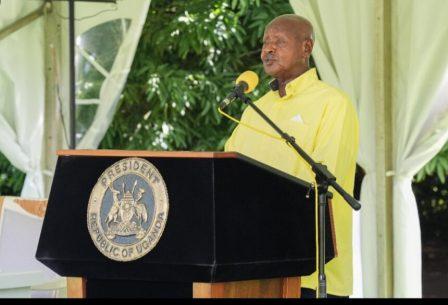
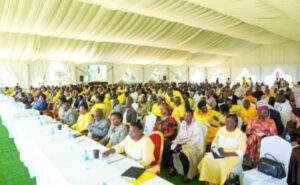
In a decisive show of political alignment, members of the National Resistance Movement Parliamentary Caucus have thrown their full support behind the government’s proposed direction for the Financial Year 2026/2027, following a high-level meeting held at State House Entebbe under the guidance of President Yoweri Kaguta Museveni.
The resolutions reached during the meeting go beyond routine endorsement of a national budget, reflecting a broader and carefully structured vision that brings together infrastructure development, social transformation, national security, and legislative efforts aimed at reinforcing Uganda’s sovereignty.
At the center of the discussions was the government’s budget framework for the 2026/2027 financial year, which the Caucus unanimously endorsed as a roadmap for continued socio-economic transformation.

A significant portion of the planned expenditure is directed toward peace and security, a sector the government has consistently described as the backbone of national stability and economic growth.
The emphasis on security reflects a long-held position that sustainable development cannot be achieved in an environment of instability, making it a priority area in successive government budgets.
Alongside security, infrastructure development remains a cornerstone of the government’s strategy, with plans to expand road networks across the country in order to improve connectivity between rural production areas and urban markets.
Electricity infrastructure is also set to receive substantial investment, with a focus on extending power access to underserved regions and supporting industrial growth.
Railway development has been highlighted as a strategic intervention aimed at reducing transportation costs and enhancing Uganda’s competitiveness in regional and international trade.
Preparations for the Africa Cup of Nations 2027 have also been included among the key priorities, reflecting Uganda’s commitment to co-hosting the tournament and leveraging it as an opportunity to boost tourism, infrastructure, and international visibility.
The government is equally placing strong emphasis on scientific innovation, recognizing it as a critical driver of socio-economic transformation, particularly in areas such as agriculture, manufacturing, and technology.
Beyond infrastructure and innovation, the Caucus reaffirmed support for restocking programmes in the Teso, Lango, and Acholi sub-regions, initiatives that are deeply rooted in efforts to rebuild livelihoods in communities that suffered massive losses of livestock due to past conflicts and cattle rustling.
In northern Uganda, particularly in Acholi, years of instability linked to the activities of the Lord’s Resistance Army left communities economically weakened and socially disrupted.
Similarly, Teso and Lango experienced repeated cattle raids that wiped out household wealth, given the central role livestock plays in income generation, food security, and cultural identity.
The restocking programmes are therefore designed not only to restore economic stability but also to rebuild dignity and resilience among affected populations by providing cattle, goats, and other livestock to households.
In addition to these interventions, the Caucus also endorsed salary enhancements for key public sector workers, including primary school teachers, secondary school arts teachers, Technical and Vocational Education and Training instructors, and security personnel.
These salary adjustments are intended to improve welfare, boost morale, and address long-standing disparities, particularly among arts teachers who have historically earned less than their science counterparts.
The inclusion of TVET instructors reflects the government’s increasing focus on skills development as a pathway to employment and industrial growth, while the emphasis on security personnel underscores their critical role in maintaining national stability.
Beyond the budgetary priorities, the Caucus also took a firm stance on the proposed Protection of Sovereignty Bill, 2025, resolving to support its passage once it is formally introduced in Parliament.
The bill is expected to play a significant role in safeguarding Uganda’s national interests by regulating the influence of foreign entities and ensuring that key decisions affecting the country remain firmly under domestic control.
Although the full details of the legislation are yet to be publicly debated, it is widely understood that the bill will introduce stricter oversight on foreign funding and activities, particularly in areas that may impact governance, policy-making, and national security.
Supporters of the bill argue that it is a necessary measure in an increasingly interconnected world where external actors often seek to shape domestic agendas in developing countries.
They believe that if passed into law, the legislation will strengthen Uganda’s independence by ensuring that its policies are determined internally rather than influenced by foreign interests.
The bill is also expected to enhance institutional integrity by shielding key sectors from undue external pressure, while promoting accountability among organizations operating within the country.
Proponents further argue that it could reinforce national unity by prioritizing local interests and safeguarding the country’s sovereignty in decision-making processes.
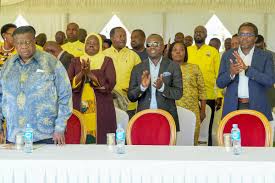
Throughout the meeting, members of the Caucus reiterated their commitment to advancing these priorities as part of Uganda’s broader development agenda, aligning legislative support with executive policy direction.
The message that emerged from State House Entebbe was one of unity, determination, and a shared vision for the country’s future.
As Uganda moves closer to the 2026/2027 financial year, the decisions taken by the Caucus are likely to have far-reaching implications for the nation’s political and economic trajectory.
They reflect a dual approach that seeks to drive development through strategic investment while at the same time asserting control over national affairs in an increasingly complex global environment.