










Forty years after arriving in Uganda amid war, displacement and widespread social hardship, World Vision Uganda is beginning another chapter with a new five-year strategy focused on the welfare of vulnerable children and communities.
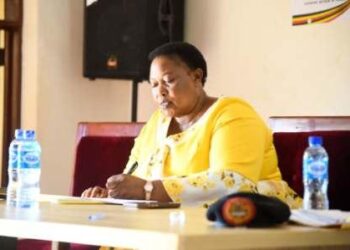
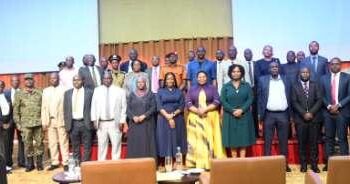
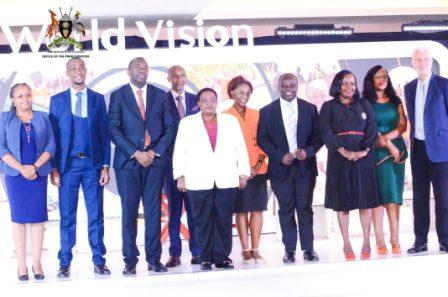
Prime Minister Robinah Nabbanja launched World Vision Uganda’s 2026–2030 Strategic Plan at Speke Resort and Conference Centre in Munyonyo, commending the organisation for four decades of partnership with government.
The launch also marked a significant anniversary for an organisation whose Ugandan story began in 1986 as an emergency relief operation and gradually developed into a broad programme covering child protection, health, education, livelihoods, water and sanitation, resilience and advocacy.

Nabbanja said World Vision had moved beyond its original humanitarian role to become an established development partner working alongside government.
She praised the organisation for continuing to focus particularly on children and communities facing the greatest vulnerability.
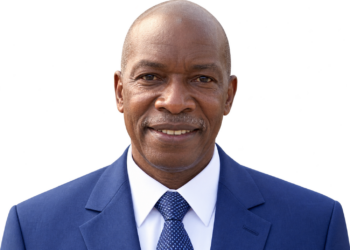
The Chairperson of the World Vision Uganda Board of Directors, Michael Segwaya, reaffirmed the organisation’s commitment to working with government and maintaining strong attention to children’s welfare and protection.
A Beginning Shaped by War
World Vision’s Ugandan story began in the aftermath of the 1981–1986 war, when communities in central Uganda were struggling to rebuild lives, homes and basic services.
According to World Vision’s own historical account, its first major intervention was in the Luwero Triangle, where communities needed assistance to resettle and reconstruct infrastructure after years of conflict.
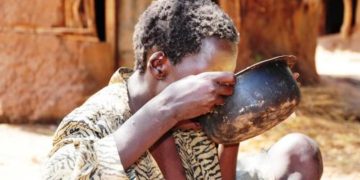
Thousands of children had been orphaned or left without adequate family support.
World Vision initially operated primarily as a relief organisation, responding to immediate humanitarian needs.
Its work later expanded to other parts of the country as different emergencies and development challenges emerged.
The organisation moved into Arua and Nebbi to address poverty and the effects of earlier conflict.
In 1988, it expanded to Gulu, where it began relief programmes for internally displaced people affected by the conflict involving the Lord’s Resistance Army.
Western Uganda subsequently became another area of intervention, with projects addressing poverty and health challenges.
The organisation’s geographical expansion reflected a changing Uganda in which communities were facing different forms of vulnerability rather than one single national emergency.
When HIV/AIDS Changed the Nature of Vulnerability
Among the greatest challenges World Vision encountered was the HIV/AIDS epidemic.
Uganda first reported HIV-related illness in 1982, and the epidemic grew into a major public-health, social and economic crisis.
The country’s HIV prevalence eventually reached extremely high levels, particularly during the late 1980s and early 1990s.
The epidemic did not affect only people living with HIV.
It also affected entire families, particularly children who lost parents and caregivers.
World Vision’s own history records that it expanded into southern Uganda, one of the areas hardest hit by HIV/AIDS.
In 1991, the organisation began projects in Rakai and Masaka specifically addressing HIV/AIDS and supporting orphans.
The significance of this intervention becomes clearer when viewed through the experience of families affected by the epidemic.
World Vision has documented the story of a child in Rakai who lost both parents by the age of 13 after his father died from HIV/AIDS.
The boy was forced to leave school and care for younger siblings. The family sometimes survived on whatever food they could find. World Vision’s intervention eventually helped him return to school.
Reflecting years later, he said: “You might not know the impact you are causing when you take care of a child, but it is immense.” Stories such as this illustrate why the HIV response could not be limited to medical treatment alone.
The epidemic created orphanhood, disrupted education, reduced household income and placed enormous responsibilities on children and extended families.
From Fighting HIV to Strengthening Families
World Vision’s response to HIV/AIDS developed alongside the wider national response.
Its international HIV programme has focused on preventing new infections, improving care for children infected or affected by HIV, and combating stigma and discrimination.
World Vision identifies children and adolescents living with or affected by HIV as a particular priority.
Its approaches have included community engagement, prevention of mother-to-child transmission, support for families and advocacy.
The organisation has also worked with faith leaders and communities, recognising that trusted local institutions can play an important role in changing attitudes and encouraging people to seek appropriate health services.
World Vision says its broader HIV work has included programmes designed to prevent new infections, improve care and support for affected children, and challenge stigma.
Uganda’s progress against HIV has itself been considerable.
The World Health Organization has reported that HIV prevalence fell dramatically from its peak in the 1990s, while national programmes expanded prevention, testing and treatment.
UNAIDS has also described Uganda as an important African HIV success story, particularly because of the progress made in reducing infections and expanding access to life-saving treatment.
World Vision’s contribution has therefore been part of a much larger national and international effort involving government, communities, health workers, donors, faith organisations and development partners.
The Vulnerable Child at the Centre
Although World Vision’s work has expanded considerably, the vulnerable child remains at the centre of its mission.
The organisation says its goal is to ensure that children live life in all its fullness.
Its current Uganda programmes cover areas including health and nutrition, education, child protection, resilience and livelihoods, water and sanitation, and humanitarian response.
World Vision reports that more than have been impacted by its work in Uganda.
Its assistance has taken many forms over the years.
These have included educational support, construction and equipping of schools and health facilities, training of health workers and farmers, provision of clean water, improved agricultural inputs, psychosocial support, peace building and advocacy.
This approach reflects an important lesson from the HIV/AIDS era.
Helping a vulnerable child often requires much more than one intervention.
A child affected by poverty may simultaneously face inadequate nutrition, poor housing, lack of school fees, unsafe water, family instability and exposure to violence.
Consequently, World Vision’s programmes have increasingly adopted a more integrated approach to child and community well-being.
Four Decades of Changing Communities
Over four decades, World Vision Uganda has evolved from an organisation responding primarily to emergencies into a development and advocacy partner operating across much of the country.
Its work has expanded into community development, education, health systems strengthening, water and sanitation, livelihoods, child protection and resilience.
The organisation’s 2021–2025 strategy, for example, sought to contribute to the improved and sustained well-being of more than 5.2 million vulnerable children.
That strategy prioritised food security and livelihoods, WASH, education, health and nutrition while integrating child protection throughout its programmes.
World Vision’s latest reporting shows that the organisation continues to work at substantial scale.
During its 2025 financial year, it reported reaching more than 1.5 million people through programmes focused on child protection and participation, education, resilience and livelihoods, WASH and health.
Its 2024 reporting similarly recorded more than 2.49 million people reached, while child-protection initiatives reached more than 2.3 million children.
Why the New Strategy Matters
The 2026–2030 strategy comes at a time when Uganda’s vulnerability landscape is changing.
The country continues to face poverty, unemployment, climate-related pressures, displacement, public-health challenges and the needs of refugee and host communities.
At the same time, the HIV epidemic remains an important public-health concern even after decades of progress.
World Vision’s challenge is therefore to ensure that the lessons learned from four decades of humanitarian and development work remain relevant to a new generation.
Its own recent research has placed particular emphasis on identifying the most vulnerable children and their families, understanding where they are concentrated and identifying the factors that make them vulnerable.
That evidence-based approach could help the organisation target limited resources more effectively.
A Partnership Rather Than a Parallel Government
Prime Minister Nabbanja’s praise of World Vision reflects another important feature of the organisation’s Ugandan journey.
World Vision does not operate as a replacement for government.
Rather, it describes its approach as working with government, communities and other partners to address the causes of poverty and vulnerability.
That partnership model is particularly important in areas such as child protection, education, health, WASH and HIV prevention, where sustainable progress depends on functioning public institutions and community participation.
The organisation’s previous strategy was itself developed through consultations involving children, communities, government, faith leaders, civil society and the private sector
The Human Face of Forty Years
Behind the statistics are individual Ugandans whose lives have been shaped by the organisation’s interventions.
There are children who remained in school after losing parents. There are families who gained access to clean water.
There are farmers who acquired new skills and improved agricultural practices. There are communities that received health, sanitation and child-protection support.
There are young people who benefited from opportunities that might otherwise have been unavailable to them.
And there are communities that received assistance during periods of war, displacement, epidemics and other emergencies.
These individual stories help explain why the organisation’s transition from emergency relief to long-term development has been significant.
Looking Toward 2030
The new strategic plan will now guide World Vision Uganda’s next phase of work.
The organisation says its long-term objective remains improved and sustained well-being for vulnerable children, particularly those facing the greatest risks.
For government, the challenge will be to maintain effective coordination and ensure that development partners complement national programmes.
For World Vision, the challenge will be to demonstrate that four decades of experience can be converted into even greater impact in the years ahead.
For communities, the most important measure will remain practical. Will children stay in school? Will families become more resilient? Will vulnerable children be safer? Will people affected by HIV receive the support and services they need without stigma? Will communities gain the knowledge and resources necessary to solve more of their own problems?
Those questions will ultimately determine the success of the 2026–2030 strategy.
A Forty-Year Journey That Continues
World Vision Uganda began its work in 1986 in communities emerging from war.
It subsequently confronted some of Uganda’s most difficult chapters, including the HIV/AIDS epidemic, the conflict in northern Uganda, refugee emergencies, poverty and other humanitarian crises.
Its response to HIV/AIDS was particularly significant because the epidemic transformed the meaning of vulnerability.
Children could become vulnerable not because they themselves were infected, but because HIV could take away their parents, disrupt household income and remove the support systems on which their education and future depended.
World Vision’s work in places such as Rakai and Masaka therefore became part of a wider effort to protect children from the social consequences of the epidemic as Uganda battled the virus itself.
Four decades later, the organisation has a much broader mandate.
Its work now stretches across child protection, education, health, nutrition, WASH, livelihoods, resilience, humanitarian response and advocacy.
Prime Minister Nabbanja’s launch of the new strategic plan therefore represents more than the beginning of another five-year programme.
It marks the continuation of a partnership that began in a period of national crisis and has evolved alongside Uganda itself.
As World Vision Uganda enters its fifth decade, its central promise remains remarkably similar to the reason it first came to the country.
To stand with vulnerable people, especially children, and help communities build a future in which vulnerability does not determine a child’s destiny.