














Parliament sittings in Kampala rarely pause for grief.
This week, one did.
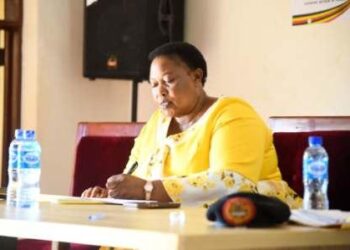
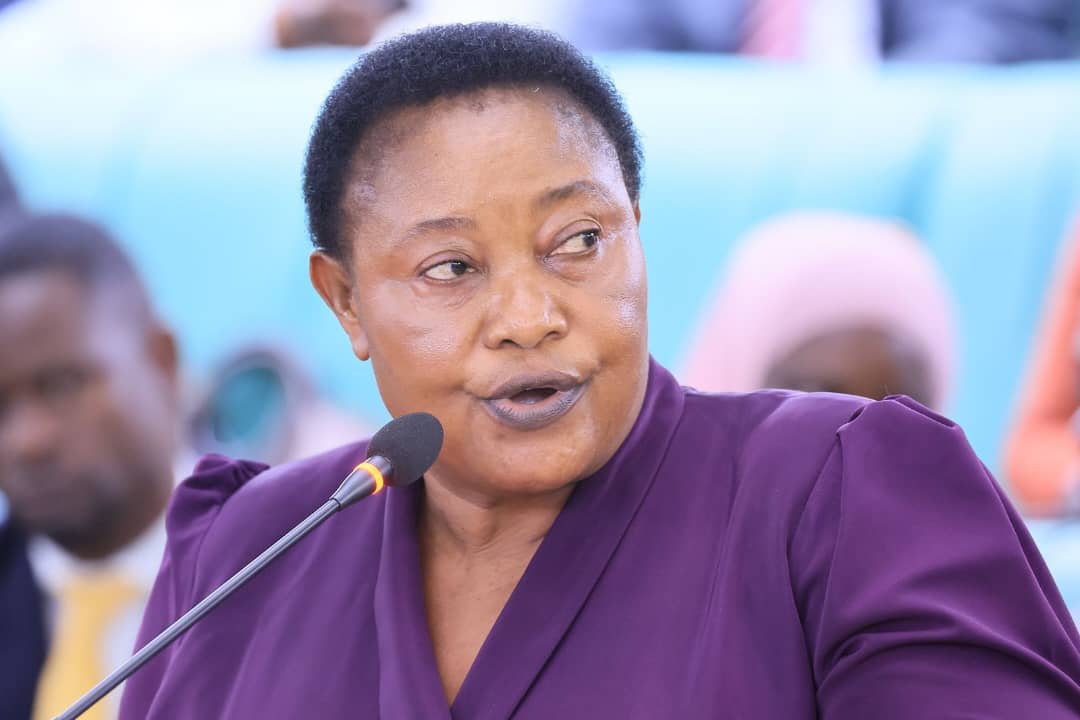
The Minister for the Presidency, Hon. Babirye Milly Babalanda, stood before the House to brief Members of Parliament on the Government’s plan to give the late King of Tooro a colourful, befitting and nationally representative send-off.

The monarch in question, His Royal Highness Rukirabasaija Omukama Oyo Nyimba Kabamba Iguru Rukidi IV, had been described throughout the week as iconic, promising and people-oriented.
He died on Friday, 28th August 2026, in Dallas, United States, at the age of 34, while receiving treatment.
Presenting a statement on behalf of Government, Minister Babalanda informed Parliament that President Yoweri Kaguta Museveni had taken personal charge of the national mourning period.
The President Who Was Once His Guardian
What Babalanda’s briefing did not need to spell out, because most of the House already knew it, was just how personal this loss was for the man leading the mourning.
When King Oyo ascended the Tooro throne in 1995, he was three years old, too young to rule in his own right.
A regency was formed to govern on his behalf until he came of age.
President Museveni was one of four regents appointed to guard the young King through his childhood.
Three decades later, it fell to that same President to announce the King’s death and organise his burial.
That history gives weight to the tribute Museveni issued the day after the King died, a tribute Minister Babalanda relayed word for word to Parliament.
“How unfair life can be! He was orphaned while still young and he has died young,” Babalanda quoted the President as saying.
Museveni had lost his own father in 1995 while still a child himself, a coincidence the President’s tribute quietly underscored.
Cabinet’s Eulogy and the Whole-of-Government Directive
Minister Babalanda told the House that on Monday, 31st August 2026, Cabinet had sat at State House Entebbe under the President’s chairmanship.
There, ministers extended long and earnest eulogies to the fallen monarch.
Cabinet then directed that an official burial be organised.
“Under the wise guidance of H.E the President, the Head of State directed the Rt. Hon. Prime Minister to coordinate a Whole-of-Government Approach bringing together the Public Sector and other critical stakeholders,” Babalanda told Parliament.
Confirming the Illness and the Journey Abroad
Babalanda also used her time before Parliament to confirm details of the King’s final months that had, until then, largely circulated as rumour.
She relayed that President Museveni had disclosed government’s role in supporting the King’s treatment first in Germany, and later in the United States, where he ultimately died.
Public accounts of the President’s own condolence message filled in the fuller picture: Queen Mother Best Kemigisa had informed Museveni months earlier that the King was battling an aggressive form of cancer, and that government had stepped in to support his treatment abroad.
Museveni also disclosed, in that same message, that the Queen Mother had told him by phone that the King had left behind a young son who would be introduced to the public as heir at the appropriate time.
Babalanda’s briefing to Parliament folded these threads together, giving MPs a fuller account of a story the public had so far only received in fragments.
The Day Parliament Mourned a King
Minister Babalanda reminded the House of its own role in the mourning process.
She informed Parliament that on Tuesday, 1st September 2026, the House had received a statement from the Prime Minister and Leader of Government Business.
Parliament then held a special sitting dedicated to debating and eulogising the late Monarch’s contribution to the socio-economic transformation of Tooro.
That sitting, coming just three days after the King’s death, marked a rare instance of Uganda’s legislature setting aside its ordinary business to honour a cultural leader outside the political establishment.
Behind Closed Doors: The Committee Taking Shape
Babalanda further briefed Parliament that, on the same day as its special sitting, the Rt. Hon. Prime Minister was chairing a different kind of meeting.
Acting on Cabinet’s directive, the Prime Minister convened and chaired an Inter-Ministerial National Organising Committee, bringing together representatives of the Royal Family of Tooro.
She said the meeting was attended by a cross-section of ministers responsible for Gender and Culture, the Presidency, Agriculture, Tourism, Wildlife and Antiquities, Public Service, Foreign Affairs, and Internal Affairs, among others.
That breadth of ministries, spanning everything from tourism to wildlife, reflected how far the government’s mourning operation had already expanded beyond the Office of the Presidency alone.
A Homecoming Delayed by a Day
Babalanda outlined for Parliament that Cabinet had received a paper from the Ministry of Gender, Labour and Social Development detailing preparatory arrangements agreed with the Royal Family.
She said the Kingdom, working with authorities in Dallas, had tentatively set Thursday, 3rd September, for the remains to arrive home.
She then confirmed to Parliament that the repatriated remains were now expected at Entebbe International Airport the following day, Friday, 4th September 2026, at 10:00 a.m.
She said government, through the Ministry of Foreign Affairs, was working with Kenyan authorities to ensure the remains transited smoothly on their journey home.
A Precedent From Teso
Before tabling the details of the burial plan, Minister Babalanda placed it in historical context for the House.
She told Parliament that, as was the case in previous burials of royal dignitaries such as the late Emorimor of the Iteso people, all government actions would be handled in a unified manner.
That reference pointed MPs to the 2022 state-supported burial of Emorimor Olem Osuban Adugala, an occasion President Museveni himself attended, where he praised Uganda’s cultural institutions for promoting unity while cautioning them against straying into partisan politics.
Eight Pillars of a National Send-Off
Minister Babalanda then tabled before Parliament the eight major requirements the Organising Committee had identified for a decent send-off.
The first was events management across five venues: Entebbe Airport, Karuzika Royal Palace, Buziga Royal Residency, Karambi Royal Tombs and St. John’s Cathedral, with government providing tents, chairs, mobile toilets and public address systems.
The second was feeding of mourners for nine days, handled by the Office of the Chief of Defence Forces under the Ministry of Defence at Buziga and Karuzika.
The third was funeral management, contracted to A-Plus Funeral Home and covering airport reception, executive vehicles hired from Nairobi, portraits, condolence books, wreaths, the order of service, a marble grave and the Royal Mausoleum, all at government’s cost.
The fourth was security and protocol, including UPDF and UPF bands, pall bearers, a gun salute and crowd control.
The fifth was palace upgrades at Karuzika, being carried out by the UPDF Engineers Brigade.
The sixth covered protocol for dignitaries, with delegations expected from royal families both within Uganda and across Africa.
The seventh was repatriation, with government having met all medical bills and repatriation costs from Dallas to Nairobi to Entebbe, paid by the President personally through State House.
The eighth was a health camp, supervised by the Ministry of Health, to serve mourners gathered in Tooro.
When the Mourning Officially Begins
Minister Babalanda closed her briefing with an important clarification for the House.
She assured Parliament that security agencies had already taken charge of protecting mourners.
But she was precise about timing: the official nine-day mourning period, she said, would begin only once the King’s body arrived at Karuzika Palace.
That detail mattered, given how much had already unfolded in the days since the King’s death, from Cabinet’s eulogies to Parliament’s own tribute sitting.
For the House, and for the President who once stood as one of the boy-king’s guardians, Friday’s arrival at Entebbe will mark the point at which grief and protocol finally give way to nine days of formal national mourning.