















A growing debate over religious freedom and public order took a decisive turn when Yoweri Kaguta Museveni personally stepped in to address tensions between Pentecostal churches and security agencies over allegations of harassment linked to noise pollution.
The matter, which has been simmering across several urban communities in Uganda, reached the President through complaints raised by church leaders who accused the Uganda Police Force of targeting places of worship during enforcement operations.
In a letter dated August 18, 2022, addressed to Bishop David Kiganda of the National Pastors’ Platform of Uganda, Museveni acknowledged receiving concerns about police actions against church groups accused of excessive noise-making.
The President’s intervention signaled both recognition of the sensitivity of the issue and a desire to prevent escalation between religious institutions and law enforcement authorities.
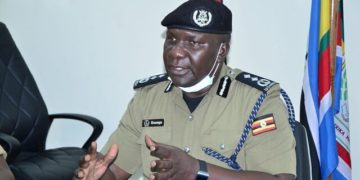
Museveni directed the Inspector General of Police to immediately halt arrests targeting the affected churches, stressing that such enforcement measures risked inflaming tensions rather than resolving the underlying problem.
 He emphasized that dialogue, rather than confrontation, should guide the search for solutions, calling for structured engagement between religious leaders and security agencies.
At the same time, the President did not shy away from challenging church leaders to reflect on their practices, particularly the use of loudspeakers during overnight worship services in residential areas.
“Does God need a megaphone?” Museveni asked, posing a question that has since sparked widespread debate among believers and the general public.
He raised concerns about whether loud nighttime worship demonstrates consideration for others, especially residents who may be resting after long working days.
The President further questioned whether public amplification is necessary for prayer and praise, suggesting that worship can still be meaningful without causing disturbance to surrounding communities.
He proposed that churches consider adjusting their schedules so that louder services take place during daytime hours when most people are awake and less affected by noise.
The directive was copied to senior government officials, including the Vice President and Prime Minister, as well as top police leadership, underscoring the seriousness with which the government views the matter.
The development highlights a broader challenge facing Uganda as urbanization continues to bring religious institutions and residential communities into closer proximity.
Noise pollution has increasingly emerged as a source of conflict, particularly in towns and cities where population density is high and space is limited.
Museveni’s intervention reflects a broader effort to balance two important constitutional principles, namely freedom of worship and the right of citizens to a peaceful environment.
Uganda’s Constitution guarantees freedom of religion, allowing individuals and groups to practice their faith without interference, a principle that has been central to the country’s governance framework since 1995.
Since coming to power in 1986, Museveni has consistently positioned himself as a defender of religious freedom, often emphasizing that Uganda is a secular state that accommodates all beliefs.
He has repeatedly encouraged coexistence among different faiths, engaging leaders from Christian, Muslim, and other religious communities in national dialogue.
In many of his past speeches, Museveni has underscored the role of religion in promoting morality, unity, and social development across the country.
He has also supported the growth of religious institutions, recognizing their contribution to education, health, and community welfare.
At the same time, the President has maintained that freedom must be exercised responsibly and within the limits of the law.
He has often cautioned that individual rights should not infringe upon the wellbeing of others, a principle that now lies at the heart of the church–police dispute.
The current situation illustrates the delicate balance required in a rapidly evolving society where competing interests must coexist.
Religious leaders argue that worship practices, including night prayers and the use of amplification, are integral to their faith and spiritual expression.
On the other hand, many residents have raised concerns about sleepless nights and the impact of prolonged noise on their health and daily lives.
Museveni’s approach seeks to bridge this divide by encouraging mutual understanding and practical adjustments rather than rigid enforcement.
His call for dialogue signals a recognition that sustainable solutions can only be achieved through cooperation between all stakeholders.
As discussions between church leaders and authorities continue, the outcome is likely to shape how similar conflicts are managed in the future.
The issue goes beyond noise alone and touches on broader questions about how freedoms are exercised in shared spaces.
For many Ugandans, the President’s involvement has brought renewed focus on the need to harmonize rights with responsibilities in a way that fosters peaceful coexistence.
In raising the question of whether worship requires amplification at all hours, Museveni has not only addressed a practical concern but also opened a deeper conversation about the nature of faith and community life in modern Uganda.