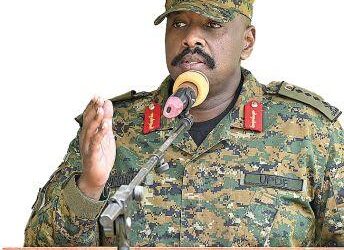














President Yoweri Kaguta Museveni has renewed his appeal to the people of Butaleja District to reduce their heavy reliance on rice cultivation and adopt a more diversified agricultural economy, emphasizing that broader commercial ventures will accelerate household incomes and regional prosperity.
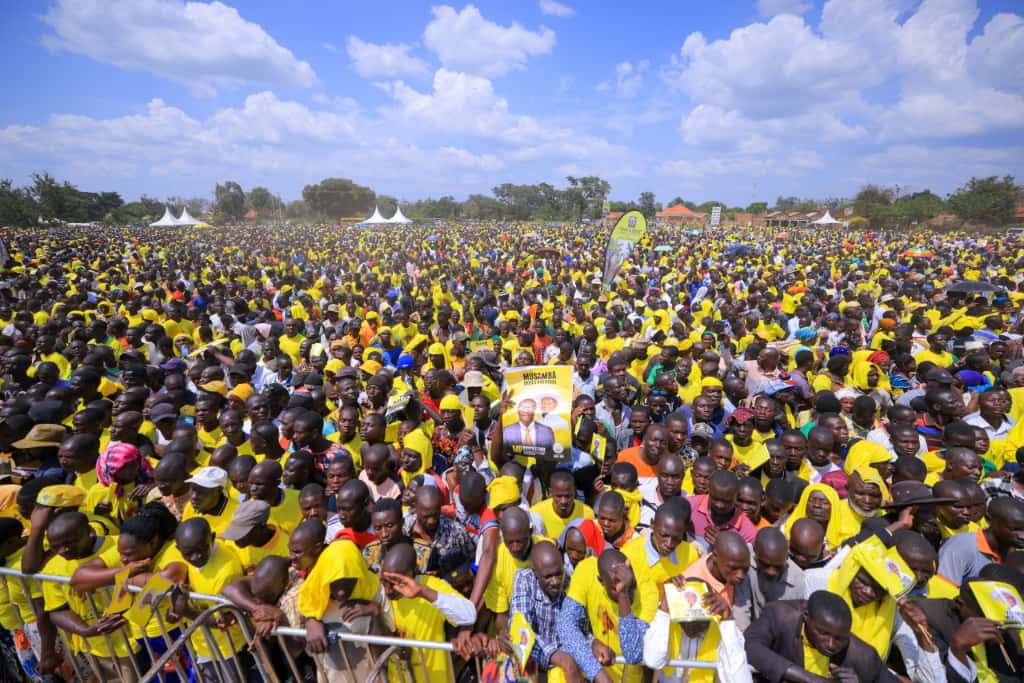
The call was made as the National Resistance Movement (NRM) Presidential candidate addressed a large crowd at Boma Grounds during his campaign tour of the Bunyole sub-region, where he underscored the urgent need for the district to shift from its historic dependence on the Doho Rice Scheme and similar wetlands-based rice projects.
Gen. Museveni said diversification is now essential for sustainable wealth creation, arguing that long-term agricultural resilience requires communities to take advantage of alternative enterprises that offer higher returns and better withstand climate and market shocks.

The President urged residents to seriously consider fish farming as one of the viable enterprises that would coexist well with the district’s natural endowments.
He explained that aquaculture has transformed incomes in other regions and could offer Butaleja youth and households a profitable pathway out of subsistence farming.
He pledged further community engagement after the elections, noting, “He promised to further engage the community on these ventures after the elections.”
Gen. Museveni drew comparisons with successful agricultural transformation in Karamoja and Lira, where farmers have embraced his four-acre model and expanded into enterprises such as dairy farming, fruit growing, and poultry to boost household wealth.
He encouraged Butaleja residents to emulate these examples, stressing that the four-acre model remains a practical blueprint for rural economic advancement.
The President also addressed longstanding concerns about the state of the Nabumali–Butaleja–Namutumba road, reaffirming the government’s plan to upgrade it to tarmac standard.
He attributed the delays to poor prioritisation by some leaders, saying that the push for less essential projects had overshadowed urgent infrastructure needs.
Gen. Museveni reminded the public that the NRM’s development philosophy is grounded in focusing on what is essential, stating that pursuing non-priority ventures often slows down progress on strategic undertakings like the road network.
He noted that despite the challenges, Butaleja has recorded visible achievements under the NRM government, particularly in social services and infrastructure.
He reported that 14 of the district’s 15 sub-counties have been connected to the national electricity grid, a milestone he said has expanded business opportunities and improved the quality of life.
He highlighted the district’s improved telecommunication coverage, enhanced road access, and enduring peace as significant dividends of NRM leadership.
He also noted that the district now enjoys a 94 percent clean and safe water coverage, which he described as central to public health and community well-being.
On the social sector, Gen. Museveni outlined ongoing plans to strengthen healthcare and education.
He revealed that Butaleja currently hosts 102 government primary schools, 13 government secondary schools, and several health units, including a district general hospital.
He also listed additional health facilities planned for construction or elevation as part of the broader effort to expand service delivery across the region.
The NRM presidential candidate promised to expedite the installation of Professor Elly Wesana Chomi as head of the Obwasehuru Bwa Bunyole Cultural Institution.
He issued a directive to the Ministry of Gender, Labour and Social Development to finalise the process, signalling a commitment to resolving longstanding cultural leadership concerns in the district.
Gen. Museveni reiterated his broader jobs and wealth creation strategy anchored in commercial agriculture, emphasizing once more the effectiveness of the four-acre model.
He backed his argument with testimonies from farmers who have prospered using the approach, adding that industrialization remains critical to sustaining the country’s economic trajectory.
He pointed to the Mbale Industrial Park as a key driver of manufacturing and employment, noting that its continued development will open more opportunities for young people across the Bukedi and Bugisu regions.
The President also appealed to the people of Butaleja to safeguard the gains of universal access to education.
He urged them to reject illegal charges imposed by some schools, warning that such practices undermine the government’s commitment to free learning.
During the rally, NRM Butaleja District Chairperson Moses Pabire presented a detailed status report on the district’s priorities and challenges.
His presentation was followed by remarks from the NRM 2nd National Vice Chairperson (Female), Anita Among, who rallied support for the party and highlighted the importance of continued political stability for development.