















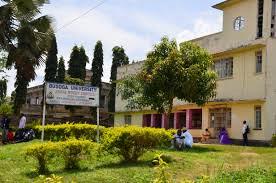
The atmosphere surrounding Busoga University is steadily shifting from uncertainty to cautious optimism as national leaders intensify efforts to restore the institution to its former promise.
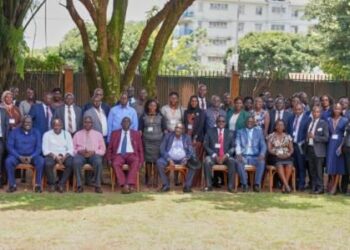
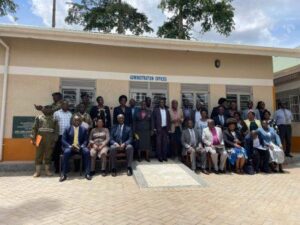
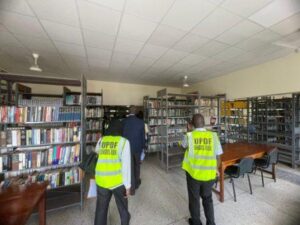
Members of Parliament sitting on the Education Committee recently undertook a detailed inspection of the university’s facilities, signaling a renewed political and institutional commitment to reviving higher education in the Busoga sub-region.
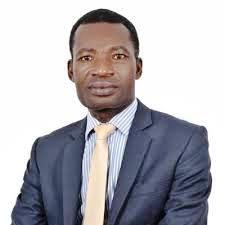

The delegation was led by Bunya East MP James Kubeketelya, who guided the team through the campus alongside a technical taskforce chaired by Professor John Tabuti and engineers from the Uganda People’s Defence Forces Engineering Brigade.
The visit revealed significant progress, with the taskforce confirming that 13 classroom blocks have already been renovated, delivering a total of 64 fully equipped classrooms ready to support learning.
They further explained that six land titles covering 219.8 acres have been successfully transferred to government ownership, securing the university’s physical and legal foundation for future expansion.
In addition, a comprehensive staffing structure comprising 434 positions has been developed, laying the groundwork for academic and administrative operations.
The Ministry of Education and Sports has also intervened to clear inherited liabilities amounting to Shs15 billion, a move widely seen as critical in restoring institutional credibility.
During the engagement, a key decision was reached to retain the name Busoga University, firmly rejecting earlier proposals by the Office of the Auditor General and the Public Accounts Committee to rename it to alternatives such as Kiira or Iganga University.
This decision was interpreted by many stakeholders as a symbolic restoration of identity and pride for the people of Busoga.
Legislators openly praised the efficiency of the UPDF Engineering Brigade, noting that the renovation works had been completed within a remarkably short timeframe.
However, Theodore Ssekikubo Sewungu cautioned that more investment is still required to elevate the institution to modern university standards.
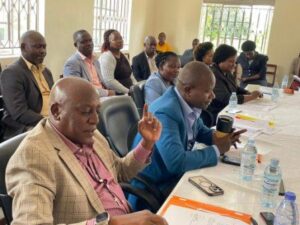
“I am happy that UPDF has done its work in the shortest time allocated to them,” he said.
“However, I ask the management committee to draft a budget that will provide better structures, as the current buildings resemble those of primary or secondary schools,” he added.
Kubeketelya emphasized that the next crucial phase involves legally formalizing the university through a statutory instrument under the Universities and Other Tertiary Institutions Act.
He explained that this process will require Cabinet approval, followed by submission to Parliament along with a certificate of financial implication.
With the 11th Parliament approaching the end of its term, he urged all stakeholders to act swiftly to ensure the university is operational within the planned timeline.
Beyond the political and administrative processes, religious and community leaders have also voiced strong support for the initiative.
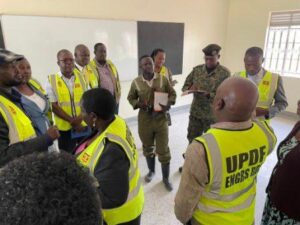
The Bishop of the Central Busoga Diocese, Patrick Wakula, commended the government for its efforts and called for the expedited completion of all remaining procedures.
He expressed optimism that the university could open its doors for the August 2026 intake, describing the development as long overdue for the region.
The renewed push to revive Busoga University is deeply rooted in its complex history and the aspirations of the Busoga people.
Originally established as a private institution, Busoga University was founded to expand access to higher education in eastern Uganda, particularly for students who could not easily secure places in public universities.
Over time, it became an important academic hub, offering programs in education, business, social sciences, and information technology.
The university played a significant role in training teachers, civil servants, and entrepreneurs who have contributed to local and national development.
However, financial mismanagement, governance challenges, and mounting debts eventually led to its decline, forcing government intervention to prevent its complete collapse.
The decision by the state to take over and rehabilitate the institution reflects a broader policy direction aimed at strengthening regional access to quality higher education.
In the wider context of Uganda’s education system, institutions like Busoga University are critical in bridging regional inequalities and promoting inclusive development.
For the Busoga sub-region, the revival of the university represents more than just an academic project, as it symbolizes economic opportunity, youth empowerment, and cultural pride.
It is expected to stimulate local economies through job creation, increased student populations, and demand for services such as housing, transport, and commerce.
Nationally, the university is poised to contribute to Uganda’s human capital development by producing skilled graduates aligned with the country’s development goals.
As preparations intensify toward the anticipated August 2026 reopening, the momentum around Busoga University continues to build, driven by a shared vision among government, legislators, and the community.
For many in Busoga, the reopening is not just about resuming classes but about restoring hope and reclaiming a vital institution that once stood as a beacon of academic ambition in the region.ajor milestone for the region.