
















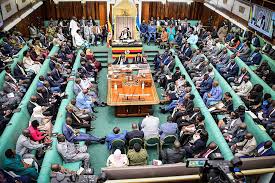
A sense of urgency has taken hold inside Uganda’s legislature as lawmakers push to finalize critical national business before the current parliamentary term comes to an end.
With the 11th Parliament nearing its conclusion, Members of Parliament are working under tight deadlines to pass essential budget and legal measures ahead of the transition to a new House.
At the center of this coordinated effort is the Speaker of Parliament, Anita Among, who has been steering the process with a clear focus on meeting constitutional obligations.
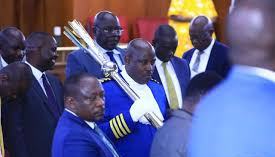
She confirmed that Parliament is operating within strict timelines that cannot be extended without risking disruption to government operations.
“We have budget timelines that we must meet,” Among told legislators, underscoring the urgency of the moment.
Her remarks highlighted a carefully structured legislative schedule that compresses weeks of critical work into a short window of less than three weeks.
The process involves the review of sector committee reports, consideration of tax proposals, and ultimately the passage of the national budget through the Appropriation Bill.
This intense activity is guided by the Public Finance Management Act, as well as Parliament’s own procedural rules, which set firm deadlines for approving the national budget before the new financial year begins on July 1.
Among pointed to specific provisions within Parliament’s Rules of Procedure that dictate how this work must be handled.
She cited Rule 156, which governs how committees scrutinize ministerial policy statements before they are brought to the House.
She also referenced Rule 157, which deals with the consideration of revenue and tax legislation.
In addition, she noted Rules 158 and 159, which outline the procedures for approving government expenditure through appropriation.
According to the schedule laid out before Parliament, sector committee reports are expected to be submitted within the week, forming the foundation for subsequent debates.
Lawmakers are then set to examine and pass tax and revenue bills between April 21 and April 24, 2026.
This will be followed by deliberations on the Appropriation Bill between April 28 and April 30, a crucial step that authorizes government spending.
Among explained that the timing of these processes has been deliberately adjusted to accommodate the impending transition.
“This being a transition period, we decided to bring the Appropriation earlier because by May, MPs will be swearing in and we shall not have Parliament,” she said.
Her statement reflects the practical reality that once the current Parliament dissolves, legislative activity pauses until the new members are sworn in.
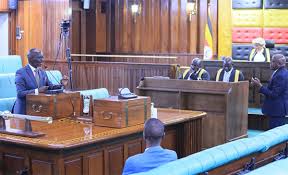
Without the approval of Parliament, the government cannot legally access funds from the Consolidated Fund, making the passage of the budget not just important but essential.
Failure to meet these deadlines would risk paralyzing government operations at the start of the new financial year.
In anticipation of the transition, Parliament had earlier issued formal guidance on the swearing-in of incoming legislators.
The Clerk to Parliament is expected to administer the process between May 13 and May 15, 2026, at Parliament House.
During the ceremony, newly elected Members of Parliament will take both the Oath of Allegiance and the Oath of a Member of Parliament, officially marking the beginning of the 12th Parliament.
This transition period represents a delicate balancing act between concluding unfinished business and preparing for a new legislative cycle.
For lawmakers, the coming days are not just about clearing paperwork but ensuring continuity in governance and stability in public service delivery.
As debates intensify and deadlines draw closer, Parliament’s ability to meet these obligations will determine how smoothly Uganda moves from one legislative term to the next.