














A tense courtroom session took a dramatic turn as fresh forensic testimony appeared to clear Robert Kayanja of allegations that he had shared pornographic material with individuals linked to a widely publicised case.
The proceedings, marked by intense exchanges between prosecution and defence teams, centered on digital evidence that has been at the heart of the case.
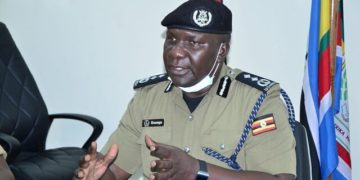
At the center of the testimony was Enock Kanene, a police forensic analyst tasked with examining electronic devices connected to the accused persons.
Kanene, while under cross-examination by state attorney Jonathan Muwaganya, firmly stated that his analysis did not uncover any pornographic content originating from Pastor Kayanja’s phone.
He clarified that contrary to reports circulated by some media outlets, he had never testified that such material was sent by the pastor.
The clarification directly challenged earlier narratives amplified by media platforms associated with Jackson Ssenyonga and Bishop David Kiganda.
Kanene explained that the device he examined belonged to Reagan Ssentongo, one of the suspects charged alongside others with offences including defamation, criminal trespass, and giving false information to police.
He told court that while pornographic material was indeed found on Ssentongo’s phone, none of it could be traced back to Pastor Kayanja.
Instead, the analyst revealed that the content appeared to have been either locally recorded on the device or shared through messaging platforms such as Telegram and WhatsApp.
As the session progressed, the courtroom atmosphere grew increasingly intense, with the forensic expert subjected to a prolonged and rigorous cross-examination.
The questioning exposed several procedural weaknesses in how the digital evidence had been handled.
Kanene admitted to lapses in professional conduct, including engaging in communication with an individual identified as Wasswa without properly verifying his identity.
He told the court that he initially believed Wasswa was a court official because he persistently requested updates on the forensic process.
Under pressure, Kanene conceded that he had failed to confirm this assumption through official channels.
“Analysts are prohibited from conducting any business outside the boardroom… I thought he was part of them,” he said, acknowledging that the interaction was inappropriate.
The issue of digital interpretation also came under scrutiny, particularly regarding how message data was analyzed.
Kanene’s report had indicated that certain messages were marked as “read,” a claim that was challenged by both the defence and the presiding magistrate.
The court noted that messaging systems often record messages as “read” once they are opened, regardless of whether the recipient actually read or understood them.
Kanene ultimately admitted this limitation in his analysis.
“If 50 messages are received and only the last one is opened, the system may capture all 50 as read,” State Attorney Muwaganya pointed out, highlighting the potential for misinterpretation.
Further testimony revealed the existence of a video on one of the suspects’ phones showing an adult male with what appeared to be blood.
This evidence was linked to earlier claims of an alleged plot involving the use of chicken blood to fabricate accusations against Pastor Kayanja.
The prosecution also raised concerns about missing data in the forensic report, particularly an audio recording involving a contact identified as “Mzee.”
Kanene admitted that he had not followed the required procedures to verify the ownership of the phone number linked to this contact.
He further acknowledged that he had selectively verified some numbers while ignoring others, raising questions about the completeness of his findings.
The state argued that without verified data, the identity of “Mzee” could not be conclusively established, leaving gaps in the evidence presented.
Following hours of intense questioning, the visibly exhausted analyst stepped down, and the court adjourned the case to allow the defence additional time to prepare for re-examination.
Beyond the courtroom drama, the case has drawn significant public attention due to the prominence of Pastor Kayanja within Uganda’s religious landscape.
Kayanja is widely known as the founder and lead pastor of Rubaga Miracle Centre Cathedral, one of the largest Pentecostal churches in Uganda.
Over the years, he has built a reputation as a prominent evangelist, attracting thousands of followers through his preaching and outreach programs.
His ministry has been associated with large-scale crusades, youth empowerment initiatives, and charitable activities aimed at supporting vulnerable communities.
Kayanja has also been involved in humanitarian efforts, including providing relief support and contributing to education and health initiatives through his church programs.
His influence extends beyond Uganda, with international connections that have helped position his ministry as a key player in the global Pentecostal movement.
Supporters describe him as a figure who has contributed significantly to the growth of the born-again faith in Uganda, particularly in urban centers.
The current case, however, represents one of the most serious legal challenges he has faced, bringing his name into intense public scrutiny.
As the trial continues, the forensic findings presented in court are likely to play a critical role in shaping its outcome.
For now, the testimony that no pornographic material originated from his phone has provided a significant boost to his defence.
The coming sessions are expected to further test the credibility of the evidence and determine the direction of the case.