













Every year, the red-dust roads leading to Namugongo come alive with the shuffle of bare feet and sandals, the hum of hymns carried on the warm Ugandan air, and the quiet murmur of prayers ascending from cracked lips.
Pilgrims walk for days — some for hundreds of kilometres — driven not by comfort, but by devotion.
They come to honour 45 young men who, between 1885 and 1887, chose death over the abandonment of their faith.
But in a world where invisible enemies can travel faster than any pilgrim, the ancient rhythm of that sacred walk has found itself interrupted — first by the shadow of a global pandemic, and now by the spectre of one of the world’s deadliest viruses.
The Uganda Martyrs’ Day celebrations at the Namugongo shrines, described as one of the most important events on the African Christian calendar, have entered a new and cautious era — one where faith and science must walk hand in hand.
A Shrine Born From Blood and Flame
To understand the weight of what is at stake, one must first understand what Namugongo represents to millions across Uganda and the wider continent.
Martyrs’ Day is one of Uganda’s most significant religious observances, held in remembrance of 45 Christian converts who were executed between 1885 and 1887 under Kabaka Mwanga II.
These young men — pages in the court of the Buganda Kingdom — were burned alive or beheaded for refusing to renounce Christianity and for resisting the sexual advances of their king.
Their courage in the face of death transformed them into symbols of unyielding faith, and the site of their execution, Namugongo, was consecrated as hallowed ground.
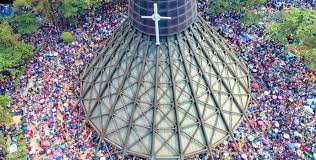
The larger Catholic shrine was built in 1968 and features 22 copper pillars representing the Catholic martyrs, as well as a man-made lake where pilgrims draw holy water believed to have healing properties.
The Anglican shrine stands nearby, the two sites jointly forming what has become, over more than a century, one of the most visited religious pilgrimage destinations anywhere in Africa.
The Martyrs’ Day celebrations, held every year on June 3, attract massive crowds of pilgrims from across East Africa and beyond, with attendance in previous years reaching hundreds of thousands and sometimes millions.
The journey to Namugongo is itself considered an act of devotion.
According to John Mwaura, a regular pilgrim to the Namugongo shrine, when walking to the shrine, the travelers make stops at local churches, schools, and hospitals, and some go to private homes where they are given free showers, food, and a place to rest and hold night prayers.
For many Ugandans and visitors from Kenya, Tanzania, Rwanda, South Sudan, and the Democratic Republic of Congo, the annual pilgrimage is not merely a religious duty — it is a personal covenant renewed year after year.
The Archbishop’s Visit: A University Steps Forward
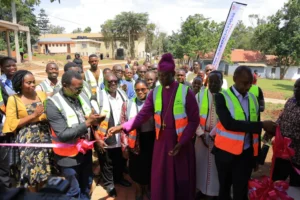
It was against this rich tapestry of faith and history that the Archbishop of the Church of Uganda, the Most Rev. Dr. Stephen Samuel Kaziimba Mugalu, made a significant inspection visit to the Uganda Martyrs’ Anglican Site at Namugongo.
His mission was clear: to assess the readiness of Uganda Christian University (UCU) to serve as the host institution for the year’s Uganda Martyrs’ Day celebrations.
The mandate had come from the highest authority within the Church of Uganda — the House of Bishops had assigned UCU the responsibility of organising the national celebrations on behalf of the entire province.
It was a significant honour, but also a considerable undertaking in circumstances that were anything but ordinary.
The Archbishop, who also serves as Chancellor of Uganda Christian University, had earlier publicly announced UCU’s role with evident pride.
“Uganda Christian University, where I serve as chancellor, will host the 2026 celebrations,” the Archbishop had declared. “We promise to deliver one of the best commemorations yet.”
Since assuming this responsibility, UCU had thrown itself into a programme of sweeping transformation at the Anglican site.
The improvements spanned multiple areas of pressing need: security and safety, environmental beautification, branding, as well as sanitation and water supply infrastructure.
Among the most notable physical achievements was the construction and renovation of modern toilet facilities capable of accommodating the thousands of pilgrims who descend on the shrine each year.
Organised walkways were established to manage the flow of worshippers across the grounds, while restoration of the green environment gave the site a renewed sense of dignity and calm.
Sections of a collapsed perimeter wall were rebuilt to enhance the security of the compound and protect the sanctity of the space from encroachment — an issue the Archbishop had previously flagged with deep concern.
“Church land has long been threatened by land grabbers,” the Archbishop had warned. “This perimeter wall stands as a symbol of stewardship and responsibility.”
A solar-powered water supply system was drilled and constructed on site, ensuring that pilgrims and worshippers would have reliable access to clean water — a provision that would prove even more significant in the context of public health preparedness.
Several buildings across the site were renovated, and a comprehensive general clean-up of the grounds was undertaken, presenting pilgrims and the watching nation with a shrine renewed in both spirit and appearance.
When God’s People Must Obey Science: The ‘Scientific’ Celebrations
However, no amount of physical preparation could alter the most consequential factor shaping this year’s celebrations: the state of public health.
In consideration of the prevailing public health circumstances, the Church of Uganda announced that this year’s Uganda Martyrs’ Day celebrations would be conducted scientifically, and strictly in accordance with the Ministry of Health’s Standard Operating Procedures (SOPs).
The phrase “scientific celebrations” — now familiar to Ugandan Christians — had entered the nation’s religious vocabulary during the era of COVID-19, when mass gatherings were suspended and churches adapted to find ways of keeping faith alive without endangering lives.
“On June 3, the Church of Uganda will host a scientific observance of Martyrs’ Day at the Anglican Shrine, Namugongo,” a Church statement confirmed. “We are expecting only 200 VIP guests in order to observe the Ministry of Health’s COVID-19 guidelines.”
The decision to restrict attendance reflected an institutional maturity within the Church — an acknowledgment that the call to love one’s neighbour extended to protecting them from invisible peril.
The national Uganda Martyrs’ Day celebrations would be held at the Uganda Martyrs’ Anglican Site at Namugongo, but strictly by invitation only.
Attendance at the main service was limited in accordance with Ministry of Health guidelines, ensuring that the central act of worship could proceed without becoming a vector for disease transmission.
All dioceses across the Church of Uganda were encouraged to commemorate Martyrs’ Day in their respective parishes, taking the celebration from a single national gathering to a thousand local expressions of faith.
The official Martyrs’ Day liturgy was to be shared through Diocesan Secretaries in due course, ensuring theological and liturgical coherence across all celebrating parishes.
The scientific service was streamed live across Church of Uganda media platforms, as well as broadcast by partner media houses, so that millions who could not be physically present could participate fully in spirit.
“We call upon you [media houses] to support us with live broadcasting services to enable the general public follow from the comfort of their homes,” the Church’s communication appeal read in part.
The Ebola Spectre: A Virus That Knows No Borders
The public health context surrounding Uganda’s most sacred celebrations has since grown sharply more alarming, with the emergence of a new and particularly dangerous Ebola outbreak threatening to reshape the nation’s entire approach to public gatherings for the foreseeable future.
On 5 May 2026, the World Health Organization (WHO) was alerted to a high-mortality outbreak of unknown illness in Mongbwalu Health Zone, Ituri Province, Democratic Republic of the Congo, including deaths among health workers.
Laboratory analysis confirmed Bundibugyo virus disease (BVD) in eight of 13 samples on 15 May — a species of Ebola. The case fatality rates in the past two BVD outbreaks have ranged from 30% to 50%.
What makes this particular outbreak uniquely threatening is a biological reality that has alarmed scientists worldwide: unlike other Ebola strains, there is no licensed vaccine or specific therapeutics against Bundibugyo virus, though early supportive care is lifesaving.
As of late May 2026, health authorities have recorded over 200 deaths and nearly 1,000 suspected cases across the DRC and Uganda.
The virus did not remain confined to the DRC.
The Uganda Ministry of Health confirmed an outbreak of BVD following the identification of one imported case from DRC — a Congolese man who died in the capital city of Kampala.
A second imported case was confirmed on 16 May in Kampala, in an individual returning from DRC with no apparent links to the first case.
As of 27 May 2026, Uganda has reported seven confirmed cases, including one death, with three of these cases linked to travel from DRC.
The global health community responded with unprecedented speed.
On 17 May 2026, the WHO Director-General determined that the Ebola disease caused by Bundibugyo virus in DRC and Uganda constitutes a public health emergency of international concern (PHEIC), as defined in the provisions of the International Health Regulations.
A Public Health Emergency of International Concern is the highest level of global health alert, reserved for outbreaks that pose a serious risk beyond the country of origin.
The last time such a designation was applied was during the COVID-19 pandemic — underscoring the severity with which the international community regards the current outbreak.
Uganda’s Border and the Pilgrimage Problem
The Ebola crisis has cast a long shadow specifically over the Namugongo pilgrimage, creating what health experts describe as a near-perfect storm of transmission risk.
Uganda continues to receive thousands of pilgrims annually, including from eastern DRC, where Ebola has been reported, making the mass gathering a potential public health risk.
The convergence of millions of pilgrims — many from the DRC, the epicentre of the outbreak — at a single site presented authorities with a crisis of conscience: how does a nation honour its deepest spiritual commitments while protecting the lives of those who come to pray?
President Yoweri Kaguta Museveni addressed the nation directly on the matter.
“After consultations with the national epidemic response task force and religious leaders, we have decided to postpone Martyrs’ Day celebrations to a later date, which will be communicated,” President Museveni stated.
The announcement sent shockwaves through the devout community, particularly among those who had already begun their long journeys to Namugongo.
Millions of pilgrims travel for the event, with thousands walking long distances to the shrine, but those who had started the journey this year were urged to turn back.
Already, several pilgrims travelling on foot from the Catholic Diocese of Butembo-Beni in the DRC had arrived in Western Uganda’s Kasese District by the time of the postponement, with several more groups seen heading to Namugongo and some at the Kenya–Uganda border.
Uganda’s health minister, Dr. Jane Ocero, appealed for calm while explaining the gravity of the decision.
“Since the water at the shrine has been alleged to have some healing miracles, some pilgrims could sneak through porous borders to Uganda from Congo and finally to the shrine and this could increase the infections; the only option we had remained with was to suspend the event until further notice,” she said.
For devoted pilgrims like John Mwaura, who had been preparing for his 500-kilometre journey from Nakuru, Kenya, the news was deeply painful.
“Though we’re not happy about the postponement of the event, but we cannot neglect the risk of Ebola infection. The safety of the pilgrims was of more importance,” he told The Living Church.
The 56-year-old man noted this would be only the second time he had missed the pilgrimage since his youth.
Catholic bishops in Uganda, for their part, urged their flock not to despair.
Bishop Joseph Anthony Zziwa of Kiyinda-Mityana, president of the Ugandan bishops’ conference, urged the people to remain calm, prayerful, united and hopeful following the postponement.
Uganda’s Fight: A Government on the Frontline
The Ugandan government’s response to the Ebola outbreak has been swift and multi-layered, drawing on hard lessons learned from previous encounters with haemorrhagic fever viruses.
Uganda has a sobering history with Ebola.
The Bundibugyo species of Ebola virus was first identified in Uganda in 2007 and has historically been associated with somewhat lower case fatality rates than other species of Ebola virus disease, though severe disease and death can still occur.
The country has also survived previous outbreaks of other Ebola strains, building institutional memory and response capacity that international health bodies have repeatedly praised.
Upon confirmation of the current outbreak, Ugandan authorities activated surveillance, screening, and response measures immediately.
National authorities, in collaboration with WHO and partners, implemented response measures including the deployment of rapid response teams, delivery of medical supplies, strengthened surveillance, laboratory confirmation, infection prevention and control assessments, the set-up of safe and optimised treatment centres, and community engagement.
Uganda temporarily closed its border with the Democratic Republic of Congo as officials worked to prevent further spread of the ongoing outbreak centred in Congo’s Ituri province, with limited cross-border movement still allowed for humanitarian operations, cargo transport, security, and Ebola response teams under strict health screening protocols.
The regional dimension of the crisis demanded equally bold regional coordination.
A high-level ministerial meeting on cross-border coordination acknowledged the heightened regional risk associated with porous borders, active trade and mining corridors, humanitarian crises, population displacement, insecurity, and limitations in surveillance and preparedness capacities at points of entry and border communities.
International partners mobilised resources at a scale reflecting the gravity of the threat.
The United States government provided $32 million in bilateral assistance to key partners on the ground, including the International Medical Corps, UNICEF, MedAir, the International Organization for Migration, the World Food Program, FHI360, and Samaritan’s Purse, supporting interventions including rigorous border screening, aggressive contact tracing, direct patient care, the execution of safe and dignified burials, and the rapid logistical transport of vital personal protective equipment.
WHO’s response measures included strengthening epidemiological surveillance, infection prevention and control at all points of entry, strengthening point of entry screening and cross-border coordination — including protocols specifically addressing mass gatherings.
In Uganda, organisations such as CARE are supporting the Ministry of Health’s Ebola preparedness measures, including screening and surveillance at points of entry, rapid response readiness in high-risk districts, infection prevention and control, and broader public health communication efforts.
Neighbouring Kenya, acutely aware of the porous nature of its shared border with Uganda, also moved quickly.
Kenya’s Director General for Health, Dr. Patrick Amoth, said the Ministry of Health intensified surveillance and response measures, activating the Public Health Emergency Operations Centre and strengthening national and county Emergency Operations Centres to enhance response capacity, with screening measures enhanced at high-risk entry points such as Busia, Malaba, Suam, and Jomo Kenyatta International Airport.
UCU’s Mandate Endures: Planning for a Safer Tomorrow
Even as the Ebola threat reshapes the immediate future of the Namugongo celebrations, Uganda Christian University’s commitment to the Anglican Martyrs’ site has not wavered.
The Archbishop assigned UCU not only to continue organising the current year’s scientific celebrations but also to prepare to coordinate the following year’s Uganda Martyrs’ Day celebrations.
The Archbishop of the Church of Uganda, the Most Rev. Dr. Samuel Kaziimba Mugalu, confirmed that Uganda Christian University, which had been scheduled to organise this year’s Anglican celebrations, will instead lead the 2027 national celebrations.
It is a testament to the University’s dedication to its mandate that, even amid postponement, the preparations at Namugongo continued uninterrupted.
At both the Catholic and Anglican shrines in Namugongo, workers remained busy carrying out maintenance and construction activities as organizers awaited further communication from government regarding the new dates for the celebrations.
The next cluster of organising dioceses is to be announced at the celebrations for the following year, preserving the tradition of rotating custodianship that spreads ownership of this national moment of faith across the entire province.
The Church of Uganda has used these challenging times to issue a reminder that runs deeper than logistics.
The faithful — and all members of the public — are encouraged to continue observing the Ministry of Health Standard Operating Procedures, for the safety and well-being of all.
In that simple instruction lies a profound theological statement: that caring for the body of one’s neighbour is itself an act of worship, as sacred as any pilgrimage.
A Faith That Will Not Be Extinguished
The Uganda Martyrs died because they refused to let anything — not a king, not a fire, not the threat of death — stand between them and the truth they had embraced.
Nearly 140 years later, their spiritual heirs are learning a different kind of courage: the courage to stay home, to pray apart, and to trust that faith is not diminished by distance.
The bonfires of Namugongo may burn less brightly this year, and the red-dust roads may carry fewer feet.
But the prayers rising from a thousand parishes across Uganda, from homes in Kampala to villages in Karamoja, carry the same weight as they always have.
And the preparations at the Anglican site — those new toilet blocks, those solar-powered water pumps, those rebuilt walls — stand as quiet testimony to a Church that is planning not just for this year’s celebrations, but for the generations of pilgrims still to come.