
















A Region on Edge
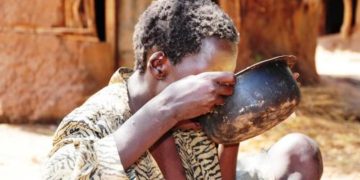
The numbers tell a sobering story. As of November 2025, the number of East Africans facing acute food insecurity stood at 45.3 million, unchanged from the month before but masking sharp disparities between countries.
That figure represents more than a statistic. It represents farmers watching crops wither in fields that once reliably fed their families.

It represents pastoralists walking ever greater distances in search of water for their herds.
And it represents a region’s food systems straining under the weight of a changing climate.
According to the Alliance for International Medical Action, the regional picture is mixed, with severe deterioration evident in Ethiopia and Kenya, where drought, crop failures and insecurity are driving widespread Crisis-level outcomes, and Emergency conditions projected in parts of Ethiopia.
South Sudan remains the most critical hotspot in the region, with Crisis and Emergency conditions persisting and some populations facing Catastrophe-level food insecurity, sustaining a credible risk of famine.
Uganda, long regarded as one of the region’s more dependable agricultural producers, has not been spared.
The same report highlights worsening food insecurity in Uganda and South Sudan, alongside moderate deterioration in Rwanda and Kenya, and relative stability in Tanzania.
Uganda’s Fraying Safety Net
For a country where, according to Dr. Enock Warinda, Managing Director and Chief Impact Officer, farming still anchors employment and household income, the disruptions caused by climate variability ripple far beyond immediate hunger.
They weigh on poverty reduction. They weigh on national development.
And even city dwellers who have never planted a seed in their lives are feeling the effects, through higher food costs and a more expensive cost of living overall, with the burden falling hardest on low-income households for whom food makes up the largest share of household spending.
This pattern is not unique to Uganda’s cities. It echoes across the region’s vast agricultural landscape, where dependence on the seasons has become a source of growing anxiety rather than quiet certainty.
A recent government assessment captured just how exposed that dependence has become.
A 2026 report by the Uganda Bureau of Statistics found that 97.2% of parishes nationwide rely on rainfall for farming, and that this dependence is becoming increasingly risky as weather patterns shift.
The findings showed that 75.7% of parishes now experience irregular rainfall seasons, making farming less predictable and increasing the risk of crop failure.
That is not a problem confined to a remote corner of the country.
It is, in effect, a near-universal vulnerability stretching across nearly every farming community in Uganda.
Karamoja: Ground Zero for Climate Stress
Nowhere in Uganda illustrates the crisis more starkly than Karamoja, the country’s arid northeastern sub-region.
Communities there have relied on small-scale subsistence farming and pastoralism for generations, livelihoods that are closely coupled to rainfall in a region where precipitation is notoriously unpredictable.
A prolonged dry spell that began in early 2022 contributed to a fourth consecutive poor harvest in the region, driven by below-average rainfall, livestock losses and a weakening of communities’ coping capacity.
The human toll of that stress has been documented in detail.
A recent food security assessment found Karamoja reporting the highest severity of acute malnutrition in the country, with three districts classified in Critical condition and four more in Serious condition.
Moroto district recorded the highest malnutrition rate in the assessment, at 20.4 percent, a stark contrast attributed to differences in geography, environment, livelihoods and socio-economic conditions across districts.
There is, however, a measure of cautious hope in the most recent projections.
The overall food security situation in Karamoja is expected to improve as the harvest of major staple crops is anticipated to be above normal, supported by forecasted above-average rainfall during the June to August period.
But improvement in one season does not erase the underlying fragility.
Engineers working on water management projects in the area describe a region trapped between two extremes.
“As a result of the high rainfall variability, the Karamoja sub-region suffers acute water shortages during the dry season and heavy flash floods during the rainy season,” said Eng. Maximo Twinomuhangi, team leader of the Kyoga Water Management Zone Project under the Ministry of Water and Environment.
“During the dry season, the Karamojong migrate many kilometres in search of water and pasture for their animals,” he added.
He was direct about what lies ahead.
“Climate change projections indicate that temperatures will rise, rainfall intensity will increase and extreme events such as droughts and floods will occur more often,” Twinomuhangi said.
Beyond Karamoja: A Pattern Repeats
The stress is not confined to a single sub-region.
Impacts of climate change and variability continue to be felt across Uganda, manifested in recent floods in the Teso sub-region and Kasese, landslides in Bududa, and prolonged droughts in Karamoja, all of which severely affect food security in the country.
Agriculture in Uganda remains overwhelmingly rain-fed, leaving it adversely affected by climate change and often resulting in substantial crop failure or crop losses tied to highly erratic rains during the growing seasons.
Flash floods are compounding the damage in unexpected ways.
Flash floods and strong winds have accelerated soil erosion that threatens sustainable agricultural production, an effect made worse by deforestation, overgrazing and other poor farming methods.
Government forecasters are already warning of a difficult season ahead.
Uganda’s Ministry of Water and Environment has forecast near-normal to below-normal rainfall and warmer-than-average temperatures for the June to August 2026 season, with the cattle corridor and the drought-prone Karamoja region flagged as particularly vulnerable to reduced crop yields, poor pasture conditions and weakened livestock productivity.
Dr. Alfred Okot Okidi, the ministry’s permanent secretary, was blunt in his assessment when the outlook was released in Kampala in late May.
He said the country should brace for prolonged dry spells across many regions, particularly in the central and western parts, while northern and eastern Uganda should expect near-normal to below-normal rainfall.
Crops Under Pressure
The threat extends to the very staples that define Ugandan diets and incomes.
Uganda’s staple crops, including maize, beans, coffee and bananas, are highly sensitive to changes in temperature and precipitation.
The implications for the country’s signature export crop are particularly stark.
A study by the CGIAR Research Program on Climate Change, Agriculture and Food Security found that coffee yields could decline by as much as 50 percent by 2050 if current climate trends continue.
Bananas, a dietary cornerstone for the majority of Ugandans, face a different but equally serious threat.
Bananas, a staple for over 70 percent of Ugandans, are increasingly affected by pests and diseases that proliferate under warming conditions.
Looking further ahead, the long-term trajectory is even more troubling.
Researchers project that regional temperatures across Eastern Africa will rise by between 1.8 and 3.0 degrees Celsius by mid-century, driving cereal yield reductions of between 13 and 22 percent, with Uganda projected to face the largest yield losses among the countries studied.
Combined with rapid population growth, Uganda’s projected cereal deficit could reach 60 percent under modest productivity-gain assumptions, underscoring the dual burden of demographic pressure and climate change bearing down on the country’s food systems.
A Region United by a Shared Threat
What is happening in Uganda mirrors a broader pattern playing out across East Africa’s drylands.
In Kenya, the picture is similarly grim.
In the country’s pastoral northern and north-eastern areas, the extreme 2022 drought wiped out almost 80 percent of livestock, and crop yields remain very poor, with more than 3.3 million people and 429,000 refugees currently classified in Crisis or worse.
Acute malnutrition has sharply deteriorated, with nearly 810,900 children between the ages of six months and five years requiring treatment for acute malnutrition throughout 2026.
The strain on people and livestock has reached extreme levels in some areas.
In some locations, animals must now travel as far as 15 kilometres to reach the nearest water point.
Somalia’s situation is, if anything, more dire still.
Between February and March 2026, an estimated 6.5 million people in Somalia are projected to face acute food insecurity, almost double the number recorded in August 2025, including more than 2 million people in Emergency-level conditions.
Crop production in some parts of Somalia is estimated at 83 percent below the long-term average, a scale of failure described by researchers at the European Commission’s Joint Research Centre as particularly alarming.
Across the wider Horn and East Africa region, the cumulative toll is staggering.
Approximately 38 million people across six IGAD member states, including Ethiopia, Kenya, Somalia and South Sudan, face acute food insecurity, and while forecasts suggested improved rainfall between March and May 2026, that improvement was not expected to reverse the impact of the climatic and socio-economic extremes the region has experienced in recent years.
The Cost of Inaction
Dr. Warinda is unambiguous about what is at stake if governments fail to act with urgency.
He warns that climate-prone regions across East Africa are being pulled into food insecurity more frequently, driven by degraded soils, water scarcity, environmental stress and farming methods that are simply not built to withstand the new climate reality.
For rural populations across the region, he notes, climate-related shocks have become a near-constant presence, forcing many small-scale farming families to rely on emergency food assistance just to meet their basic daily needs.
He cautions that as climate shocks grow more frequent and more severe, the pressure on food systems risks eroding social stability, slowing economic momentum and unravelling hard-won development gains across the region.
The warning is pointed.
He argues that research has shown that if countries fail to act immediately, it will become apparent too late that climate-induced food insecurity has deepened existing inequalities and expanded vulnerability for millions of East Africans.
Building Resilience: What Comes Next
The response, according to Dr. Warinda, must be layered, spanning local, national and regional efforts simultaneously.
He calls for East African governments to increase adaptive capacity, invest in resilient agricultural systems, and strengthen early warning systems capable of flagging climate-related shocks and stressors before they spiral into crises.
For Uganda specifically, he points to an urgent need for heavier investment in water management capacity, expanded irrigation systems, and the development and wider distribution of drought-resilient crop varieties, alongside improved access to climate-relevant advisory services for farmers.
He also stresses the importance of land and water conservation, arguing that farming communities’ resilience can only be strengthened through sustained investment in sustainable management practices.
Some of that work is already under way on the ground.
In Karamoja, for instance, international development partners have begun targeting climate adaptation directly.
ADRA Uganda, in partnership with the Organization for Peace, Relief and Development and Reproductive Health Uganda, launched the STRENGTH project in March 2025, a $4.8 million initiative funded by the Danish Ministry of Foreign Affairs to mitigate and address climate-related loss and damage in Uganda’s Karenga and Kaabong districts as well as parts of South Sudan.
Such interventions, while welcome, remain modest relative to the scale of the challenge described in Dr. Warinda’s analysis.
He is emphatic that regional cooperation cannot be treated as optional.
Given the similarity of the climate threats facing East African nations, he argues, coordinated efforts on research, disaster preparedness, food trade and the sharing of knowledge will prove essential.
He believes that strengthening regional institutions and deepening cooperation between neighbouring countries is vital if East Africa’s food systems are to become genuinely resilient to climate shocks in an adaptive, forward-looking way.
A Closing Warning
Dr. Warinda’s message is ultimately one of urgency rather than despair.
Climate change effects, he stresses, are already being felt today, and they continue to threaten the lives and livelihoods of people across East Africa.
He calls for a rapid response from Uganda and its neighbours, one focused squarely on safeguarding vulnerable communities while building food systems resilient enough to withstand the climate shocks still to come.
Whether that response materialises in time may determine not just how the region weathers the next drought, but whether it can break the cycle of crisis that has come to define so much of its recent history.
Dr. Enock Warinda is an Agricultural Economist and Monitoring, Evaluation and Learning specialist with more than 28 years of experience across Africa’s development landscape. He holds a PhD in Agricultural Economics, a PhD in Management and Leadership, and an MA in Monitoring and Evaluation.