

















Uganda’s Ministry of Education and Sports is quietly laying the groundwork for one of the most significant structural changes in the country’s education history — a plan to bring the Uganda National Examinations Board (UNEB) and the National Curriculum Development Centre (NCDC) under a single institutional roof.
The proposal, which has been in the works behind closed doors, is embedded in a forthcoming piece of legislation known as the Curriculum, Assessment and Admissions Bill.
President Yoweri Kaguta Museveni has publicly acknowledged the bill as part of the government’s current legislative pipeline, signalling that the merger is no longer merely a bureaucratic idea but a formal policy direction.
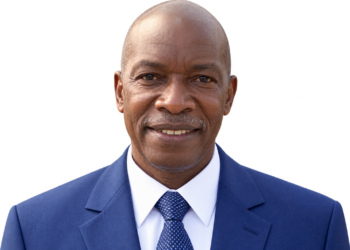
At the centre of this reform agenda is Brighton Barugahare, the Commissioner in charge of Policy Analysis and Research at the Ministry of Education and Sports.
According to Barugahare, the merger is not about abolishing either institution, but rather about eliminating the inefficiencies that come from running two bodies with deeply intertwined functions under separate administrative structures.
He has framed the move as part of wider efforts by the government to streamline public institutions, reduce operational costs, and improve the coherence of decision-making across the education sector.
“Assessment is no longer only about what happens at the end of the cycle,” Barugahare explained. “Schools conduct continuous assessment on a daily basis and these processes require coherent guidance linked directly to curriculum development.”
His argument reflects a growing recognition, both in Uganda and globally, that the wall between curriculum design and student assessment has become increasingly artificial — particularly in an era of competency-based education.

Understanding the Two Institutions at the Heart of the Debate
To appreciate the weight of what is being proposed, it is important to understand what UNEB and NCDC are, where they came from, and what role each has played in shaping Uganda’s education system.
The National Curriculum Development Centre (NCDC) is a corporate autonomous statutory institution under the Ministry of Education and Sports, responsible for the development of educational curricula for pre-primary, primary, secondary, and tertiary institutions across Uganda.
NCDC was established in 1973, at a time when Uganda was asserting greater control over its national affairs, including what its children learned in school.
Its functions include initiating processes for curricula research, review and reform, updating, testing, and coordinating the implementation of educational curricula at all levels of learning, as well as providing guidance for the implementation of improved educational curricula and pedagogy.
The Centre is also mandated to draft teaching schemes, textbooks, teachers’ manuals, and examination syllabuses in cooperation with teaching institutions and examining bodies, and to devise, test, and evaluate examination questions and methods of examining students.
The NCDC is headquartered at Plot M838, Kyambogo, in Kampala, and its work touches every Ugandan child who has ever opened a school textbook or followed a teacher’s lesson plan.
UNEB, on the other hand, has a somewhat different origin story — one rooted in the politics of regional integration and eventual institutional fragmentation in East Africa.
UNEB is an assessment body whose systems of examination formats and grading were inherited from the University of Cambridge Local Examinations Syndicate, which was responsible for school examinations in British colonies until 1968 in East Africa.
In 1968, the East African Examinations Council (EAEC) came into being, and in collaboration with the University of Cambridge Local Examinations Syndicate, it took over secondary school examinations and issued joint certificates — a gradual separation of East African countries from the British syndicate.
By 1971, the EAEC had become fully independent, conducting secondary school examinations and issuing the East African Certificate of Education (EACE) and the East African Advanced Certificate of Education (EAACE).
When the East African Community collapsed in 1977, however, the shared regional examination system could not survive either.
UNEB was initially established by an Act of Parliament in 1983, under Cap 137 of the Laws of Uganda, legalising all actions taken with effect from 1st July 1980 when it effectively started operating.
This foundational law was later repealed and replaced by the UNEB Act No. 1 of 2021, which reaffirmed the Board as a body corporate mandated to conduct and manage examinations in Uganda for the end of the educational cycle at primary and secondary school levels, and to conduct examination-related research.
The UNEB Secretariat is headed by an Executive Secretary, who acts as the chief executive and accounting officer of the Board, while the Board itself is governed by a Chairperson appointed by the President of Uganda.
In 1983, the Primary Leaving Examination Section was transferred from the Ministry of Education to UNEB, expanding its mandate.
Today, UNEB administers three of Uganda’s most consequential national examinations: the Primary Leaving Examination (PLE), the Uganda Certificate of Education (UCE) for O-level students, and the Uganda Advanced Certificate of Education (UACE) for A-level students.
The Board’s strategic direction is built around four key pillars: professionalism, accountability, teamwork, and innovativeness — values that reflect the high-stakes, public-trust nature of its work.
Complementary Roles, Separate Structures
For decades, NCDC and UNEB have operated in parallel, each performing essential but distinct roles.
NCDC tells teachers what to teach and how to teach it; UNEB tests whether students have learned what they were supposed to learn.
In a traditional education system, this division of labour made a certain kind of sense.
But critics have long argued that the separation creates coordination problems — situations where what students are examined on does not always align neatly with what the curriculum says they should know.
Barugahare acknowledges this tension directly, noting that the two agencies already have overlapping governance structures, including cross-representation from the Ministry of Education and shared board memberships, making the case for formal unification even stronger.
He has also pointed to international precedent, arguing that in many countries, curriculum development and assessment are managed within the same institutional framework.
The Competency-Based Curriculum: A Game-Changer
A critical driver of the merger push is Uganda’s ongoing shift to a Competency-Based Curriculum (CBC), which fundamentally changes the relationship between teaching, learning, and assessment.
Under the old system, examinations at the end of the school cycle were largely the only formal measure of student achievement.
Under the CBC, assessment is woven into the daily fabric of classroom life, with teachers expected to continuously evaluate student progress against defined competencies.
This shift makes it almost impossible to separate curriculum design from assessment design — a teacher’s guide and an examination marking scheme now need to be built from the same conceptual foundation.
“Assessment is no longer only about what happens at the end of the cycle. Schools conduct continuous assessment on a daily basis and these processes require coherent guidance linked directly to curriculum development,” Barugahare reiterated, underlining the philosophical basis for the proposed institutional union.
Echoes of a National Commission
The merger proposal did not emerge in a vacuum.
The Education Policy Review Commission (EPRC), chaired by retired Colonel Nuwe Amanya Mushega and established in May 2021 via Legal Notice No. 5 of 2021, was tasked with inquiring into the current state of Uganda’s education sector and advising on urgent reforms.
Over the course of its work, the Commission conducted public hearings across all sub-regions of Uganda, receiving over 230 memoranda and gathering perspectives from citizens of all backgrounds — from farmers to professors.
The Commission’s final report was presented to the Minister of Education, Hon. Janet Kataaha Museveni, by Mushega himself, with a mandate to synchronise Uganda’s education sector with current global and national needs.
Among the Commission’s key recommendations was the creation of a National Curriculum and Assessment Authority — a single body to replace the fragmented landscape of curriculum and assessment institutions operating across both basic and advanced education levels.
“The Commission notes that R5 on the merging of all curriculum and assessment bodies applies,” the report states. “NCDC, UNEB, and other assessment bodies under the Basic and Advanced levels should be merged under one body with respective directorates to develop curriculum and assessment frameworks for both the academic and skills tracks.”
Notably, discussions about merging the two institutions had reportedly already begun within the Ministry before the Commission formally published its recommendations — a sign of how widely shared the concern about institutional fragmentation had become.
A Blueprint Already Exists in the TVET Sector
The government is not starting from scratch when it comes to merging curriculum and assessment functions.
In the Technical and Vocational Education and Training (TVET) sector, a similar consolidation has already been carried out, with curriculum development, assessment, and certification functions brought under the Uganda Vocational and Technical Assessment Board (UVTAB) and the Uganda Health Professions Assessment Board (UHPAB).
These boards were designed to develop curricula in consultation with relevant stakeholders while simultaneously conducting assessments and overseeing certification — a model the Ministry appears eager to replicate for the mainstream academic education sector.
Institutional Resistance and Unanswered Questions
Despite the momentum behind the proposal, it has not been met with universal enthusiasm.
Both UNEB and NCDC are reported to have internally expressed reservations about the merger, with concerns centring on the preservation of institutional autonomy and the risk of each body’s distinct mandate being diluted within a larger combined structure.
The name and precise governance structure of the proposed merged institution have not yet been made public, leaving significant uncertainty about how the transition would be managed and what it would mean for staff, budgets, and operational independence.
The Commission’s report itself has not yet been widely disseminated, with Members of Parliament raising concerns about lack of access to its contents, suggesting that public and parliamentary scrutiny of the specific merger proposals is still at an early stage.
The government has also not yet issued a formal White Paper adopting the Commission’s recommendations, meaning that while the direction of travel is clear, the legal and administrative details remain to be worked out.
What Comes Next
The forthcoming Curriculum, Assessment and Admissions Bill is expected to be the vehicle through which the merger is formally legislated.
When passed, it would represent a fundamental reorganisation of how Uganda designs, delivers, and measures its national education system.
For millions of Ugandan pupils who sit national examinations each year — and for the teachers, parents, and policymakers whose work depends on the integrity of those systems — the stakes could hardly be higher.
Whether the merger ultimately strengthens Uganda’s education outcomes or introduces new complications will depend heavily on how carefully the transition is managed, how much institutional knowledge is preserved, and how genuinely the new body is empowered to serve both its curriculum and assessment mandates with equal rigour.