
















In a lecture hall steeped in liberation history, the government has told those charged with managing Uganda’s most ambitious youth empowerment initiative that the country’s trust — and its money — is not to be squandered
A Classroom With a History
There is something deliberately symbolic about choosing the Oliver Reginald Tambo Leadership School in Kaweweta as the venue for training Uganda’s newest generation of public programme managers.
The school, located in Nakaseke District approximately 142 kilometres northwest of Kampala, was established in 1989 as a camp to house freedom fighters of the African National Congress’s Umkhonto we Sizwe — the armed wing of the ANC — during the final years of South Africa’s liberation struggle.
By 1994, the camp housed some 3,000 South African soldiers. It was later transformed, at a combined cost of US$4.5 million contributed by both Uganda and South Africa, into a formal leadership training institution officially commissioned in March 2010.
The school’s core mandate is to teach and train the defence forces leadership and prepare them ideologically — equipping them with the competences to conceptualise, analyse, and understand global dynamics and to manage human, material, and financial resources in a complex environment.
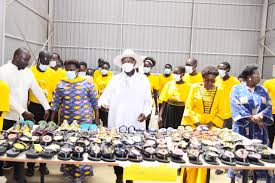
It was in this institution — freighted with the memory of struggle, sacrifice, and institutional discipline — that the government convened a one-week induction training beginning June 22, 2026, for newly appointed Finance Managers of the Presidential Zonal Industrial Skilling Hub programme SACCOs, and Managers of Presidential Demonstration Farms.
The Weight of Public Trust
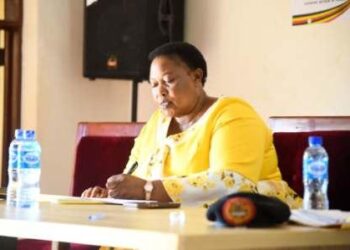
The woman who opened the training carried a pointed message.
Hon. Babirye Milly Babalanda, Minister for the Presidency, stood before the assembled managers and reminded them that the positions they had been handed were not simply jobs — they were responsibilities that the public would be watching closely.
“The success of these programmes will depend not only on sound financial management but also on effective leadership, professionalism, transparency and accountability,” the Minister said.
She warned without ambiguity against corruption, fraud, and financial mismanagement, telling the new appointees that every shilling entrusted to public officers must deliver real value to Ugandans.
She also took time to commend President Yoweri Kaguta Museveni for establishing the skilling hubs, describing them as transformative initiatives that have changed the lives of thousands of young people by providing vocational skills, employment opportunities, and pathways to self-reliance.

The Programme Behind the Training
To understand why this induction training matters, one must first understand the scale of what these managers have been appointed to oversee.
In 2020, President Museveni directed the government to allocate Shs130 billion for the construction of 21 Presidential Zonal Industrial Skilling Hubs across the country, designed to equip the youth with practical skills and stimulate industrial production.
The programme’s genesis can be traced to the broader industrialisation agenda articulated in Uganda Vision 2040 and successive National Development Plans, but its operational momentum accelerated significantly from 2021 to 2022, when the President insisted on decentralised, hands-on skilling centres directly linked to production, value addition, and market demand.
Today, 19 hubs are operational across the country, with the programme aiming to equip over 12,000 vulnerable Ugandans annually with practical, income-generating skills in fields including carpentry, welding, tailoring, building and construction, hairdressing, shoe-making, and mechanics — all at no cost to the trainees.
Training is fully residential, with learners receiving accommodation, meals, and training materials. Upon completion, graduates are awarded certificates from the Uganda Vocational and Technical Assessment Board, a qualification equivalent to the Uganda Certificate of Education.
By 2024, field reports indicated that over 25 hubs had been established and more than 12,000 youths had completed intensive skilling programmes, with a significant proportion transitioning into self-employment, cooperatives, or absorption into industrial parks such as Namanve, Mbale, and Kapeeka.
Stories the Numbers Cannot Fully Tell
Behind every statistic in this programme is a human life that was redirected.
At the Mengo Zonal Presidential Industrial Skilling Hub, one graduate — a young woman named Nantongo — recalled how she arrived to find “a new life waiting.” She was given a mattress, a blanket, and a bed — comforts she had not had at home. Within six months she had mastered hairdressing, was employed by a technical school to train students at Shs150,000 per month, and had saved enough to rent a salon space and buy her own equipment.
Another graduate, Ashraf Semakata, a 23-year-old Senior Four dropout from Gomba District who had been carrying loads for people to survive — earning Shs10,000 on a good day — described the hub as his turning point from hardship to dignity.
These are not exceptional stories. The Presidential Industrial Hubs are dismantling a long-standing cultural hierarchy in Uganda that elevated white-collar employment while stigmatising technical and manual work — restoring dignity to production, and aligning Uganda with the historical pathways of now-developed nations like Germany and South Korea, where skilled labour formed the backbone of middle-income transitions.
A Presidential Directive: Four New Courses
The training at Kaweweta brought with it a significant programmatic announcement.
Eng. Raymond Kamugisha, Director of Presidential Projects and Industrial Hubs at State House, revealed that President Museveni had personally directed the programme to expand the range of courses offered at the hubs — responding to labour market signals that the existing curricula needed to be broadened.
“We have received a directive from His Excellency the President to increase the courses offered at the Presidential Industrial Hubs,” Eng. Kamugisha told the assembled managers.
“Beginning with the next intake, we shall introduce Electrical Engineering, Plumbing, Motor Vehicle Mechanics, and Weaving and Knitting,” he announced.
The addition of these four disciplines reflects both the evolution of the programme and the growing recognition that Uganda’s expanding infrastructure — roads, electricity networks, water systems, and the vehicle fleet supporting a growing middle class — demands a technically skilled domestic workforce, not continued reliance on imported expertise.
Eng. Kamugisha also reported that the programme had already produced results that were reshaping Uganda’s security and private sectors simultaneously.
“About 600 of our graduates have joined the UPDF Engineering Brigade as professionals, others have joined the Uganda Police Force, while many have established their own businesses and are creating jobs for fellow Ugandans,” he said.
President Museveni himself, speaking at a separate hub commissioning, was characteristically direct about the programme’s significance: “I am happy to be here, because this initiative is now more impactful than UPE and USE. Here we feed, house, and fully train these young people, many of whom had dropped out due to poverty.”
The Farms: Where Agriculture Meets Ambition
Alongside the Industrial Hubs, the Presidential Demonstration Farms form a parallel pillar of the government’s rural transformation agenda — and their new managers received their own set of marching orders at Kaweweta.
Dr. Moses Ochen, Commissioner in charge of Technology Transfer and Presidential Demonstration Farms, urged the newly recruited Farm Managers to use the induction training to deeply internalise President Museveni’s vision of transforming Uganda into a modern agricultural economy.
“This training should help you align your mindset with the President’s vision,” Dr. Ochen said.
“Your responsibility is to ensure that the demonstration farms become centres of excellence that support modern farming and wealth creation,” he added.
He was equally direct about who the demonstration farms were ultimately intended to serve — ordinary farmers across Uganda who needed practical models to observe and learn from.
“Our demonstration farms are open to the public. Farmers should visit them to learn modern farming practices and access improved inputs such as coffee seedlings, banana planting materials and modern livestock breeds,” he said.
Dr. Ochen further urged the trainees to become active champions of the President’s Four-Acre Model — a concept built around the idea that a Ugandan household can generate substantial income and food security from a single, well-managed four-acre plot combining coffee, food crops, and livestock.
The Money: Accountability Before It Leaves the Office
One of the most pressing reasons for the Kaweweta induction was not simply orientation — it was financial oversight.
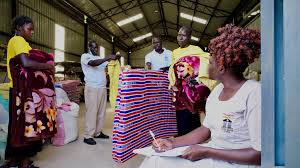
The Presidential Zonal Industrial Skilling Hubs are supported by revolving SACCO funds, injected at district level to give graduates start-up capital after they complete their training.
The hub manager at Madi Presidential Zonal Industrial Skilling Hub in Adjumani District noted that this support fund had enabled many beneficiaries to acquire start-up capital and become self-reliant: “The Presidential support fund has enabled many beneficiaries to acquire start-up capital and become self-reliant.”
But the injection of public money into community-level SACCOs requires robust oversight — and that is precisely what the new Finance Managers have been deployed to provide.
Mr. Julius Muhairwe, Coordinator of Industrial Hubs in Central and Western Uganda, addressed the new officers with blunt clarity.
“You have a duty to ensure that the money given to beneficiaries is properly utilised,” he told them.
“The recruitment of State House Finance Officers will strengthen monitoring and accountability within the SACCOs established to support graduates of the Presidential Industrial Hubs,” he said.
He explained that the deployment of Finance Officers would improve oversight of the revolving funds and ensure that beneficiaries used the money for its intended purpose — wealth creation, not personal consumption or diversion.
What Kaweweta Is Training Them to Protect
President Museveni has announced plans to establish 17 additional Presidential Zonal Industrial Skilling Hubs across the country, taking the network well beyond its current 19 operational sites and expanding the annual intake of trainees significantly. The sixth intake has already enrolled 4,560 youth across existing hubs.
The scale of that expansion makes the integrity of the management layer more critical than ever.
As analysts have noted, the hubs are not operating in isolation — they dovetail with Uganda’s expanding industrial parks, energy infrastructure, road network, and regional markets under the East African Community, positioning skilled graduates within emerging value chains in oil, manufacturing, and agro-processing.
The one-week induction at Kaweweta, scheduled to conclude on June 26, 2026, with the award of certificates to participants who complete the programme, is designed precisely to ensure that the people managing this expanding infrastructure understand both its promise and its fragility.
In a school built on the memory of liberation struggles — where ANC combatants and NRA fighters once trained together for a different kind of future — Uganda’s newest cohort of programme managers is being prepared for their own kind of duty.
Not with a rifle, but with a ledger.
And with the clear expectation that both will be handled with equal care.