














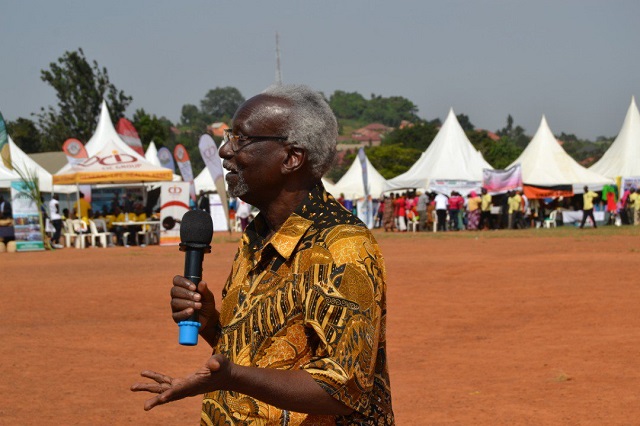
Kirunda Kivejinja is arguably one of Uganda’s elder statesmen who have witnessed the evolution of this country from the times of the colonialists to independence and the post-independence Uganda. He was among the vanguard of progressive reformers and liberators who would later join hands with the various forces to liberate Uganda from the yester regimes. He was a key founder of Yoweri Museveni’s UPM which would later transform into the National Resistance Army/Movement. He spoke to Stephen Bwire about the evolution of Uganda’s democratization process.
How would you look at the transition from the British to the Ugandans?
The Ugandans who would occupy these positions [which had initially been occupied by the British] were mesmerized by the prospects of “tugudde mubintu” (“we have fallen into things”). They did not see through the essentials of nation building. So automatically, first of all they did the fatal things; they expelled some of us, the group that brought all the knowledge and assembled them. [John] Kakonge was excluded in government; we were also excluded in the party, and relegated to observer status.

Why would Obote expel you from UPC?
We were telling them that independence was not the end by itself, but the beginning, to be able to construct a new Uganda. Because the prospects we were talking about were only good for the colonial structure. I would refer you to the speech of Kokonge as UPC secretary general, to tell you exactly the conditions in which were were. As it was, the economy was only good according to the British standards- Uganda had only 500 people with O’level and 103 graduates at the time. They were the best of the colonial exhibits in the whole of Africa. But we were more prosperous; we had excess money which was borrowed to Australia, to other groups to form up industries like in Kenya. But the independence group could not see it. They thought they would only take over and continue. And once we were expelled, it was automatic. Just like when you take off cement from the bricks the whole structure crumbles- that is how Obote’s system began to crumble once we were got rid of. As soon as we left, then they began quarreling among themselves.
Were the quarrels expected?
For me I expected them. Whatever had happened forced us to early retirement. But we told to Kakonge to continue being in the system since all of us couldn’t afford to be there.
For me and some of my colleagues retreated to Katwe to find our way. We set up a bookshop, printing press and other businesses. And over a period, we did a lot of other things.
First of all, it was not an alternative to our struggle, it was a hide out. We created a village where we could set our own rules, we run it on capitalist basis, but the benefits were on a welfare state. There was no difference between the worker and ourselves. We exposed all our children to education, and now if you find the children of my workers and my children, they are the same. So this was our view in Uganda, not the Kabaka to produce the Kabaka and the chiefs to produce chiefs, but to be able to bring everybody so that the talents of Uganda can come up. And then the economic benefits to be shared by all. In other words to transform society
Let’s go back to the time we have acquired independence, Obote is in power as prime minister in alliance with KY, they start fighting. How would we look at that? Did Obote luck the administrative ability to manage crisis?
The question is not all on managing crisis. I have written that in my book, and I think that I am still valid. He did not appreciate the essentials of nation building.
But we feel Obote was a nationalist…
No, he wasn’t a nationalist, but a manipulator. A nationalist looks at the essentials of nation-building by integrating all the various people with diverse skills, views and opinion and accords them the chance to give the nation their best in terms of talent. This wasn’t the case with Obote, rather he wanted to work with those who wouldn’t question him. The moment he left us, and thought of us as his first enemies, he was left bare. By this time power had entered his head, and he started to consolidate his stronghold on power by bringing in his relatives and clan members to run the key state organs. With this consolidation of power, he would one time remark that he was the “only African president who didn’t fear a coup.” And within a short time, we saw [Idi] Amin overthrowing him. And Amin again brought new dynamics which would necessitate a liberation struggle.
How would you comment on Obote’s first five years at the helm since independence, it is recorded and we see that Obote did a lot of work- 25 hospitals, 22 schools, infrastructure, industries?
The question should be: whose ideas were they that set the stage for this development you are talking about? The first manifesto of the UPC, who drew it? It was John Kakonge who was the only economist with a master’s degree in economics. He also started the planning commission, and we drafted the plan together. And he had brought his professor at independence, to assist him in perfecting the planning commission. Even in our first manifesto which was drawn completely under our guidance, we also included there Universal Primary Education. Because we knew how much we get, how much is available and we knew it was possible. So it is a question of putting up this house, and then you see what comes out. But it was not his foundation. You are interviewing me at the age of 80+, I don’t think you can grade me as not a sane person. So you can imagine what I was. I was the secretary for research and information bureau of the UPC, now would you expect people of that nature at that time available to you and you throw them away? And if you say things were okay, then why did they collapse? Why didn’t they proceed? Because everything has got its momentum. When you are on top of a hill and you throw a stone, it would go until it reaches the bottom and it stops. And you cannot say there was somebody engineering the falling of the stone. Even now in the Movement I can tell you we are on the momentum of the revolution of the people. That’s why we are moving.
Before we come to the Movement, we are now moving towards Obote’s dow fall. Let’s look at the time when he announces the Common Man Charter.
It’s good you have brought that up. Was the Common man’s Charter his [Obote’s] idea? We were the ones who always thought about the future of mankind, the future of our society. Now who thought he could get rid of us and then continue with the whole thing of which he did not know the ABC? When he announced the Common’s Man’s Charter, he was declaring his move to the Left- being Socialist. But he wanted a Socialist state without socialists. We were the socialists. You don’t just stay in your office and announce a people’s ideology. Therefore it must first have been rooted in the population, which was our idea because none of us wanted to be ministers. We wanted to just have time to go and organize the people, install them onto their throne and be able to determine their own life. Because it is only the people that determine, not the cleverness of the genius, otherwise the genius would be the leaders of the world.
The might of a leader is how he is entrenched within the population. Ghandi was able to organize 280 million people [Indians] against the British. And he persistently mobilised everybody and the British Empire where the “sun never rose or set” had to collapse.
Can we say Obote’s mistakes created Amin?
Idi Amin rode on the failures of Obote. Obote had become so sophisticated with his tricks and political manoeuvers and had been declared as the “king of politics”, “the man with great brains” but no principles. Now he was consummated with himself having succeeded to overcome the Kabaka, and he was alone. Amin only helped him to reach this pinnacle of power.
You know Obote was the one that conspired against Amin, Amin only reacted. So he thought that having got rid of some of us and the Kabaka, his only remaining job was to contain or remove Amin, and then he remains alone. You can succeed once, twice and the third time you will fail, and that’s what happened to him. He failed and he was overthrown. Now the rest is a consequence, because if Museveni tried his method of an armed struggle, if he was ready at the time of independence and tried his method of armed struggle, it would not start, it would be a non-starter because the conditions were not ripe.
Is there anything to write Amin’s 8 years?
Yes, there were positive things. First of all, he made it possible for people to see that there are no indispensable people in the world. As Mao said, “the graves are full of people who thought that they were indispensable.” So that the mighty could also be overcome was a big lesson. Secondly, there are certain things, for example he dismantled the colonial economic structure which had essentially been established to benefit the British and Asians. For the first time, the Africans were exposed to the wealth of their country, the methods of how to make trade.
Wasn’t his economic war [expulsion of Asians] a disaster?
You can call it a disaster, but what was not a disaster. Exploiting all our wealth? I have told you that by 1939, the proceeds from cotton were able to pay for the loan and by 1940, every year there was a balance of 40 million pounds which was stashed on the British Consolidated Fund, just from the production and sale of cotton alone. Could any of the African people access even money for toothpaste? We were only using the branches of trees to brush our teeth. We did not have any access to that money. So if the thing came it was only by self-discovery, he led the way for every Ugandan to come and discover, and we are still discovering.
First talk about your group when forces began plotting against Idi Amin.
Now for us our strategy was “let’s preserve ourselves” because during the French revolution, one wise person was asked what they did for the revolution, and the answer was: we preserved ourselves.
So ours was to preserve ourselves and that’s how we went to Katwe and set up Sapoba company dealing in printing. While we were preserving, we were also debating among ourselves and also creating a home for other ideas that caould advance the struggle of the people because nobody is going to finish the problems of this world. And the people must continue thinking and if you do things you have not thought about, you know where it will end. So all this time, Katwe was the centre of collection of all the views and ideas.
So Amin collapses in 1979, a new situation comes. How would you describe the period between 1979 to 1980?
Go and read my book and that period is very well described and assessed. Because the book I wrote which was published in 1995, The Crisis of Confidence assesses the situation pre-colonial, colonial and post-colonial up to 1980.
You join Yoweri Museveni, you start UPA. Did you subscribe to his idea of going to the bush?
No, each state of sickness requires different prescriptions. The prescription we had when we joined the national liberation could no longer be applied. Now he [Museveni] comes here with new science. For us we brought him up and said his was a political mission, it cannot be realized militarily alone. So let’s assemble ourselves, distance ourselves from the DP and UPC and from factions. Let’s establish what we want and we formed a UPA/M, and we said because he was a factor for forward movement, he must be the chairman of the UPA movement. Bidandi [Ssali] became the secretary general, I became the treasurer, and at one stage when we had done everything, the manifesto and all, we were only going to launch, many of his colleagues especially from Ankole began to bring in the Bahima-Hutu politics. So he was more or less abandoned.
So Yoweri Museveni captures power.
He did not capture, we joined him and we organized the population to take the fate into their hands.
How did you convince the masses to join you in the Bush?
No, you did not understand the people’s power, people’s struggle. We opted to go to the population because our job is only to organize the people, they are the beneficiaries. We are not clever enough to say this is what you want, if you do that, they will vomit it even if it is good medicine for them. But they must own it, so when they owned it and said that this question of looking for another person to liberate you is no more. You yourselves, we are going to teach you how to create your own power, create an army, go by these rules and then we shall be able to overthrow this one so then we are free to create our own system.
Why did you nominate Yoweri Museveni for the post of chairman for NRM at Bulange? You [Kivejinja] nominated Museveni to fill the gap of Yusuf Lule who had shortly passed on in London…
The politics of the Movement was collective, it is not exclusive. We wanted to make this armed struggle to be all inclusive because people had opted to fight Obote but they didn’t know how to fight. Because they had personal grudge, not knowing that he is mortal and that the people are ever there. So we tried to float the idea that all fighting groups, those who were opposing, should become one. Now we tred to get the UFM, because they also were angry but you may not have the tactics. So we said what we need is really to have a people based Movement. EFM was a reality, and because we were not fighting for positions, we said you [Yoweri Museveni] are the older one so you are the chairman. So he gave us chance to organize.
To be continued in next issue…