

















Let’s begin with putting things in perspective. In 1987 the number of hosts on the internet in the entire world was 20,000 and these were not members of the general public. The general public started to use the internet round about 1991 and that is when the phrase surfing the internet was born and popularized. And its only in 1998 that the now household Google was born. Even in 2021 we can still call the internet a new phenomenon, yet in 1998 Ugandans albeit a few, were already surfing the web because the government of Uganda took deliberate steps to ensure the growth of internet use.
First, the NRM Government liberalized the ICT sector from state monopolies as early as 1994 in order to speed up technology and internet penetration. The national Information and communication Technology policy was enacted as early as 2003. Secondly, the NRM demonstrated its commitment to this sector by creating a dedicated Ministry.
The growth of Uganda’s ICT sector has been deliberate and systematic with the National Information Technology Authority (NITA-U) under the Ministry of ICT and National Guidance at its helm and the results speak for themselves. For example; as we speak, over 18.94 million Ugandans are internet users with ICT as one of fastest-growing sectors in the country. Another example among the many? This year the government of Uganda through NITA-U is to launch UGhub, a Systems Integration Platform which will enable all Government systems to seamlessly share data in a rational, secure, efficient and sustainable manner saving both Government and Citizens’ time, and resources. This only demonstrates how quickly and how far the Ugandan ICT sector has come under the Leadership of H.E Yoweri Tubuhaburwa Kaguta Museveni.

An Enabling Environment
Most recently, H.E President Yoweri Museveni signed the Data Protection and Privacy Bill into law which protects people’s rights to privacy. The law also protects the privacy of the individual and of personal data by regulating the collection and processing of personal information. It secures citizens as government moves to bring all services online and promote growth in the IT sector.
This is complemented by other cyber laws which include the Computer Misuse Act and the Electronic Transactions Act all which are aimed at ensuring the safety of all digital transactions that a consumer might undertake. A National Information Security Framework (NISF) was also put in place to protect MDA resources and systems from potential cyber-attacks and risks associated with cyber terrorism.
Reduction in Cost of Internet Government
Through Government’s efforts, the cost of Internet Bandwidth dropped from USD 1200 per Mbps per month in FY2012/13 to the current USD 70 per Mbps per month.
Nationwide Connectivity
The story of the National ICT backbone Infrastructure project(NBI/EGI) begins when H.E President Museveni visited The People’s Republic of China, in his special wisdom, he made sure he signed the National ICT backbone project. The Government of Uganda is implementing NBI/EGI project to connect districts and towns across the country including Government offices via an optical fibre cable network so as to reduce the cost of the internet and public administration, support delivery of secure e-Government services as well as enhance communications services in the country.
Government has so far laid more than 4000 kilometers of fiber across 49 districts and connected 609 sites to the network. Uganda is now a fully-fledged communications hub with the Seven major border posts of Uganda with its neighboring countries all connected to the NBI.
Last Mile project
Currently, the Government is implementing the Last Mile Connectivity Project under which 732km of fiber optic cable are being laid to extend the National Data Transmission Backbone Infrastructure (NBI) connectivity to an additional 700 sites. At the end of the Project, the cumulative span of the NBI shall be over 3,156km across 52 Districts and connecting over 1,300 Government Offices and Target User Groups. As of today a total of 519 out of the 700 sites have been connected.

Electricity and Fiber to villages
The Government of Uganda through NITA-U Launched Electricity and Fiber to villages (EFTTV) together with Uganda Communication Commission (UCC) through its Rural Communication Development Fund (RCDF), the Rural Electrification Agency (REA) Electricity. The EFTTV is a shared infrastructure concept that combines the roll out of electricity and ICT in rural areas of Uganda leveraging infrastructure sharing to exploit the cost synergies of simultaneously rolling out the grid and fiber.
Securing your Data: The National Data Center
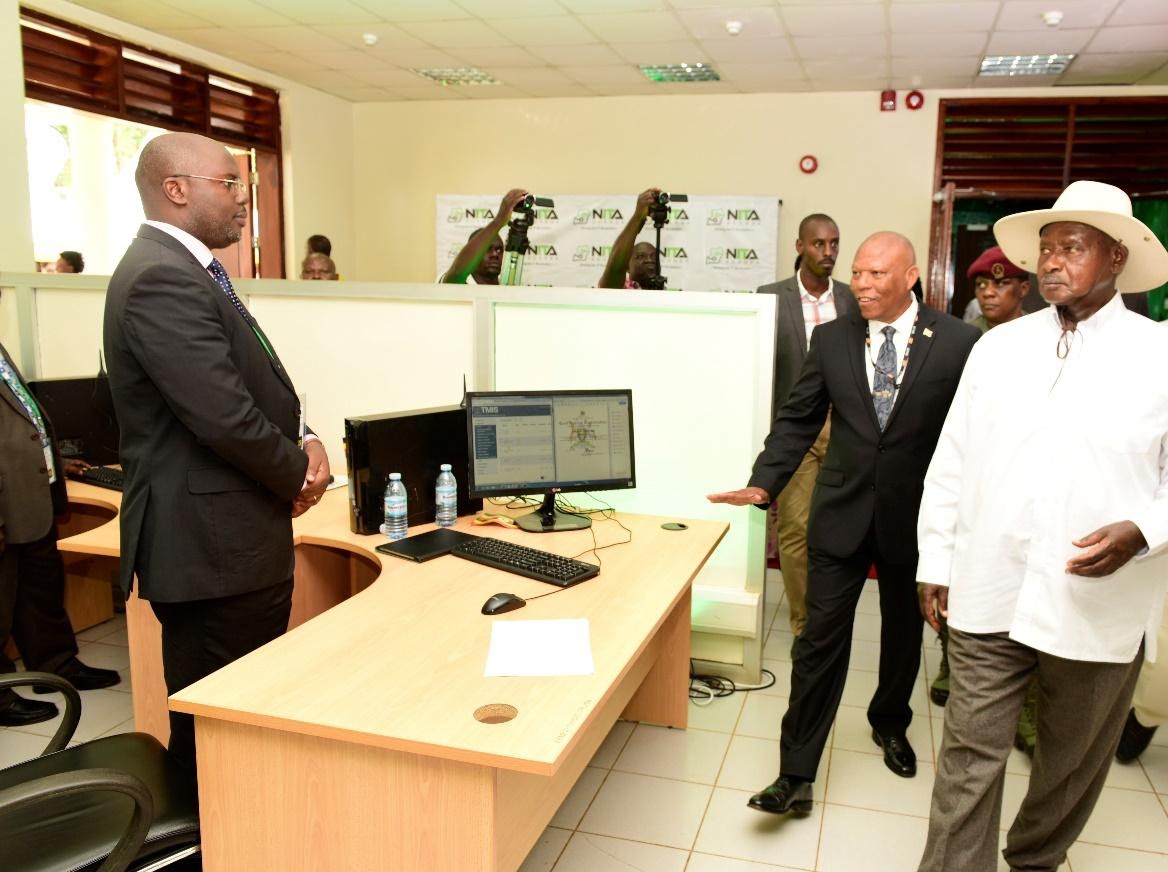
The Government of Uganda through NITA-U under the ministry of ICT and National Guidance invested and established a Tier III National Data Centre and Disaster Recovery (DR) sites to provide centralized hosting services, Data Centre services and Disaster Recovery (DR) services for all Government data and applications. Today there are over (160) critical e-Governments systems and applications being hosted in this Government facility. With this cloud Data Center, MDAs can now concentrate on their core functions of delivering services to citizens without worrying about the availability and sustainability of the underlying infrastructure.
Development of E-services
The Government of Uganda through NITA-U has undertaken the development of e-Government services including the requisite platforms to deliver the e-services Such as;
Unified Messaging and Communications System (UMCS) to standardized email and collaboration service for all MDA/LGs. This is in a bid to Rationalize and harmonize IT initiatives and services in Government. It provides a uniform mailing platform for Government communication and enhances efficiency in information sharing. To date over 68 Government institutions are using the unified e-mail and communication services.
UGhub – Systems Integration Platform
NITA-U is integrating all MDA systems to enable seamlessly sharing of data across Government systems in a rational, secure, efficient and sustainable manner. This is aimed at improving service delivery to citizens as well as reporting, planning and decision making across Government.
ePay – Electronic Payment Gateway
MoFPED and NITA-U have rolled out ePay; a platform that enables convenient and secure online payments via a wide range of electronic payment options. With ePay, Government and Private Enterprises are able to receive or more payments for products and services in real-time. This shall also promote e-Commerce and financial inclusion in Uganda.
uConnect – SMS, USSD & Voice Broadcast
The Government SMS Gateway (uConnect) provides subsidized SMS services that public entities are utilizing to provide USSD services, Bulk SMS notifications among others. Through integration with the various public eServices and applications, the gateway creates a rich online experience for the citizens. To date, over 2,000,000 unique SMSs have been shared via uConnect.