










In a carefully coordinated political and social outreach effort, senior leaders of Uganda’s ruling National Resistance Movement traveled to Johannesburg to rally Ugandans in the diaspora ahead of celebrations marking President Yoweri Kaguta Museveni’s 2026 electoral victory.
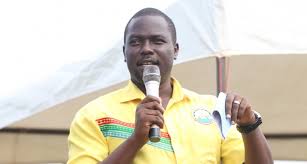
At the center of this engagement was Richard Todwong, the party’s Secretary General, whose arrival on March 25, 2026, signaled a renewed push to consolidate unity and strengthen the party’s presence among Ugandans living abroad.
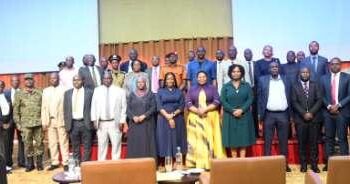
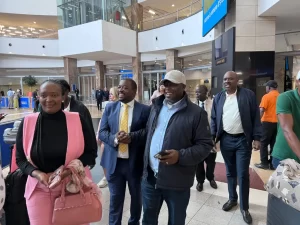
He was received by key organizers including Phillip Kakuru, alongside other officials and Uganda’s diplomatic representatives in South Africa, before proceeding to engage members of the NRM diaspora community and the Victory Party Organising Committee.

In that meeting, Todwong delivered a message from President Museveni that reaffirmed confidence in the legitimacy of the election outcome and called on party members to embrace the moment with unity and pride.
“There is no doubt about the President’s landslide victory. Nothing should stop members from celebrating this achievement,” he said, urging even those with reservations within the party to set aside doubt and remain committed to the NRM’s long-term vision.
He further encouraged ideological clarity and discipline, pointing members toward political education programmes at Kyankwanzi as a way of deepening their understanding of the party’s principles and national development path.
Todwong’s role in this engagement reflects his broader contribution to the NRM over the years, having risen through its ranks as a key mobilizer and organizer who helped strengthen party structures, particularly in regions where the movement once struggled to gain firm footing.
His leadership as Secretary General has been associated with reinforcing internal coordination, expanding grassroots mobilization, and maintaining cohesion within the party, factors widely seen by supporters as contributing to the NRM’s continued electoral strength.
As preparations shifted toward the main celebrations scheduled in Cape Town, organizers emphasized inclusivity and economic empowerment as central themes of the gathering.
Kakuru noted that participation would not be limited by political affiliation, stating, *“All Ugandans are welcome to participate, regardless of political affiliation,”* before encouraging attendees to take part in cooperative savings initiatives linked to government programmes.
“We encourage everyone to join the SACCO so they can benefit from similar government initiatives such as Emyooga and the Parish Development Model,” he added, highlighting the government’s ongoing push toward household-level wealth creation.
A major highlight of the event is the planned launch of a diaspora SACCO aimed at mobilizing millions of Ugandans living abroad into a unified investment platform, with each member expected to contribute regularly toward a collective fund projected to generate substantial annual capital.
Organizers envision these resources being invested in sectors such as real estate, healthcare, and financial markets, with longer-term ambitions that include establishing a diaspora bank to further channel investment back into Uganda’s economy.
For supporters of President Museveni, the celebrations are also rooted in a broader narrative of continuity and progress tied to his long-standing promises, including the expansion of infrastructure, the promotion of peace and security, and the implementation of wealth creation initiatives such as Emyooga and the Parish Development Model.
They also point to commitments to improve access to education and healthcare, alongside efforts to strengthen regional trade and economic integration, as reasons to celebrate his electoral success.
As the diaspora prepares to gather in Cape Town, the event represents more than a political celebration, reflecting an evolving strategy to connect Ugandans abroad with national development efforts while reinforcing loyalty to the ruling party.
For Todwong and the NRM leadership, it is an opportunity to project unity and confidence beyond Uganda’s borders, while for many supporters, it is a moment to affirm their belief in a leadership they credit with stability and a vision for continued national transformation.