











Secretary to the President tells RDCs, RCCs and security officers in Jinja to drop politics, chase coffee money and stop hiding behind office doors
A Sharp Warning to Open the Workshop
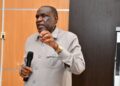
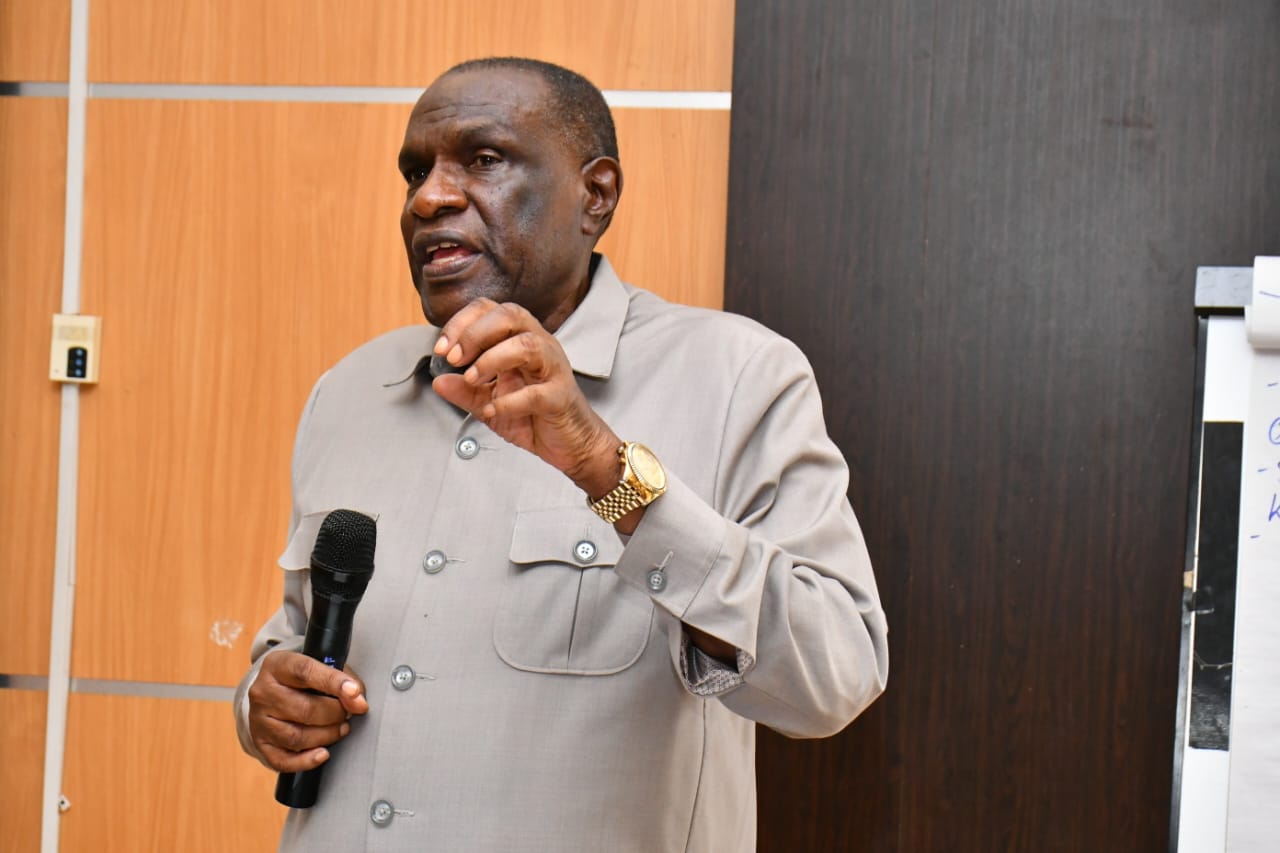
The Secretary in the Office of the President, Hajji Yunus Kakande, walked into the Source of the Nile Hotel in Jinja City on Monday with a message that had little room for pleasantries.
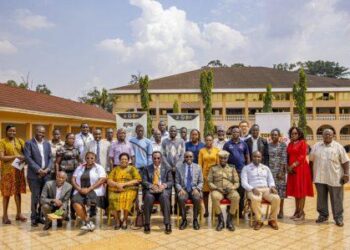
He was there to open a three-day capacity-building workshop for Resident District Commissioners, Resident City Commissioners, their deputies and assistants, together with Regional and District Internal Security Officers drawn from across Busoga Sub-region.

But before the training modules could begin, Hajji Kakande wanted one thing understood.
Indiscipline among government field officers, he said, would no longer be tolerated.
“Indiscipline will not be accepted in the Presidency. The indiscipline I have seen these days, we shall not allow it. You should respect your elders. Why should you create anarchy?”
His voice carried the weight of someone who has spent decades inside the machinery of government.
He reminded the officers that respect for hierarchy is not an optional courtesy but the glue that holds public administration together.
“We must respect our seniors. People no longer respect ministers.”
Hajji Kakande said he had watched, over a long public-service career, officers who disrespected their leaders or colleagues fall away one by one.
“I have worked in the government for so many years. If you must succeed as individuals, you must respect others. People who have shown no respect for their leaders or colleagues have not survived long.”
He then softened his tone, framing the appeal almost as a father speaking to his children rather than a bureaucrat issuing an order.
“I am speaking as a parent: please be disciplined. You don’t lose anything when you have discipline.”
More Than a Title: The Weight of the RDC Office
Hajji Kakande used much of his address to push back against the idea that being a Resident District Commissioner is simply a seat behind a desk.
“You are not in these positions merely to occupy office. Identify challenges and provide accurate and timely solutions.”
Under Uganda’s 1995 Constitution, RDCs sit at the front line of government accountability at district level, representing the President and coordinating the various arms of government working in their areas.
Hajji Kakande has made this point before in similar workshops held for other sub-regions this year, describing the officers as the ones who must convene coordination meetings and keep government actors working in harmony rather than at cross purposes.
He told the Busoga officers to physically visit government project sites rather than rely on paperwork from contractors.
“Establish whether the project is being implemented well. Check the specifications and standards. Is the contractor performing as required?”
He pointed to stalled seed-school construction projects around the country as a cautionary example of what happens when contracts go to firms without the capacity to deliver.
The President, he said, had given RDCs the authority to insist that a project meets its required standards before any commissioning ceremony takes place.
“The President gave you powers to oversee government projects, including ensuring that projects meet the required standards before they are opened or commissioned.”
Guarding the Parish Development Model From Abuse
Turning to household poverty, Hajji Kakande singled out the Parish Development Model and the Emyooga programme as the government’s flagship tools for lifting families out of subsistence living.
He insisted that RDCs and their security counterparts carry personal responsibility for making sure the money reaches the people it was designed for.
“Your responsibility is to make sure that the intended beneficiaries and targets are reached.”
He directed District Internal Security Officers to actively track how programme funds are spent in their areas, describing this as a frontline defence against corruption.
Hajji Kakande then turned to the country’s young people, urging them to step back from partisan politics and into productive work.
“There is no money for nothing. Young people should desist from politicking. Right now, politics should stop and people should work. They will go back to politics in 2031.”
His argument was that lasting prosperity grows from enterprise and investment, not from handouts tied to the electoral calendar.
Coffee Over Cane: Busoga’s Untapped Fortune
Sugarcane has long defined the Busoga economy, but Hajji Kakande used his platform to make the case for diversifying into coffee.
“Why don’t you go to coffee for high returns? Coffee farmers in areas like Masaka are prospering. If people with land embrace coffee growing, this country will get richer.”
His appeal echoes a national push that has been running for almost a decade.
Uganda’s Coffee Roadmap, launched under a presidential directive in 2017, set out to grow annual production from roughly seven to eight million 60-kilogram bags to 20 million bags by 2030, more than doubling the country’s agricultural exports in the process.
Government data presented in the President’s most recent State of the Nation Address showed coffee production climbing from 7.8 million bags in the 2022/23 financial year to 8.2 million bags the following year, with export earnings rising from 845 million dollars to more than 1.1 billion dollars over the same period.
Uganda has in the meantime overtaken traditional rivals to become Africa’s biggest coffee exporter, even though Ethiopia still produces more overall.
Hajji Kakande held up Brazil as proof of what disciplined, large-scale agriculture can do for a nation’s fortunes.
He also reached back to his own record in public service, recalling how he helped resettle Bakiga families from Kabale into Kakumiro in the 1990s in search of productive land.
“In the 1990s, I’m the one who took the Bakiga to Kakumiro where they created opportunities.”
For Hajji Kakande, that migration stands as evidence that communities can rewrite their economic story once they commit to productive enterprise.
He reminded the gathering that Busoga was not always trailing behind in national development.
“In the 1960s, Busoga was next to Buganda in terms of development, but now it is a different story.”
He traced part of that earlier prosperity to coffee and groundnut farming, and challenged today’s leaders to help revive that same productive spirit.
“As leaders, you should be champions for this transformation. Skills, natural resources and industrial resources must be used to create jobs.”
Peace as the Foundation, Not an Afterthought
Hajji Kakande cautioned that none of this economic ambition means anything without security.
“You have to be on the lookout all the time.”
He noted that the country had just come through an intense election season, and said the priority now was to lock in the calm that follows and turn attention fully to development.
“We have just come through a period of intense politics and elections. We should now ensure that we maintain peace and security and socio-economic transformation.”
He thanked the Busoga officers for their part in the recent electoral process, crediting them with helping keep the region stable.
“I thank you for making sure that the government comes back to power. You did a good job.”
He closed that section of his address with a plea to keep young people away from idleness and drug abuse, and instead channel them toward study, skills training and constructive participation in community life.
Turning Money Into Results: The Kisuyi Session
Later in the workshop, the Assistant Commissioner for Finance and Planning in the Office of the President, Hajji Sadat Kisuyi, took participants through a session on results-based planning and reporting.
He explained why government insists on such tight transparency around public resources.
“Why that level of transparency? It is to ensure that you are able to monitor whether the resources are well utilised in your respective areas.”
Hajji Kisuyi pressed the officers to take initiative rather than waiting for headquarters to intervene.
“You should do your part. You shouldn’t wait for Hon. Balaam to come unless you are not in charge.”
He tied every shilling of public spending back to a simple test: whether it visibly improves people’s lives.
“They should be able to improve the well-being of the people, reduce poverty, promote sustainable economic growth and improve quality of life. These results shall ultimately lead to a long-term development impact.”
His closing message reinforced Hajji Kakande’s opening one: authority without accountability, and presence without results, serve no one.
Background: The RDC System and Its Mandate
Resident District Commissioners have featured heavily in Hajji Kakande’s tour of Uganda’s sub-regions over the past year, with near-identical capacity-building workshops already held in Karamoja, Bugisu and Bukedi, Rwenzori, West Nile and Lango.
In several of those sessions, he has described RDCs as the eyes and ears of government on the ground, responsible for identifying gaps in service delivery and proposing corrective action so that citizens can access the services they are entitled to.
He has also stressed to other sub-regions that RDC responsibilities are grounded in the 1995 Constitution and related administrative frameworks, chief among them the duty to monitor government programmes so that public resources reach their intended beneficiaries.
The Office of the President has in the past defended the newer Assistant RDC positions against criticism that they were an unnecessary addition, explaining that the role simply renamed what used to be known as district Mobilizers, with their responsibilities unchanged.
Monday’s Busoga workshop follows the same format used in earlier sub-regional sessions this year: three days of induction covering governance, security coordination and results-based planning for RDCs, their deputies and assistants, together with RISOs and DISOs.
Why the Coffee Push Matters for Busoga
The renewed call for Busoga to plant more coffee sits inside a much bigger national bet.
Uganda’s Coffee Roadmap was signed into force by President Museveni in 2017, and its stated ambition is not modest: 20 million 60-kilogram bags of coffee a year by 2030, alongside 1.5 billion dollars in annual foreign exchange earnings.
Coffee already touches a large share of Ugandan households, with the sector now supporting more than 1.8 million households, a figure that has roughly tripled since 1985.
Achieving the 2030 target will require regions like Busoga, long associated with sugarcane rather than coffee, to make the kind of shift Hajji Kakande was urging in Jinja.
What to Watch Next
The workshop in Jinja runs through Wednesday, with sessions expected to translate Hajji Kakande’s warnings on discipline and Hajji Kisuyi’s results-based planning framework into practical monitoring tools for the officers to take back to their districts.
Whether the message translates into sharper oversight of contractors, cleaner PDM disbursements and a genuine tilt toward coffee in Busoga’s fields will likely shape how the sub-region is discussed the next time Hajji Kakande convenes a workshop of this kind.