













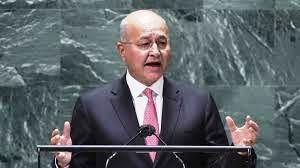
Dr. Barham Salih’s recent appointment as UN High Commissioner for Refugees marks a historic moment.
He is the first person with lived refugee experience to hold this position.
As a Kurdish Iraqi who himself fled persecution and lived in exile, he brings an invaluable perspective to the role.

His personal understanding of displacement, loss, and the struggle to rebuild one’s life in a foreign land gives him unique insight into the challenges faced by the 117 million forcibly displaced people worldwide.
This makes his first official visit as Commissioner particularly significant.In January 2026, Commissioner Salih chose Kenya for this inaugural visit, touring Kakuma camp and meeting with President William Ruto to highlight Kenya’s progressive refugee policies and the innovative Shirika Plan.
These are programs worth celebrating, and Commissioner Salih was right to shine a spotlight on them.
Yet, as a Ugandan, I cannot help but feel a sense of missed opportunity.
Uganda, home to nearly 2 million refugees and asylum seekers, was not on the itinerary.
I understand the complexities considering Uganda’s election season was at its peak with both the presidential and parliamentary vote being held.
The political unpredictability may have made scheduling such a high-profile visit challenging.
But the timing makes Uganda’s exclusion particularly poignant because while Kenya hosts over 800,000 refugees, Uganda quietly shoulders more than double that burden, 1,971,983 as of December 2025, making us the third-largest refugee-hosting nation globally.
This is not about competition, both countries deserve recognition and support, but ratherit is about ensuring Uganda’s contribution to refugee protection receives the attention it desperately needs.
The refugees in Uganda come primarily from three devastating conflicts showing no signs of abating.
Sudan’s brutal civil war has displaced over one-third of the country’s population, more than 15 million people in 1,000 days of fighting.
The conflict between the Sudanese Armed Forces and Rapid Support Forces has created one of the world’s worst humanitarian catastrophes.
In eastern Democratic Republic of Congo, renewed fighting involving M23 rebels and other armed groups has forced hundreds of thousands from their homes.
The cycle of violence in North Kivu and Ituri provinces continues unabated, with many displaced families seeking refuge in Uganda’s western settlements.
South Sudan, despite a fragile peace agreement, remains deeply unstable. Sporadic violence, economic collapse, and climate disasters continue preventing refugees from returning home.
The majority of Uganda’s refugee population comes from South Sudan, people who fled civil war and now cannot return to a country still struggling to find stability.
Uganda has implemented the same progressive policies Commissioner Salih praised in Kenya.
Refugees can work, access public services, and integrate into communities.
We have done this not because we are wealthy, but because we believe it is the right approach.
However, these policies require investment without which even the most progressive framework will collapse.
Yet, this missed opportunity should serve as a wake-up call to the Office of the Prime Minister and the Ministry of Relief, Disaster Preparedness and Refugees.
We cannot afford to be passive in international engagement.
These institutions must be more proactive, better organized, and strategically positioned to ensure Uganda’s refugee story is told globally.
Kenya’s success in attracting Commissioner Salih’s first visit was not accidental; it resulted from sustained engagement, clear communication of their Shirika Plan, and strategic positioning.
Uganda must demonstrate similar excellence and accountability.
Our refugee response framework is strong, but we must document it better, communicate it effectively, and showcase our successes and challenges clearly.
This is why Dr. Salih’s eventual visit to Uganda matters.
Given his own refugee experience, he would understand better than anyone the daily realities facing the nearly 2 million displaced people who have found safety here.
I hope that once Uganda’s political calendar settles, he will make his way here.
When he does, he will find refugee settlements that exemplify both the promise and peril of our current approach; communities working hard to build lives amid chronic underfunding, host populations sharing limited resources with remarkable generosity, and a government committed to keeping borders open despite mounting pressures.
The conflicts in Sudan, DRC, and South Sudan are not ending soon. Uganda will continue welcoming those fleeing violence. But we cannot do it alone.
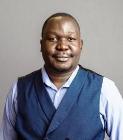
Ivan Onapito is a Scholar in Humanitarian and Disaster Relief and
PhD student at the University of Pittsburgh
i.onapito4@gmail.com