


















In a quiet corner of Wakiso District, a deeply disturbing case has emerged that is forcing many to confront uncomfortable questions about the safety of children placed in the care of adults.
A 34-year-old woman, identified as Nankunda Esther, now sits in police custody at Nateete Police Station, accused of subjecting a 10-year-old child to a cruel and painful form of punishment that has shocked both authorities and the surrounding community.
The child, a Primary Four pupil whose identity has been withheld for protection, had reportedly been left in her care by a relative in what was meant to be a safe and supportive environment.

Instead, according to police accounts, that trust was shattered on the evening of Eid al-Fitr, when events took a violent turn.
Police spokesperson Racheal Kawala described the preliminary findings, stating, *“On Eid Day at around 5:00 p.m., the suspect allegedly burned the child’s hands using a heated white polythene bag, accusing the victim of stealing 100,000 Ugandan shillings.”
What began as an accusation quickly escalated into an act that investigators say crossed the line from discipline into outright torture, leaving the child with painful injuries and emotional trauma.
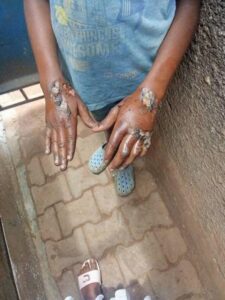
The child was later rescued and rushed to hospital, where medical personnel are working to assess both the physical wounds and the deeper psychological scars that such an experience can leave behind.
Kawala confirmed the immediate response by authorities, explaining, “The child has since been rescued and taken to hospital for medical examination and treatment,” and added that, “witness statements have been recorded, and the case file has been forwarded to the Resident State Attorney for further guidance.”
As the investigation continues, the case is now moving through the legal system under the framework of Uganda’s child protection laws, particularly the Children Act, which clearly states that every child has a right to protection from “any form of physical or mental violence, injury or abuse, neglect or maltreatment.”
The Act leaves little ambiguity, emphasizing that discipline must never involve cruelty or degrading treatment, and that any act causing harm to a child constitutes a serious violation of their rights.
Alongside this, the Uganda Penal Code Act provides for criminal penalties in cases of assault and causing bodily harm, with even harsher consequences where the victim is a minor, reflecting the gravity with which such offenses are treated under Ugandan law.
Yet beyond the legal implications, this case reflects a broader and troubling pattern that has surfaced repeatedly across Uganda, where children have suffered abuse at the hands of those entrusted with their care, including guardians, domestic workers, and even educators.
In some instances, children have endured severe beatings, burns, and prolonged neglect, with certain cases ending in permanent disability or loss of life, underscoring the urgent need for stronger prevention and intervention measures.
Experts often point to a mix of factors behind such incidents, including lack of awareness about children’s rights, economic stress, cultural acceptance of harsh punishment, and impulsive reactions to accusations such as theft or disobedience.
In many cases, caregivers fail to distinguish between discipline and abuse, resorting to methods that inflict lasting harm rather than correction.
Under the Children Act, abuse is broadly defined to include physical harm such as beating or burning, emotional abuse through humiliation or threats, neglect of basic needs, and other forms of maltreatment, all of which are recognized as violations of a child’s dignity and well-being.
Torture, such as that alleged in this case, is considered an aggravated form of abuse involving the intentional infliction of severe pain, and it carries serious legal consequences.
Preventing such incidents requires more than legal enforcement alone, as families must take greater care in selecting and monitoring those entrusted with children, while communities need to remain vigilant and report suspected abuse before it escalates.
There is also a growing need for public education on non-violent discipline methods, as well as stronger child protection systems at both local and national levels.
As this case unfolds, it stands as a painful reminder that children rely entirely on adults for their safety and protection, and when that responsibility is betrayed, the damage goes far beyond physical injury.
For now, attention turns to the courts and investigators, but the deeper challenge remains for society as a whole—to ensure that no child is left vulnerable to such cruelty again.