











After years of broken promises, funding crises, and six extensions of expired terms, Uganda’s Electoral Commission has announced a July timetable that will bring grassroots democracy back to more than 71,000 villages
A Long Time Coming
There is a particular kind of frustration that settles over a community when the people meant to lead it have been governing on borrowed time for years.

Uganda’s Local Council system traces its origins to 1986, when President Yoweri Museveni and the National Resistance Movement introduced what were then called Resistance Councils — a participatory structure designed to replace the colonial-era administrative apparatus with something closer to the people.
The first elections under this system were held in 1989, using a method in which voters physically lined up behind the candidate of their choice — a system that remains in use to this day.
But the history of these elections has been one of chronic delay. After 2001, LC1 elections were not held for over fifteen years. Uganda then held elections in 2018 after a seventeen-year gap, with over 60,800 villages participating.
The Women Council elections were last held in 2018, with their four-year term expiring in 2022, while the LC1 elections were last held in 2019, with their term ending in 2023.
Parliament has since extended the terms of the sitting LC leaders six consecutive times, with each extension running for six months.
The result has been a slow erosion of democratic legitimacy at Uganda’s most intimate level of governance — in the very spaces where most citizens first encounter the state.
The Money Problem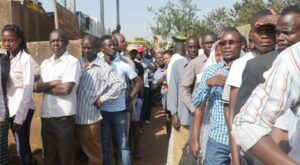
The reason for the delays has never been mysterious, even when the official explanations shifted.
The Electoral Commission had confirmed that both sets of elections, initially scheduled for 2023 and 2022 respectively, were postponed due to financial challenges, with the government opting each time to extend the terms of current office bearers.
EC Chairperson Justice Simon Byabakama was frank about the situation: “It’s the issue of money that has been holding us back. But we shall fix the dates within less than a week because we got ready long time ago.”
The breakthrough came when the Ministry of Finance released Shs 56 billion to the Electoral Commission on June 12, with Deputy Secretary to the Treasury Patrick Ocailap confirming the transfer and stating plainly: “We released the required money to conduct the elections on Friday. The ball is now in the Electoral Commission’s court.”
Byabakama had previously explained the decision to consolidate the elections into a single 2026 cycle as a cost-saving and calendar-rationalising measure.
“We have been holding elections nearly every year. Women Council elections were due in 2022, and LC1 elections in 2023. With 2025 being another election year, it was too much. This new approach will allow us to hold all elections in one year and allow people to focus on other priorities,” he said.
The Announcement
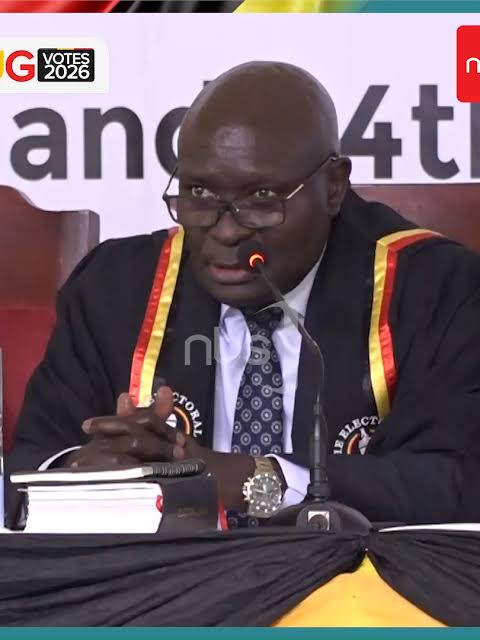
Standing before journalists at the Electoral Commission headquarters in Kampala on June 22, Byabakama finally delivered what communities across the country had been waiting years to hear.
“We know that this programme has been long awaited, and we want to thank and appreciate the people of Uganda for the patience you have exhibited up to now,” Justice Byabakama said.
He added: “With Government having provided the Electoral Commission with the much needed funds, the Commission is able to announce today the programme for conducting these important elections.”
The roadmap he unveiled is both detailed and ambitious, covering not just the LC1 village councils but also the Village Women Committees, Parish LC2 chairpersons, and ultimately a National Women Councils Delegates Conference — all to be completed before the year is out.
How Voting Will Work
Registration and verification of residents for both the Village Council and Village Women’s Council registers will take place from July 6 to July 10, 2026, covering all 71,214 villages across the country.
To qualify for registration, Byabakama explained, an individual must be a Ugandan citizen, at least 18 years old, ordinarily resident in the village where they intend to register, and willing to be a member of the village council.
The display of voter registers will follow on July 13 and 14, allowing residents to verify their details and raise objections over inaccuracies — including the inclusion of non-residents, underage persons, and non-citizens.
Byabakama urged residents to report the names of deceased persons, non-citizens, underage individuals, and people who do not reside in the village, so they can be removed from the registers before polling day.
Nomination of candidates will run from July 15 to July 19, conducted at subcounty, town council, and municipal division headquarters.
For the Women Committees, campaigns will run from July 20 to July 22, with polling on July 23.
For LC1 candidates, voting will be conducted at designated public places in each village from 7:00am to 4:00pm on July 28.
Between 7:00am and 10:00am, all eligible voters are expected to assemble at the polling station, where they will be verified to confirm they are registered members of the village. Voter sensitisation will follow at 11:00am, after which the lining-up exercise will begin under the supervision of a presiding officer who will oversee and count the votes.
Byabakama explained that voters will elect their preferred candidates through the traditional lining-up system, where voters will stand behind the candidate of their choice or their candidate’s portrait.
What Villages Are Actually Electing
The elections are about more than a chairperson.
The EC outlined that each village will elect an eleven-member executive committee, comprising representatives responsible for key areas including security, finance, youth, women, production, and vulnerable groups.
According to the Electoral Commission, Uganda has 71,216 villages and 10,717 parishes, and the combined elections are expected to produce approximately 421,430 women council leaders across all tiers.
Under Uganda’s 1995 Constitution, the LC system empowers councils with legislative and executive authority over their jurisdictions, including revenue collection, bylaw enactment, and resolution of minor disputes.
The LC1 chairperson serves as the primary link between citizens and the government, holding significant influence over community dynamics, law enforcement, and conflict resolution at the most local level.
The Women Councils: A Separate but Parallel Journey
The Women Councils run on a distinct but intertwined track.
The National Women’s Council is an autonomous body established by the Women’s Council Act of 1993, designed to bring all women of Uganda together for development purposes, irrespective of their religion, tribe, origin, status, or political affiliation.
The structure works by electoral college. All willing women in a village register and elect five members — a chairperson, vice chairperson, secretary, publicity secretary, and secretary for finance. The elected members from all villages in a parish then form the parish electoral college, which elects five leaders from among themselves, and so on up through sub-county, district, and national levels.
At the apex of this hierarchy, a National Delegates Conference is scheduled for September 3 and 4, 2026, at which the national leadership of the Women Councils will be elected by secret ballot — a contrast to the open lining-up method used at the village level.
The People Who Will Make It Happen
Running elections across more than 71,000 villages is not a small logistical undertaking.
The Electoral Commission plans to recruit 142,500 polling officials for the exercise, deploying one official in each village for the voter register display and other pre-election activities, and two officials per village on polling day itself.
EC Secretary Richard Kamugisha, who confirmed receipt of the government funds, was clear about why the process had to follow established procedure: “The election is conducted according to the law. When the law says we print registers, recruit polling officers and other things, we have to do them, and all of them require money. Otherwise, if you don’t conduct the elections according to the law, the results will be contested and you will be taken to court.”
The recruitment of temporary polling officials is expected to create short-term employment for thousands of Ugandans, especially youth and unemployed people who have previously worked in election-related activities.
The Road Beyond July
The July elections mark the beginning rather than the end of the electoral cycle.
Parish LC2 chairperson elections are scheduled for August 10, 2026, with nominations set for August 3 and campaigns running from August 4 to August 9.
The Women Councils electoral process will continue climbing through the administrative hierarchy — village to parish, parish to sub-county, sub-county to district — before culminating at the national level in early September.
Justice Byabakama called upon candidates, voters, election officials, and all stakeholders to comply with electoral laws, guidelines, and regulations throughout the process.
“The Commission urges all Ugandans to participate in this electoral programme and to do so in accordance with the guidelines for each activity. This will ensure a smooth electoral exercise,” he said.
For millions of Ugandans who have watched their village leaders serve year after year past the expiry of their mandates, July cannot come soon enough.
Key Electoral Dates at a Glance
- July 6–10: Voter registration across all 71,214 villages
- July 13–14: Display of voters’ registers
- July 15–19: Nomination of candidates
- July 20–22: Campaigns for Village Women Committee candidates
- July 20–27: Campaigns for LC1 candidates
- July 23: Village Women Committees polling day
- July 28: Village LC1 polling day
- August 3: LC2 nominations
- August 4–9: LC2 campaigns
- August 10: Parish LC2 Chairperson elections
- September 3–4: National Women Councils Delegates Conference