














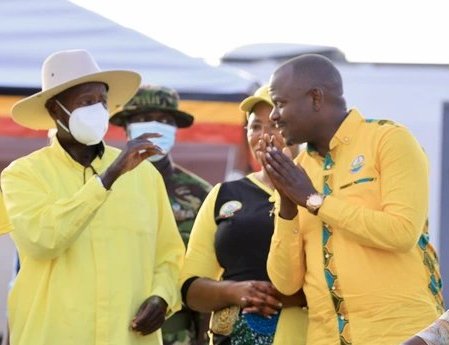
A politician who rose from grassroots mobilisation and microfinance empowerment now holds one of the most consequential desks in Ugandan government — even if only temporarily
The Appointment
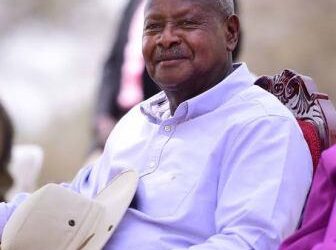
In a letter dated June 22, 2026, and confirmed publicly two days later by the Presidential Press Unit, President Yoweri Kaguta Museveni made a decision that would place one of his most trusted mobilisers at the helm of Uganda’s diplomatic machinery.

The Presidential Press Unit said in a statement: “The Presidential Press Unit would like to inform the general public that the President of the Republic of Uganda, H.E Yoweri Kaguta Museveni has appointed Hon. Haruna Kyeyune Kasolo as the acting Minister of Foreign Affairs.”
The presidential instruction to Kasolo himself was unambiguous.
“In exercise of the powers vested in the President by article 99 (1) of the Constitution, I hereby appoint you as acting Minister of Foreign Affairs in the absence of a substantive Minister,” President Museveni wrote to Hon. Kasolo in the letter dated June 22, 2026.
The appointment is a caretaker one, held in the interim, but it signals the extent to which Kasolo has climbed within the architecture of President Museveni’s seventh-term government — and how quickly his new assignment in foreign affairs has brought him into the highest levels of national responsibility.
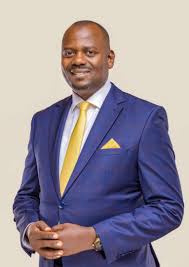
A Long Road from Kyotera
The journey that delivered Haruna Kyeyune Kasolo to this position did not begin in any diplomatic salon or ministry boardroom.
He was born on August 24, 1979, and entered Uganda’s political life as a directly elected Member of Parliament for Kyotera County in Rakai District, winning his seat for the first time in 2011 on the National Resistance Movement ticket.
From his very first entry into politics, Kasolo made community organisation and the uplift of ordinary people the foundation of his work, using his Kasolo Foundation to support more than 2,000 people in Kyotera alone with skills development and business start-ups.
His parliamentary career found its commercial and social extension in the town of Kyotera itself, where he became widely known as the proprietor of Solo Bites Hotel — a businessman-politician who embedded himself in local economic life rather than standing apart from it.
He won re-election in 2016, again on the NRM ticket, and concurrently received his first national ministerial appointment on June 6, 2016, when President Museveni named him State Minister for Microfinance in the Ministry of Finance, Planning and Economic Development.
The Microfinance Years
In finance, Kasolo found a platform that matched his grassroots instincts with national policy reach.
As State Minister for Microfinance, he spearheaded the Emyooga Programme, facilitating access to credit for over 6,000 SACCOs and reaching more than 20,000 villages, enabling millions of Ugandans to access enterprise financing for the first time.
The Emyooga programme became one of the most visible government initiatives of the Nabbanja Cabinet era, and Kasolo became one of its most publicly associated faces — crisscrossing districts to speak at SACCO launches, mobilise communities, and explain the mechanics of government credit to farmers, market vendors, and artisans who had never previously had access to formal financial services.
He also served as NRM Second National Vice-Chairperson for the Central Region, extending his political footprint well beyond his home constituency of Kyotera and embedding himself as one of the ruling party’s key mobilisers in Buganda.
A Setback, and Then a Pivot
Not every chapter of Kasolo’s political life has been linear.
In the 2021 general elections, he was unseated in Kyotera County by the Democratic Party’s John Paul Mpalanyi, who won with 28,230 votes against Kasolo’s 20,431 — a defeat that pushed one of the NRM’s most prominent Greater Masaka figures out of Parliament for the first time.
In the wake of the defeat, Kasolo began a determined effort to redefine his political career, shifting his attention across three districts — from Kyotera to Masaka City, where he attempted to unseat NUP’s Dr Abed Bwanika, before eventually setting his sights on Bukoto Central in Masaka District.
He declared his intent in Bukoto Central with characteristic directness: “I have come back to bring back the glory of NRM in Bukoto Central and to extend development to our people. I wouldn’t have an interest in standing as a Member of Parliament for Bukoto Central, but I have to finish the journey of our elder Edward Kiwanuka Ssekandi, the former Vice President, because I know people voted him out due to the political wave that was here.”
The parliamentary ambition ultimately gave way to something larger.
By 2026, Kasolo had returned to declare his candidacy for Kyotera County once more, posting: “Today, I’m proud to declare that I’ll be contesting in Kyotera County in 2026, committed to building on our achievements and ensuring every household benefits from government programmes.”
But President Museveni had other plans for him.
The Foreign Affairs Appointment
When Museveni announced his new 2026-2031 Cabinet, Kasolo was named Minister of State for Foreign Affairs in charge of Regional Affairs — a move that transferred him from the Ministry of Finance, where he had spent a decade, into one of Uganda’s most strategically sensitive ministries.
The news swept across Greater Masaka and Kyotera District with considerable excitement, widely interpreted as a major political elevation for one of the NRM’s most outspoken mobilisers in the Buganda region, and as a sign of growing presidential confidence in Kasolo’s leadership abilities.
Kasolo responded to the appointment with a pledge of service, describing the assignment as a call to greater dedication and patriotism, and committing to strengthen Uganda’s regional cooperation and diplomatic engagement.
He officially assumed office on June 11, 2026, during a handover ceremony at the Ministry of Foreign Affairs headquarters in Kampala, taking over from outgoing minister John Mulimba.
Speaking at the ceremony, Kasolo laid out his agenda plainly: “I pledge to serve with integrity and diligence so that the people of Uganda benefit from harmonious regional cooperation of Uganda across the region.”
He also committed to promoting and defending Uganda’s foreign policy, expanding market access for Ugandan goods, and advancing regional integration for the broader benefit of Ugandans, while emphasising continuity with the work of his predecessor.
The Ministry He Stepped Into
The Ministry of Foreign Affairs that Kasolo inherited carries a long institutional history and a demanding contemporary mandate.
The Ministry’s roots trace back to Uganda’s independence on October 9, 1962, when it was initially housed under the Office of the Prime Minister.
It became a fully fledged ministry in 1971, and successive additions — including the State Minister for International Affairs in 1966 and State Minister for Regional Affairs in 1988 — have expanded its operational scope over the decades.
The three-person team now in charge at the ministry — led by Ambassador Adonia Ayebare as substantive Foreign Affairs Minister, alongside Calvin Echodu as Minister of State for International Affairs and Kasolo for Regional Affairs — was assembled at a time when Uganda is deepening ties across Africa, the Gulf, Asia and global multilateral institutions.
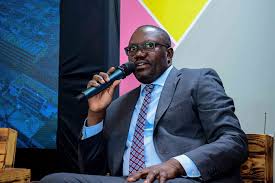
The Permanent Secretary of the ministry, Vincent Bagiire Waiswa, noted at the handover that defining work over the past five years had been built around Joint Permanent Commissions with Uganda’s regional partners, describing them as vehicles for opening markets for Ugandan products.
He noted that five JPCs had been concluded in the preceding year alone.
Museveni’s Diplomatic Architecture
The ministry into which Kasolo has stepped is an instrument of a foreign policy that President Museveni has built and refined over four decades.
Under Museveni’s long administration, Uganda evolved from a country with Marxist-aligned sympathies in the Cold War era into a liberal reformer that embraced World Bank and IMF prescriptions, generating what analysts described as “positive responses from Western bilateral donors,” and earning Museveni a reputation as part of a new generation of African leaders expected to deliver stability and prosperity.
The diplomatic dividends were significant: in 1998, Museveni welcomed US President Bill Clinton to Kampala, marking a high point in Uganda’s Western relationships.
Uganda has also been recognised internationally for contributing to regional stability, hosting approximately 1.5 million refugees — the largest refugee population in Africa — while simultaneously deploying its military to peacekeeping missions in Somalia and the eastern Democratic Republic of Congo.
In July 2025, Presidents Museveni and Kenya’s William Ruto signed eight bilateral memoranda of understanding covering tourism, fisheries, agriculture, and transport, aimed at enhancing cross-border efficiency.
By September 2025, the two nations had committed to eliminating non-tariff barriers and boosting bilateral trade volumes, which reached approximately $1.2 billion in 2024.
Uganda’s relationship with China has deepened considerably in recent years.
In September 2024, the two countries signed protocols enabling Ugandan exports of chillies and aquatic products to China, alongside a framework for economic and technical cooperation.
Ugandan exports to China increased by 127 percent from February 2024 to February 2025.
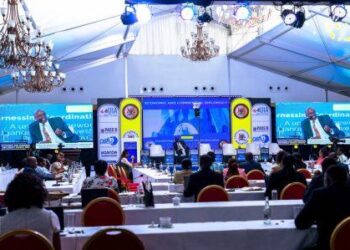
Reflecting this wider ambition, Uganda’s Annual Ambassadors’ Conference in 2025 was convened under the theme “Strengthening the Foreign Service’s Contribution to National Development,” with discussions reaffirming economic diplomacy as a cornerstone of Uganda’s foreign policy.
Uganda maintains strategic relations with leading global states including the United States, China, the United Kingdom, Germany, France, Japan, and India, as well as African partners such as Kenya, Rwanda, Tanzania, South Africa, Nigeria, Egypt, and Ethiopia.
What Acting Means — and What Comes Next
The title of acting minister carries weight in Ugandan constitutional practice.
As legislative analyst Medard Ssegona once observed of Museveni’s diplomatic methods: “He has been lucky and skilful. He knows how to play games when it comes to foreign policy. He has been careful.”
That carefulness is evident in the construction of the current foreign affairs team.
With the substantive minister, Ambassador Adonia Ayebare, temporarily away, Kasolo holds the full portfolio — managing a ministry responsible for Uganda’s embassies, bilateral relations, economic diplomacy, and engagement with multilateral bodies from the African Union to the United Nations.
For a man who spent his early political years walking the villages of Kyotera, distributing SACCO credit, and campaigning at roadside rallies in Greater Masaka, the acting foreign ministerial desk represents an extraordinary distance travelled.
As Kasolo himself put it at his handover: “I will work closely with the technical team to build on the foundation laid by my predecessors and continue advancing Uganda’s foreign policy objectives.”
The question Uganda’s diplomatic watchers are asking is how long the word “acting” stays in his title — and what shape his influence on the country’s regional relationships will take in the months ahead.